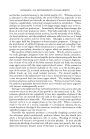
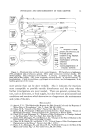
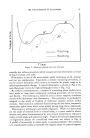
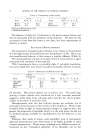
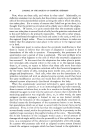
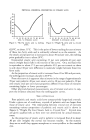
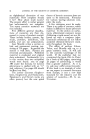
12 JOURNAL OF THE SOCIETY OF COSMETIC CHEMISTS at the time anyhow. When comeurn is sloughed off to a greater extent than normal (12), the mitotic activity of the underlying basal epidermis is increased by a degree roughly comparable with the amount of comeurn re- moved. There is then a self-regulatory control mechanism (feedback) for corneum production and probably for sebum production. The nature of the self-regulation in the hair cycle is not known but could well be the re- sult of the accumulation of an inhibiting substance during the production of hair. This substance would be slightly diffusible, and could be shared by the neighboring epicdermis and follicles only if very close. The club might act somewhat as the stratum comeurn in helping to retain for a time, at least, this substance. Of particular interest in this connection is the fact that a mouse on a diet of half the normal caloric intake will not initiate new waves of hair growth even if the plucking stimulus is applied (9). A plucked area will start a new growth, however, weeks later when and if the normal diet is restored. Hairs which are growing when the reduced diet becomes effective will either be unaffected or will grow more slowly and for a few days longer before catagen occurs and a club is formed. In view of our present information, only a very tentative hypothesis can be suggested to explain the regulatory mechanism of cyclic hair growth. It is possible, however, that there is a slowly diffusible substance (3) formed as a by-product of the growth of the inner sheath and hair. This sub- stance may be the same as the hypothetical substance involved in the formation of the stratum comeurn. This substance may be dissipated or it may "decay" at a certain rate. When a club is removed or disturbed from its bed in the upper external sheath, the substance may be released much more rapidly. It disappears not only from the sheath epithelium but also from the sebaceous epithelium and from the neighboring epidermis. If another follicle is sufficiently close and it is has already lost much of its inhibiting substance, it also might be affected. According to this scheme and providing there is an adequate carbohydrate source, anagen is initiated in a dormant follicle when the inhibiting substance falls below a certain threshold. Anagen stops, i.e., catagen occurs, when the threshold is again attained. Such a system would allow both for the synchrony and the autonomy which do occur. Pigment cells may be very sensitive indicators of the presence of this sub- stance, which we might call h. In many follicles there is a gradual cessation of the formation of pigment granules (melanogenesis) in these special cells shortly before the hair stops growing (6). During the early anagen there is a vigorous return of this melanogenic activity. In conclusion, a control system diagram can be prepared (Fig. 1) which indicates some of the interactions involved among the components of the skin especially with relation to the hair growth cycle. Such a diagram presents inter-relationships and self-regulatory mechanisms in a manner

PHYSIOLOGY AND HISTOCHEMISTRY OF HAIR GROWTH 13 -- k, I '• comeurn • -- L '• sebum ,j mertt• lrtto new ' -rn , K I "-. dub Figure 1.--Postulated skin and hair cycle control diagram. BE, basal layer of epidermis 2PSC, peripheral cells of sebaceous gland UES, upper permanent external sheath D/•, derreal papilla CTS, connective tissue sheath C, corium z/, adipose layer /•H, pig- ment cells of hair follicle LES, lower temporary external sheath m, mitotic activity k, keratinization l, lipid accumulation g, glycogen accumulation mel, melanogenesis hrhr, hairless genotype of the mouse. more precise than can be done verbally. Also it indicates the reactions most susceptible to possible outside disturbances and the areas where further investigations are most needed. There are general, systemic fac- tors, such as hormones, or food supply, but also there are pronounced local conditions and reactions which determine to a large extent the maintenance and cycles of the skin. BIBLIOGRAPHY (1) Argyris, T. S., "The Relationship Between the Hair Growth Cycle and the Response of Mouse Skin to X-irradiation," •Im. •e. •Inat., 94, 439 (1954). (2) Chase, H. B., "Growth of the Hair," 2Physio/. Rev., 34, 112 (1954). (3) Chase, H. B., "Evaluation of Biological Control Systems," Tech. Report: "Essays on Biological Utilization," Control Systems Lab., University of Illinois (1954). (4) Chase, H. B., and Montagna, W., "Relation of Hair Proliferation to Damage Induced in the Mouse Skin," 2Proc. Soc. Expt/. Bio/. Med., 76, 35 (1951). (5) Chase, H. B., Montagna, W., and Malone, J. D., "Changes in the Skin in Relation to the Hair Growth Cycle," •Inat. Record, 116, 75 (1953). (6) Chase, H. B., Rauch, H., and Smith, V. W., "Critical Stages of Hair Development and Pigmentation in the Mouse," 2Physiol. Zool., 24, 1 (1951). (7) Eisen, A. Z., Montagna, W., and Chase, H. B., "Sulfhydryl Groups in the Skin of the Mouse and Guinea Pig," •7. Nat. Cancer Inst., 14, 341 (1953).
Purchased for the exclusive use of nofirst nolast (unknown)
From: SCC Media Library & Resource Center (library.scconline.org)