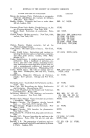
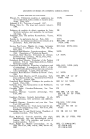
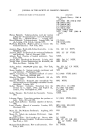
14 JOURNAL OF THE SOCIETY OF COSMETIC CHEMISTS (8) Liang, H., and Cowdry, E. V., "Changes of Hair Follicular Cells After a Single Painting of Methylcholanthrene in Mice," Cancer Research, 14, 340 (1954). (9) Loewenthal, L. A., "The Effects of Vitamin A Deficiency on Skin and Hair Growth in Mice." Thesis, Brown University (1954). (10) Montagna, W., and Chase, H. B.• "Redifferentiation of Sebaceous Glands in the Mouse After Total Extirpation with Methylcholanthrene," .4nat. Record, 107, 83 (1950). (11) Montagna, W., Chase, H. B., Malone, J. D., and M, elaragno, H. P., "Cyclic Changes in Polysaccharides of the Papilla of the Hair Follicle, ' Quart. •. Microgiol. $ci., 93, 241 (1952). (12) Pinkus, H., "Examination of the Epidermis by the Strip Method, II. Biometric Data on Regeneration of the Human Epidermis," f. Investigative DermatoL, 19, 431 (1952). NEWER ASPECTS OF EPIDERMAL D I F F ERENTIATI ON* By PETER FLY. Sell, M.D., PH.D. Department of Dermatology, University of Pennsylvania School of Medicine, Philadelphia, Pa. HUMAN EPIDERMIS, the outermost layer of the skin, is in most areas only about 1/i000 of an inch deep. The thickness of an onion skin paper is all that separates the inner from the outer environment. Within this layer an amazing variety of changes occur, as the epidermal cells differentiate into the dead horny layer at the surface. Some of these changes are environ- mental, such as a drop in pH from the inner alkaline tissue fluids to the acid reaction of the surface film the temperature and water content also de- crease as one proceeds from the inside to the outside. The most character- istic changes, however, are inherent in the epidermal cells themselves. These changes may be classified as morphological, physical, and chemical. Such a classification is arbitrary terms such as "morphological, .... physi- cal," or "chemical" denote different aspects of the same process, or are dif- ferent ways of looking at the same thing. The time is not far away, indeed in many instances has already arrived, when it will become possible to ex- press morphological features in chemical or physical terms. Among the morphological changes the conversion of the epidermal cells into the fibrous structures of the horny layer is the most conspicuous one. This transformation is a continuous and slow process it has been esti- mated that under normal circumstances at least a month, or probably more time, elapses before a cell in the basal layer reaches full maturity and is cast off as a horny scale of microscopic dimensions on the surface of the skin (1). The morphological details of this conversion are not very clear. * Presented at the December 9, 1954, Meeting, New York City. This study was supported by U.S. Public Health Grant #G4257.

NEWER ASPECTS OF EPIDERMAL DIFFERENTIATION 15 Keratinization, like collagen formation (2), probably begins in the periph- ery of the cell and proceeds from there throughout the rest of the cyto- plasm (1). Studies of a so-called transitional layer, the granular layer, which is located immediately underneath the horny layer, t did not shed much light on the morphological aspects of epidermal keratinization. The granular layer is composed of cells filled with a granular substance, woefully misnamed keratohyalin. Keratohyalin is neither keratin nor hyalin it is deplorable that the name implies that this material is a forerunner of keratin. Such an assumption is not borne out by the fact that some types of keratinization, such as nail formation, are characterized by the absence of a granular layer (3). In a pathologic type of keratinization, called para- keratosis, nuclear remnants are retained in the horny layer and the granular layer is absent. Although by no means proved, it would appear that an accelerated rate of keratinization leads to failure of keratohyalin granules to appear. The most likely explanation of the origin of the keratohyalin granules is that they are by-products in the keratinization process. As the cytoplasm partly solidifies into keratin and partly disintegrates, some of the intracellular proteins may be precipitated and give the appearance of granules (4). The disintegration of the cytoplasm and unmasking of the protein molecule immediately underneath the horny layer are also indicated by the sudden release of acid phosphatase (5) and by the frequent appear- ance of an increased sulfhydryl reaction in this region, also called the keratogenous zone (6). It has been postulated for a long time that from a physical standpoint the epidermis contains globular and fibrous proteins. The globular proteins are presumably involved in cellular metabolism, while the fibrous struc- tures represent the forerunners of the keratin fibers. A rather well-defined fibrous protein, epidermin, was extracted with 6 M urea from the super- ficial epidermal layers of the cow's nose. This protein had an x-ray diffrac- tion pattern like alpha keratin (7). In human epidermis, which has a struc- ture vastly different from the epidermis on the cow's nose (8), epidermin has never been shown to occur. Moreover, the process of extraction with 6 M urea, as used for epidermin, leads to denaturation-of epidermal pro- teins. Thus, the two distinct globular proteins extracted from human epidermis with neutral buffers become indistinguishable after treatment with 6 M urea (9). The characterization of epidermal proteins remains a task for the future, and is dependent on the availability of suitable solvents which can extract the more resistant fibrous structures in the epidermal cells without causing undue denaturation (8). From a chemical point of view, during epidermal differentiation, two proc- esses go on simultaneously: 'the formation or consolidation of the keratin 1 t The so-called stratum lucidurn, a layer between the granular and horny layers, can be visualized on the palms and soles only.
Purchased for the exclusive use of nofirst nolast (unknown)
From: SCC Media Library & Resource Center (library.scconline.org)