8 JOURNAL OF THE SOCIETY OF COSMETIC CHEMISTS Another physiologic factor worthy of consideration is the buffering or neutralizing capacity of the skin. The perspiration, fatty acids, and keratin help to maintain the acid pH of the skin surface, which is frequently termed the acid mantle of the skin. Sharlit, Burckhardt, Neuhaus, Piper, Jacobi, Robert, and Jaddou, among others, studied the neutralizing capac- ity of the skin to both acids and alkalies, and while the findings of these studies cannot be categorically applied to all synthetic detergents, they have considerable importance with respect to alkali soaps. Although these investigators differ somewhat with respect to the mecha- nism of neutralization, it is well agreed that the alkaline irritants do stimulate a buffering response by the skin. Some of the conclusions would credit the influence of sweat as the main regulatory mechanism other investigations indicate that when the horny layer becomes thinned or permeable, the main buffering effect stems from the action of CO,. diffusion. Still others of these workers attribute the neutralization to the action of the amino acids derived from keratin and sebaceous material. Regardless of the mecha- nism, it seems physiologically beneficial to maintain an acid mantle of the skin, and if soaps or alkalies remove the lipid and sweat barrier without undue harm, the buffering system remains effective. If, however, the irritant effect of a soap is sufficiently repeated and prolonged to such a de- gree as to promote a lag in the neutralizing system, the alkaline influence predominates. Burckhardt particularly believes that individuals who dis- play an eruptive response to alkali likewise show a deficiency in neutraliza- tion capacity. Rather recently, Haxthausen, in working with metal dermatoses of aller- gic contact origin, found that he could sensitize individuals to nickel and cobalt more readily when the skin was in an alkaline state. If an alkaline pH is a possible requisite or an assisting mechanism for certain agents such as nickel and cobalt, it raises the question of whether those individuals who be- come sensitized to soap are among those who show a deficiency in.their neutralizing capacity with a subsequent shift to an alkaline state. This brief review of some recent cutaneous physiological data' applic'able to the problem of soap and detergent dermatitis has intended to show that scientific investigations dealing with the physiology of the skin, as with other organs, can be most complex and speculative. The scientist is con- tinually confronted with the fact that conclusions derived from a given laboratory procedure with dead tissue may be completely nullified when actually applied to living skin provided with active circulatory, buffering, protective, and other functions. Nevertheless, it is quite probable that the laboratory will provide the additional details of those reactions which alter the physiology of the skin and thus bring about a clinical picture of derma- titis from soaps and detergents. Once cause and effect have been estab- lished, prevention can then become a practical reality.

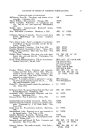
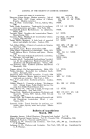
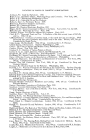
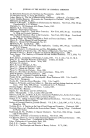
PHYSIOLOGY AND HISTOCHEMISTRY OF HAIR GROWTH 9 BIBLIOGRAPHY Lane, C. G., and Blank, I. H., "Cutaneous Detergents," y. Am. Med. Assoc., 118, 804 (1942). Blank, I. H., "Action of Soap on the Skin," Arch. Dermatol. and Syphilol., 39, 811 (1939). Kooyman, D. J., and Snyder, F. H., "Tests for Mildness of Soap," Ibid., 46, 847 (1942). Johnson, S. A.M., Kile, R. L., Kooyman, D. J., Whitehouse, H. S., and Brod, J. S., "Com- parisoh of Effects of Soaps and Synthetic Detergents on Hands of Housewives," Ibid., 68, 643 (1953). Pluss, J., "Uber die Bedentung der Synthetischen Wachschmittel als Eczematogene," Derma- tologica, 106, 186 (1953). Schwartz, L., Tulipan, L., and Peck, S. M., "Occupational Diseases of the Skin," Philadelphia, Lea and Febiger (1947). Rothman, S., "Physiology and Biochemistry of the Skin," Chicago, University of Chicago Press (1954). Johnson, S., Kile, R., Fliegelman, M., and Fix, J. C., "Differences in Skin Surfaces According to Age and in Age Groups by Subjective Methods," Proc. Sci. Sect. Toilet Goods Assoc., No. 16 (1951). Blank, I. H., "Factors Which Influence the Water Content of the Stratum Corneum," •. In- vestigative DermatoL, 18, 433- (1952). Gaul, L. E., and Underwood, G. B., "Relation of Dewpoint and Barometric Pressure to Chapping of Normal Skin," Ibid., 19, 9 (1952). Van Scott, E. J., and Lyon, J. B., "A Chemical Measure of the Effect of Soaps and Detergents on the Skin," Ibid., 21, 199 (1953). Sharlit, H., and Sheer, M., "The Hydrogen Ion Concentration of the Surface on the Healthy Intact Skin," Arch. Dermatol. and Syphilol., 7, 592 (1923). Burckhardt, W., "Neuere Untersuchungen uber die Alkaliempfindlichkeit der Haut," Derma- tologica, 94, 73 (1947). Klauder, J. V., and Gross, B. A., "Actual Causes of Certain Occupational Dermatoses. III. A Further Study with Special Reference to Effect of Alkali on the Skin, Effect of Soaps on pH of Skin, Modern Cutaneous Detergents," Arch. DermatoL and Syphilol., 63, 1 (1951). Haxthausen, H., "Verwandtschaftsreaktion bei Nickel- und Kobalt- Allergie der Haut," Arch. Dermatol. u. Syphilis, 174, 17 (1936). THE PHYSIOLOGY AND HISTOGHEMISTRY OF HAIR GROWTH*, By HEM,N B. Biology Department, Brown University, Providence 12, R. I. ONE FUNCTION of skin is the production of hairs. This keratinized product is produced in a cyclic fashion and is periodically shed. Actually the hair follicle is continuous with the basal layer of the epidermis and may be considered as a specialized portion of it. Likewise, the peripheral cells of the sebaceous gland are part of this continuity of the "germinal epi- thelium." Therefore, it is not surprising that physiological activity in the hair follicle is associated with changes in the epidermis and in the sebaceous glands. In addition, there are changes in the corium or dermis layer and in * Presented at the December 9, 1954, Meeting, New York City. t Work supported by Grant #C592 from the U.S.P.H.S. and by Grant #ENV-3 from the American Cancer Society recommended by the Committee on Growth of the National Research Council.
Purchased for the exclusive use of nofirst nolast (unknown)
From: SCC Media Library & Resource Center (library.scconline.org)