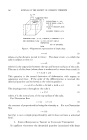
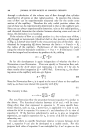
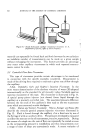
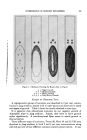
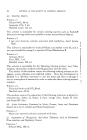
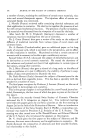
372 JOURNAL OF THE SOCIETY OF COSMETIC CHEMISTS inactivation by or incompatibility with certain nonionics, but there is no adequate study of the present problem. At the outset of this work, a number of variables were apparent. The following were considered for their effect on results: 1. Type of nonionic. 2. Purity of nonionic. 3. Presence of mineral salts. 4. Other types of surfactants. 5. Use of sodium salts. 6. pH. 7. Solid versus liquid medium. 8. Ratio of nonionic to preservative. 9. Degree of ethoxylation. EXPERIMENTAL Seven micro6rganisms taken from the Wayne State University College of Pharmacy collection were used in the first tests. They consisted of the following: Penicillium ctlrysogenum, ,4spergi#us niger, RMzopus nigricans, Candida albicans, ,41ternaria solani, Oidium /actis and Mucor racemcsa. A Baci#us subtills, Pseudomonas aeruginosa, Proteus vulgaris, Escherichia co/i and Torula roseus were also used in some of the tests but not in all of them, so the results are only summarized here. In addition two un- knowns isolated from spoiled nonionic emulsions were also used in some tests. These organisms were later identified as Paecilomyces varioti and Candida guillermondii, respectively. The first series of tests were made in test tube slants of Sabouraud dextrose agar at pH 5.6. The nonionic and preservative were dissolved in the medium, the pH adjusted, sterilized by autoclaving, slanted and, when cool, streaked with ten-day-old cultures of the molds under test or forty-eight hour cultures of the bacteria. While the concentration of nonionics commonly used in industry is usually between 1 and 25 per cent, they are rarely used in quantities less than 1 per cent. Accordingly, tests were made with 1 to 4 per cent concentrations ofnonionic, mainly, although some tests were made with 0.1 to 10 per cent concentrations. The preser- vatives were used in amounts from 0.1 to 0.4 per cent of preservative with most tests at 0.2 per cent. Thus, a ratio of nonionic to preservative was generally 10: 1. In the greater number of experiments, ztspergillus niger became the sole test organism. It was chosen because it is easily seen when germi- nated and because it is a common contaminant in commercial products. Jaag liquid medium replaced Sabouraud dextrose agar. The main dif- ference between Czapek-Dox medium and Jaag medium is that the latter contains more sucrose and nitrate. Figure 1 shows the method of scoring the results.

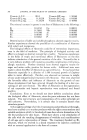
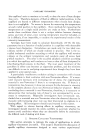
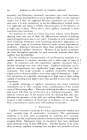
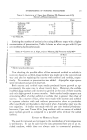
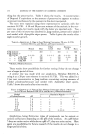
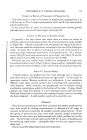
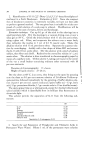
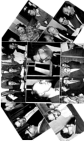
INTERFERENCE OF NONIONIC EMULSIFIERS 373 4- +4' Figure 1.--Method of Scoring the Results Key to Figure: q- = Slight Growth d- d- = Medium Growth d- q- d- = Heavy Growth d- d- d- d- -- Very Heavy Growth ,.4' 4' +4' . . . .'.• -.... - . . . ,.. .. - , EFFECT OF NONIONIC TYPE A representative group of nonionics was dissolved in 2 per cent concen- tration in Jaag medium, seeded with ,4. niger spores and observed for speed and degree of growth. Table 1 shows the results obtained in nine days. It is apparent that ethoxylated nonionics do not suppress growth of dspergillus niger in Jaag medium. Indeed, they seem to favor growth rather significantly. A nonethoxylated Span seems to retard growth in this test period. Three different types of nonionics, Tween 80, Myrj 49 and G-3720 were dissolved in Jaag medium, in both 2 and 4 per cent concentrations along with 0.2 per cent of four different common cosmetic preservatives. It was
Purchased for the exclusive use of nofirst nolast (unknown)
From: SCC Media Library & Resource Center (library.scconline.org)