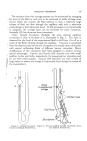
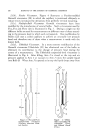
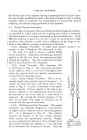
USES OF PAPER CHROMATOGRAPHY 381 and common substances, gives no method for the isolation and identifica- tion of coloring matters in cosmetics. We have therefore carried out research to perfect methods of isolation and identification of coloring matters by paper chromatography this research has been extended to cover substances other than coloring matters, such as thioglycolic and thiolactic acids, G-11, etc. We considered it useful to describe to cosmetic chemists some of the techniques used in our laboratory. We certainly do not wish to boast of having overcome all the analytical difficulties which arose, and this is par- ticularly true of the tracing of coloring matters in the presence of quaternary i compounds. A large number of problems remain unsolved, and from _.. experience we can state that there is no general method of analysis for : ! cosmetics: each cosmetic, because of its particular composition, constitutes a special case for analysis. For this reason the indications given must be considered merely as examples and not as techniques which can be applied in all cases. USE OF PAPER CHROMATOGRAPHY We have used the simplest method, i.e., paper chromatography, by ascending development. Generally two kinds of paper are used: Whatman No. 1 (thin paper) and Schleicher and Schuell No. 2093b (thick, very porous paper). In certain cases, such as the separation of polyalcohols, it is an advantage to impregnate these papers uniformly with certain salts. With these salted papers we obtain better separation of substances and rounder spots with better delimitation and clear edges, since the diffusion of the sub- stances under examination is diminished on the paper. These salted papers are easily made. A solution of 0.1 M of the chosen salt (NaC1, KC1, K2SO•) is sprayed onto the suspended sheets of paper, which are then dried in an oven regulated at 80 ø C. At a distance of 3 cm. from the lower edge of the paper, we put a series of spots with intervals of 3 cm. containing the solution under examination or the reference material. Each spot is 5 cm. in diameter. The sheet of paper is then rolled into a cylinder and clipped so that the edges of the paper do not touch each other. VATS We use cylindrical glass vats (height 40 cm., diameter 14 cm.), closed by means of a glass disk, modeling clay being used to ensure watertight closure. SOLVENTS We use the following solvents, which have been chosen after a large number of trials:

382 JOURNAL OF THE SOCIETY OF COSMETIC CHEMISTS (a) Coloring Matters FoRMula^ 1 Ethanol 96%, 80 mi. Ammonia 25%, 8 mi. Distilled water, 112 ml. This solvent is unsuitable for certain coloring matters such as foodstuff blues and colorings which are insoluble in water (red and fatty Sudans). FoRMUL^ 2 2 per cent ammonia solution saturated with methyl-iso- butyl ketone Shell. This solvent is unsuitable for foodstuff blues and methyl violet B, and is not very suitable for orange I, tropeoline OO and Rhodamine B. Fo•uL^ 3 Acetone, $0 mi. Conc. HC1, 5 ml. Distilled water, 200 mi. This solvent is unsuitable for the following coloring matters: navy blue, induline, chrysoidine, methyl violet B, geranium ultra fix (Gy). The acidity of this medium causes the following coloring matters to dis- appear: eosine, phloxine and naphthol yellow. Once the development is finished it is therefore necessary to dry the sheet and then to plunge it into an atmosphere of ammonia in order to make the above coloring matters reappear. Foetus^ 4 Technical formic acid 85%, 80 mi. Distilled water, 20 mi. This medium ensures the separation of the following colorants: p-dimethyl- aminobenzine, Sudan G, Sudan I, fatty orange (Gy), Sudan II (Gy) and Sudan III (Gy). (b) /Ictive Substances Contained in Sticks, Creams, Soaps and Deodorant Lotions (G-4, G-II, ztnobial and Phenol Components) Foauuu^ 5 10 per cent ammonia solution saturated with ether. (c) Separation of Thioglycolic .4cid from Thiolactic .4cid in Permanent tlZave solutions and Depilatory Creams Fo•uuu^ 7 Ethanol 96%, 160 ml.
Purchased for the exclusive use of nofirst nolast (unknown)
From: SCC Media Library & Resource Center (library.scconline.org)