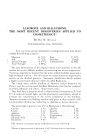
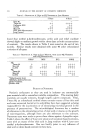
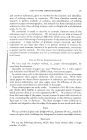
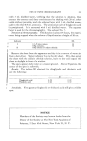
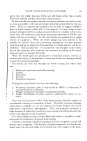
374 JOURNAL OF THE SOCIETY OF COSMETIC CHEMISTS Ts, uLE 1--GRowTH Or //. Niger IN 2% No•IoNI½ IN JAAG MEDIUM 2 Days 9 Days Span 40 - - Tween 80 3-3- 3-3-3-3- Carbowax 4000 3- q- 3- G-3720 3- + 3- 3- 3- Myrj 59 PEG 1000 Monostearate Jaag Control found that methyl p-hydroxybenzoate, sorbic acid and ethyl vanillate ' showed slight to medium growth within three days at both concentralions of nonionic. The results shown in Table 2 were noted at the end of two months. Similar results were obtained with some 40 other ethoxylated nonionics of all types. Ts, u•,E 2--GRow'rH oF ,,/. Niger •N Js, s,G ME•)•uv•, wrru 2 s,N•) 4% NowIoNic s, Nr• 0.2% P•ESE•VS, V•VE DHA* MPt EV$ SORõ 2% Tween 80 + -3--3-3- -3-3- -3--3--3-3- Myrj 49 ++ +++ +++ G-3720 ++ ++++ +++ 4% Tween 80 3- +++3- ++3- ++3-+ Myrj 49 +3- +3-3-3- 3-3-3-3- 3-3-3-3- G-3720 ++ +++ +++ Dehydroacetic Acid. Methyl.p-hydroxybenzoate. Ethyl Vanillate. Sorbie Acid. PURITY OF NONIONIC Nonionic surfactants as they are used in industry are commercially pure materials with a somewhat variable composition. The starting fatty materials are usually mixtures, though largely a given compound. Thus, Tween 80, an ethoxylated sorbitol oleate contains traces of free oleic acid and some unreacted hexitol or its anhydrides have been suggested as being responsible for the inactivation or of stimulating microbial growth in the presence of preservatives. The microbiological literature has a number of references to the stimulating action of oleic acid or oleates on the growth of microiSrganisms, although there are also references to the contrary. Numerous tests were made to prove these claims against Atspergil/us niger. Table 3 shows the effect of 2 per cent oleate and nonoleate based nonionics, some with an excess of free oleic acid in Jaag medium with 0.1 per cent methyl p-hydroxybenzoate. One can hardly point to any influence of oleic acid or oleate based nonionic in these data.

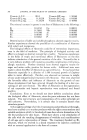
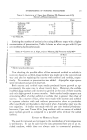
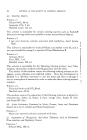
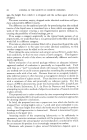
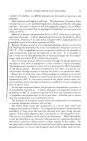
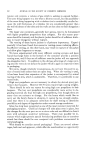
INTERFERENCE OF NONIONIC EMULSIFIERS 375 TABLE 3--GRowTH Or A t. Niger, JAAO MEDIUM, 2% No•Io•Ic AND 0.1% METHYL p-HYDROXYB ENZOATE Days Carbowax 1540 + 90 Tween 20 ++++ 21 Span 20 ++ 21 Oleic Acid + 21 25% Oleic Acid* + 65 Pluronic L 64 ++++ 60 Control ++++ 21 * In Tween 80. Limiting the number of nonionics but using different types with a higher concentration of preservative, Table 4 shows us what we get with 0.2 per cent methyl p-hydroxybenzoate. TABLE 4--GP. oWTH Or At. Niger, IN JAAO MEDIUM, 2% NONIONIC 0.2% MP* 10 Days Tween 80 +++ My• 49 G-3720 ++ G-3810 ++ G-1425 -- * Methyl p-hydroxybenzoate. Now checking the possible effect of free unreacted sorbitol or sorbide in nonionics based on sorbitol, Jaag medium was made up in the conventional way and also by replacing the sucrose with sorbitol and sorbide, respec- tively. No nonionic or preservative was added. dspergillus niger spores were introduced and growth observed. Both sucrose and sorbitol type media produced heavy growth at ap- proximately the same rate in about twenty days. However, the sorbide modified Jaag medium still showed no growth at the end of three months and only slight growth in seven months. Such results hardly support any stimulating effect of either sorbitol or sorbide that is greater than that of sucrose. As a matter of fact, other tests made with sucrose and sorbitol in aqueous solution with and without preservative show no particular effect specifically attributable to the hexitol when dspergillus niger was the test organism. A similar test made with 0.1 per cent methyl p-hydroxy- benzoate, 2 per cent Tween 40 in Jaag medium with an excess of sorbitol gave medium growth as compared to a parallel series without the added sorbitol. EFFECT OF MINERAL SALTS The need for minerals and nitrogen in the metabolism of micro Srganisms is well known. It can be said that the data presented here are on an en- riched medium, which does not always exist in commercial products.
Purchased for the exclusive use of nofirst nolast (unknown)
From: SCC Media Library & Resource Center (library.scconline.org)