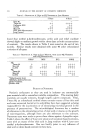
USES OF PAPER CHROMATOGRAPHY Conc. ammonia, 10 ml. Distilled water, 30 ml. 383 As examples we shall describe a few actual cases. 1. Identification of Coloring Matters in a Lipstick: Introduce into a test tube about 0.2 gr. of the lipstick, then 10 mi. of 50 per cent acetic acid, heat to boiling point only, shaking the test tube constantly, allow to cool in order to solidify fatty matter, then filter. The solution is agitated twice in a separatory funnel with 20 mi. petroleum ether (note that certain fatty reds are particularly soluble in the ethereal phase). The acid solution is poured into a porcelain dish, then evaporated to dryness over a water bath. When cold the residue is ground with 5 mi. alcohol at 50 per cent. The solution is centrifuged then decanted. The alcoholic solution is then trans- ferred to the paper for chromatography according to the usual technique. This method is unsuitable where the lipstick contains the coloring matter cyclamen Gy. We have observed that this coloring matter is destroyed by acetic acid when hot. This is apparent from the gradual fading in the color of the solution during heating. We therefore extract the coloring matter by melting 0.2 gr. of the lipstick in 10 mi. hot water. The aqueous solution is purified as before with petroleum ether, then evaporated to dry- ness in a porcelain dish. The residue is taken up by 50 per cent alcohol. The alcoholic solution is finally transferred to the chromatography paper. The fatty residue from the aqueous extraction is then treated with 50 per cent acetic acid, as above. Liquid lipsticks. We have modified the method of extraction of coloring matters for liquid lipsticks, since these preparations contain no fatty matters. The procedure is therefore as follows: Pour one or two drops of the liquid onto 2-3 gr. of kieselguhr in a porcelain dish, stir with a glass rod, then dry over a water bath. Treat the warm colored kieselguhr with 50 per cent acetic acid, filter, evaporate the tiltrate to dryness in a porcelain dish, and take up the residue with 50 per cent alcohol. Transfer the alcoholic solution onto the chromatography paper. After treatment with 50 per cent acetic acid, the kieselguhr remains highly colored. It is taken up with alcohol at 96 ø which dissolves the fatty coloring matter remaining on the kieselguhr the alcoholic solution is then transferred to the chroma- tography paper. In order to identify better the coloring matter extracted from a lipstick, it is necessary to put next to the spot made by the coloring matter the following reference colorings: eosine, phloxine (extra bluish geranium), rhodamine b, metanil yellow, orange II, etc. Our method has been tested by preparing with industrial products offered for this type of cosmetic fatty carriers of very different composition, to which we have added known ,coloring matters.

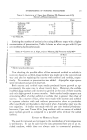
384 JOURNAL OF THE SOCIETY OF COSMETIC CHEMISTS 2. Identification of G-11 (2,2'-Dioxy-3,5,6,3',5',6'-hexachlorodiphenyl- methane) in a Stick Deodorant: Extraction of G-11. Since the composi- tion of deodorant cosmetics is extremely variable, we have not been able to perfect a general method. The one given here is suitable for sticks com- posed of a solid solution of a soda soap in ethanol. Modifications will be necessary in the case of creams, lotions and handsoaps. Extraction technique. Cut up 0.5 gr. of the stick in thin shavings into a small porcelain dish. Dry the shavings in a vacuum drying oven or over a silica gel at 50 ø C. Grind the dried product with 15 ml. dry acetic ether, using a glass rod. Filter, and evaporate the solvent over a water bath, then redissolve the residue in 5 ml. of 0.1 N caustic soda. Shake this alkaline solution with 15 ml. petroleum ether. Separate the aqueous solu- tion by centrifuging. Acidify with a few drops of dilute HC1 and extract the G-11 with 10 ml. acetic ether. Dry the solution with a pinch of sodium sulfate, then filter and distill. Redissolve the crystalline residue in 1/10 ml. acetic ether. The solution is then transferred to chromatography paper by means of a capillary tube. Utilize solvent 5, taking care to put in the center of the vat a small beaker containing ordinary ether saturated with 10 per cent ammonia. Duration of chromatography: 31/2 hours Height of liquid column: 25-26 cm. Dry the sheet at 60 ø C. in an oven, then bring out the spots by spraying onto the sheet an 0.1 per cent acetone solution of 2.6-dibrom-N-chloro-p- quinoneimine followed immediately by the spraying of buffer alkaline solu- tion (1 part 1 per cent sol. caustic soda and 2 parts buffer so1.--13 gr. boric acid, 15 gr. potassium chloride, 1.7 gr. caustic soda in 1 liter distilled water). The spots appear blue on a white ground, except for Anobial (chlorinated salicyl anilide) which is identifiable from its brilliant blue fluorescence in ultraviolet light. This solvent permits the separation of G-11 from the following sub- stances: Rf G-11 0.59 G-4 0.73 Sustane 0.67 Parachlorometacresol 0.80 Anobial 0.27 p-hydroxybenzoic acid 0.94 Salicylic acid 0.91 Sensitivity 1-5 micrograms G-11 3. Search for and Separation of Thioglycolic and Thiolactic Acids in Permanent Wave Water: Dilute 1 ml. of the permanent wave solution
Purchased for the exclusive use of nofirst nolast (unknown)
From: SCC Media Library & Resource Center (library.scconline.org)