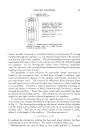
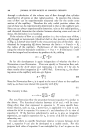
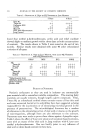
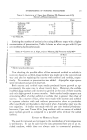
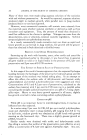
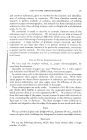
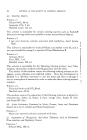
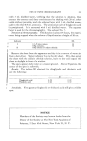
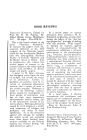
378 JOURNAL OF THE SOCIETY OF COSMETIC CHEMISTS thing but the preservative. Table 5 shows the results. A concentration of Duponol C equivalent to the amount of preservative appears to reduce or prevent interference by the nonionic in this short test period. The tests were repeated using three representative cationics with the nonionic G-3720. A 10 and 20 per cent mixture of the cationic in the non- ionic was made, but results made with the latter are reported only. Two per cent of this mixture was dissolved in Jaag medium, preservative added and seeded with dspergi/lus niger spores. Table 6 gives the results after eight months' growth. T.•BLE 6--GP. oWTH Or A. Niger •N J.•.•a MEDIUM CONTAINING 20/0 OF A G-3720- J _, CATIONIC M•XTURE AND METHYL p-HYr•V. OXYBENZOATE [ Ethyl Hyamine Roccal Days Cetab Days 10 X Days 0.1% Cationic -- 210 -- 210 -- 320 0.1% Cationic 4- ++++ 25 ++++ 40 ++++ 20 2,,% 0-,3,720 0.1% MP* 4- 250 -- lS0 +4-4- 40 " " 0.15% MP - 150 - 150 4- 40 " " 0.2% MP - 150 - 150 -- 160 * Methyl p-Hydroxybenzoate. These results show possibilities for further testing if they do not change over a longer period of time. A similar test was made with one ampholyte, Deriphat XD-150 A, using it as a 20 per cent mixture in nonionic G-3720. This was added in a 2 per cent concentration to Jaag medium containing varying amounts of methyl p-hydroxybenzoate and seeded with Aspergillus niger spores. Table 7 shows the results after nine months. T.•BLE 7--GRowTH Or At. Niger •N J-•-•c MEDIUM CONTAINING 2% Or .a_ M•XTUV. v- Or G-3720 .•ND DEVaPH.•' XD-150 A .•ND METHYL p-HYDv. OXY•ENZO.•'V- Methyl .Results in Months . p-Hydroxybenzoate pH 1 3 7 9 0.1 7.8 -- -- -- 0.1 5.6 -- -- -- 0.15 7.8 -- + + 0.15 5.6 -- -- -- 0.2 7.8 -- -- - 0.2 5.6 -- -- -- Control 5.6 -- q- +4-4-4- ++ + + Ampholytes, being Zwitterion types of compounds can be anionic or cationic surfactants depending on the pH of the medium. At a pH below 7 they are cation-active while above a pH of 7, they are anion active. Here again are possibilities for future research if the results do not change in a longer period of time.

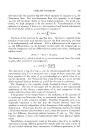
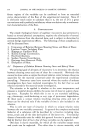
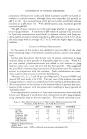
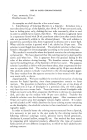
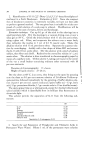
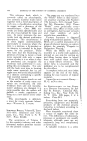
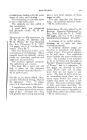
INTERFERENCE OF NONIONIC EMULSIFIERS 379 EFFECT OF RATIO OF •NTONIONIC TO PRESERVATIVE Test were made on ratios of nonionic to preservative ranging from 1 to 1 all the way to 50 to 1 using concentrations of 0.1 and 0.2 per cent methyl p-hydroxybenzoate. It was found that all ratios of nonionic to preservative showed growth although lesser amounts of nonionic gave slower growth. EFFECT OF DEGREE OF ETHOXYLATION In general it has been found that when there are above six moles of ethylene oxide in the ethoxylated chain, the nonionic becomes water soluble or dispersible. Almost in a parallel way, the greater the degree of ethoxyla- don, the more rapid the inactivation, excepting in the case of the Carbowax series. It seems that an alkyl or aryl group at one end of the nonionic is necessary to get maximum inactivation of the preservative. In a narrow series, Myrj 49 inactivates preservative more slowly than Myrj 59 and G- 3810 is slower than G-3816 and it in turn slower than G-3820. When 0.1 per cent sodium lauryl sulfate was compared to 0.1 per cent ethoxylated sodium lauryl (ether) sulfate in Jaag medium,/lspergillus niger grew in the ethoxylated medium within three weeks showing heavy growth. SOLID F'. LIQUID MEDIA A liquid medium was preferred for this work although over a thousand tests were made on solid Sabouraud dextrose agar slants. It was easier to quantirate results. Because nonionics are surfactants, it was sometimes difficult to get clear, smooth surfaces due to foaming after autoclaving a solid medium. Some nonionics are precipitated out of solution during sterilization remaining as a glob in the bottom of the tube. Using a liquid medium, the tubes were placed on a slow shaking machine until dissolved. The foam formed did not interfere with seeding of spores, since on standing the foam collapsed. A solid medium could not be used this way. SUMMARY Over the last several years over forty nonionics and twenty preservatives have been tested in varying concentrations to determine if all types of nonionic surfactants inactivate all usuable cosmetic preservatives. From this group of preservatives, four were used, namely, methyl p-hydroxy- benzoate, for the main part, dehydroacetic acid, ethyl vanillate and sorbic acid. The principal nonionic used was G-3720 for its ease of handling and for producing rapid results. zlspergillus niger was the test organism most often used. Factors possibly influencing results were examined.
Purchased for the exclusive use of nofirst nolast (unknown)
From: SCC Media Library & Resource Center (library.scconline.org)