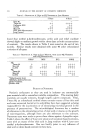
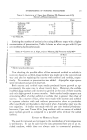
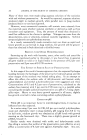
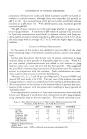
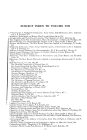
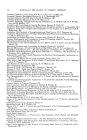
38O JOURNAL OF THE SOCIETY OF COSMETIC CHEMISTS CONCLUSION In general any water soluble ethoxylated nonionic surfactant will in- activate the commonly used cosmetic preservatives when employed in their usual concentrations if tested on Sabouraud dextrose agar or Jaag medium against the organisms mentioned. SOME USES OF PAPER CHROMATOGRAPHY FOR THE ANALYSIS OF COSMETICS* By J. DESHUSSES AND P. DESBAUMES Cantonal Chemical Laboratory, Geneva, Switzerland IN SWITZERLAND, cosmetics are subject to control based on the Federal decree of May 26, 1936, regulating trade in foodstuffs and various common substances, with particular reference to Article 467 of the decree. Medicinal cosmetics and those on the market with indications claiming curative properties are controlled by the Inter-cantonal Office for the Control of Medicaments (O.I.C.M.). Article 467 states that preparations used for the care of the mouth, skin and hair, hair dyes and make-up must not contain metalloidal or toxic metallic (arsenic, antimony, lead, mercury, thallium) substances or harmful organic components. Paragraph 2 of article 467 mentions the following organic components considered to be noxious: para-phenylene, diamine, formaldehyde, para- formaldehyde, pilocarpine and nitrobenzine, but this list is not exhaustive, for it ends with "etc." The Federal Public Health Service may at any time declare other organic components to be noxious and may forbid their use. Thus the use of thioglycerin in permanent wave liquids has been pro- hibited since 1956. As regards coloring matters, cosmetics may in principle be colored only with foodstuff colorings listed in Article 441 of the above decree. Para- graph 6 of Article 467, however, allows the use of harmless coloring matters other than those used in foodstuffs, provided that their chemical composi- tion is communicated to the Federal Public Health Service. It will be agreed that Swiss legislation on cosmetics is very liberal. The great variety of substances used for the composition of cosmetics makes their analysis exceedingly difficult. The "Swiss Foodstuffs Man- ual," 4th edition, 1939, containing official methods for analysis of foodstuffs * Presented at the Augus• 2, 1957, Meeting, Geneva, Switzerland.

38O JOURNAL OF THE SOCIETY OF COSMETIC CHEMISTS CONCLUSION In general any water soluble ethoxylated nonionic surfactant will in- activate the commonly used cosmetic preservatives when employed in their usual concentrations if tested on Sabouraud dextrose agar or Jaag medium against the organisms mentioned. SOME USES OF PAPER CHROMATOGRAPHY FOR THE ANALYSIS OF COSMETICS* By J. DESHUSSES AND P. DESBAUMES Cantonal Chemical Laboratory, Geneva, Switzerland IN SWITZERLAND, cosmetics are subject to control based on the Federal decree of May 26, 1936, regulating trade in foodstuffs and various common substances, with particular reference to Article 467 of the decree. Medicinal cosmetics and those on the market with indications claiming curative properties are controlled by the Inter-cantonal Office for the Control of Medicaments (O.I.C.M.). Article 467 states that preparations used for the care of the mouth, skin and hair, hair dyes and make-up must not contain metalloidal or toxic metallic (arsenic, antimony, lead, mercury, thallium) substances or harmful organic components. Paragraph 2 of article 467 mentions the following organic components considered to be noxious: para-phenylene, diamine, formaldehyde, para- formaldehyde, pilocarpine and nitrobenzine, but this list is not exhaustive, for it ends with "etc." The Federal Public Health Service may at any time declare other organic components to be noxious and may forbid their use. Thus the use of thioglycerin in permanent wave liquids has been pro- hibited since 1956. As regards coloring matters, cosmetics may in principle be colored only with foodstuff colorings listed in Article 441 of the above decree. Para- graph 6 of Article 467, however, allows the use of harmless coloring matters other than those used in foodstuffs, provided that their chemical composi- tion is communicated to the Federal Public Health Service. It will be agreed that Swiss legislation on cosmetics is very liberal. The great variety of substances used for the composition of cosmetics makes their analysis exceedingly difficult. The "Swiss Foodstuffs Man- ual," 4th edition, 1939, containing official methods for analysis of foodstuffs * Presented at the Augus• 2, 1957, Meeting, Geneva, Switzerland.
Purchased for the exclusive use of nofirst nolast (unknown)
From: SCC Media Library & Resource Center (library.scconline.org)