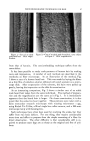
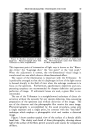
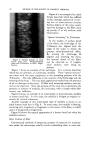
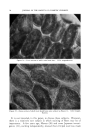
JOURNAL OF I'HE SOCIETY OF COSMETIC CHEMISTS 105 T•rx^x•v• Ev^i•u^x•o• M•'•or•s xs•'o Orr•c•^• PP, oc•:rmP,•:s We are planning to offer several tentative evaluation methods this fall. These tentative methods will be made available to all members of the SocxET¾ and those in charge of these test methods would like your criticisms --both constructive and destructive. After these tentative evaluation methods have been open to review by the SomET¾ for one year, we propose to offer them as "Official S.C.C. Methods" for evaluating cosmetic products. It is hoped that "Official Methods" will develop as tremendously improved, accurate methods that have been checked and rechecked in many separate laboratories. The Subcommittee has the initial problem of selecting properties that are important and that can be accurately measured. Initially we are working with established methods but we expect to develop new and special methods before long. Usually, coded samples are sent to all members of the Subcommittee to see what agreement (if any) is obtained among the com- mittee members using the suggested techniques. At least one committee has been working for nearly a year to develop a test method which will give the same values in the hands of several different investigators, and you will learn today of their experience. We have started with six important cosmetic products and five subcom- mittees to study them: Shampoos, Waving Lotions, Aerosols, Creams and Lotions, Deodorants and Antiperspirants. Each committee has considered what test methods show the most promise and are reporting to you. We are particularly encouraged by the assurance that several tentative test methods will be offered for general SocI•,¾ study this fall. What addi- tional products shall we tackle ? COMMENTS BY MORRIS J. ROOT M•,HoDs ^sD techniques have been developed for analyzing the spray characteristics of aerosol products. The characteristics of the spray which can be measured include these: I. Pressure II. Delivery Rate III. Spray Pattern (Particle Size) IV. Spray Angle. I. Pressure. The pressure in the container determines the forcefulhess of the spray and, therefore, is an important consideration in analyzing the spray. Furthermore, certain government regulations make it imperative that the pressure be measured by a standard technique. A tentative method for internal pressure determination of aerosol prod- ucts in lightweight metal containers has now been adopted by the Aerosol Division of the Chemical Specialties Manufacturers Association. This

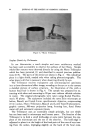
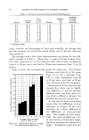
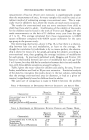
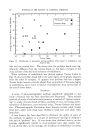
106 JOURNAL OF THE SOCIETY OF COSMETIC CHEMISTS method prior to adoption was checked by eighteen cooperating laboratories in various parts of the country. The method uses a standard type of Bour- don pressure gauge attached to a standard can-piercing device. The container is pierced and then the gauge, through an appropriate valve, is prepressurized with nitrogen to approximately five pounds per square inch below the estimated container pressure. The can is immersed in a water bath that can be controlled to within +0.5øF. Accuracy of this method has been shown to be + 1.5 p.s.i. at 70øF. and +3.0 p.s.i. at 130øF. For the measurement of the internal pressure of glass aerosol products another tentative method has been adopted by the C.S.M.A. which utilizes a standard Bourdon gauge and an adapter for taking the pressure through the valve. Another method which is being used in at least three laboratories for measuring the pressure in lightweight metal containers is based on a Bour- don diaphragm gauge. The use of the diaphragm makes it possible to take the pressure through the valve without the danger of getting liquids into the Bourdon tube. This method is especially useful for quality control since it does not necessitate destruction of the package by piercing, and the pressure measurement is rapid. Still another method which has been used utilizes a mercury manometer. The line between the manometer and the container in which it is desired to measure the pressure is evacuated. The container is then opened to the manometer, and the pressure is measured in inches of mercury. Although this is an extremely accurate method of pressure determination, it is rather cumbersome since a very large column of mercury is needed (30 inches for each 14.7 p.s.i.). II. Delivery Rate. The delivery rate of an aerosol product is of impor- tance since it measures the quantity of material atomized in a given time. A tentative standard method for delivery rate of aerosol insecticides and room deodorants has been adopted by the C.S.M.A., which is adaptable to cosmetic aerosols as well. The container is weighed and the valve acti- vated for a period of ten seconds while the container is kept at a tempera- ture of 80 + 0.5øF. The loss in weight is then recorded. The results of this test are reported as delivery rate in grams per second and calculated as follows: Delivery rate, gm./sec. -- .4/10 sec. where ?/= loss of weight in grams. IlL Spray Pattern (Particle Size). Although several methods have been devised for measuring particle size of aerosol products, most have been found unsatisfactory because they are tedious, time consuming, require elaborate equipment or are difficult to carry out. A tentative official method of determination of the particle size distribu-
Purchased for the exclusive use of nofirst nolast (unknown)
From: SCC Media Library & Resource Center (library.scconline.org)