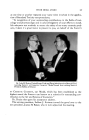
THE MEDALIST'S ADDRESS MR. PRESIDENT, Mr. Toastmaster, Distinguished Guests, Mem- bers of the SOCIETY OF COSMETIC CHEMISTS, Ladies and Gentlemen: Allow me first to express my deep appreciation and gratitude to the SOCIETY OF COSMETIC CHEMISTS for the high honor which it has conferred on me in presenting me with its coveted recognition--The Medal. It is at a time like this that one feels keenly his lack of the gift of eloquence to give expression to his true feelings. I must confess that I accept this honor with real humility, and do appreciate the expression of confidence it represents. Let me hasten to add that in reality I am sharing this honor with my col- leagues and associates of the Division of Pharmacology of the Food and Drug Administration who have worked with me in the design of experi- mental procedures in skin pharmacology. Unlike some of the former recipients of The Medal, I cannot claim re- search which has produced revolutionary developments in the cosmetic in- dustry. Rather, the contributions of the skin pharmacologist are more apt to serve as a restraining influence in such developments, at least until prob- lems of safety have been resolved. There has been a growing awareness by the members of this SOCIETY as well as by the members of your sister organization--The Toilet Goods As- sociation-that "safety for use" in a cosmetic is of paramount importance. A cosmetic, regardless of its elegance, effectiveness or attractiveness, will not survive long unless it •s safe for the user. My address tonight is entitled, "The Pharmacologist Delves in Cosmet- ics." 124

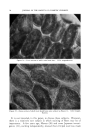
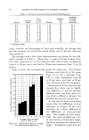
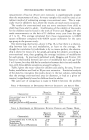
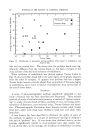
THE PHARMACOLOGIST DELVES IN COSMETICS By JoH H. DP. AIZE, Chief Skin Toxicity Branch, Food and Drug/Idministration, Dept. of HeMth, Education, and PFelfare, PFashington, D.C. The Division of Pharmacology of the Food and Drug Administration is often called upon to review derreal, mucous membrane and other toxicity data submitted for a new cosmetic formulation, or for ingredients thereof, and to express an opinion on the adequacy of such data in support of safety for use. In essence, the evaluation of such data represents an appraisal of the health hazards in the cutaneous or mucous membrane exposure to the product. Such appraisals involve fundamental problems in skin pharma- cology. More specifically, these problems are associated with studies in percutaneous or mucous membrane absorption, and concern local and sys- temic effects following exposure to the cosmetic. Time does not permit the discussion in detail of all the factors involved in percutaneous absorption. There have been a number of reviews by Rothman (1), Calvery, Draize and Laug (2), Valette (3), Rothman (4), and Gemmell and Morrison (5), which deal with this problem in great detail. Any substance which, when applied topically, is capable of eliciting a re- action, although such reaction is purely local and superficial in nature, dem- onstrates a certain degree of absorption. There are three fundamental factors concerned with percutaneous absorption: 1. Skin (gross anatomical and histological nature). 2. Innate nature of the substance to be absorbed. 3. Role of the vehicle. The skin is a large, important and, histologically, a unique organ of the body. Unlike the parenchymatous organs, it is exposed to many and var- ied influences, often of a detrimental nature, such as wide variations in temperatures and humidity, or to many offending factors, such as chemical and physical irritants in man's environment. Anatomically, the skin, also unlike the parenchymatous organs, is a typically stratified structure con- sisting of three distinct entities--the subcutis, derma and epidermis. The epidermis itself, or the peripheral stratum, is further differentiated in five cell layers. The skin has many "breaks" or imperfections in its architec- ture (as represented by the skin appendages, sebaceous and sweat glands 125
Purchased for the exclusive use of nofirst nolast (unknown)
From: SCC Media Library & Resource Center (library.scconline.org)