68 JOURNAL OF THE SOCIETY OF COSMETIC CHEMISTS discuss new methods and refinements of older techinques with which it is now possible to obtain more accurate data concerning the number of molecules of a substance which leave the surface of a unit a•ea of skin in a unit time and how much of the penetrating material reaches the blood stream. He will show a correlation of the results obtained by different methods. No one can yet say where more accurate determinations of percutaneous absorption will lead us. They certainly should be useful to the cosmetic chemists. With such methods available, the initial step in the study of mechanisms of action can be taken. When we understand how a cosmetic acts, present products can be evaluated and perhaps improved and new products can be formulated. REFERENCES (1) Rothman, S., "Physiology and Biochemistry of the Skin," Chicago, University of Chicago Press (1954), pp. 26-59. (2) Guillot, M., and Valette, G., 5 e. physiol. (Paris), 46, 31 (1954). (3) Calvery, H. O., Draize, J. H., and Laug, E. P., Physiol. Review, 26, 495 (1946). (4) Lockie, L. D., and Sprowls, J. B., y. •lm. Pharm. •lssoc., $ci. Ed., 40, 72 (1951). (5) Strakosch, E. A., •lrch. Dermatol. and $yphilol., 47, 16 (1943). (6) Goldzieher, J. W., Roberts, I. S., RaMs, W. B. and Goldzieher, M. A., Ibid., 66, 304 (1952). (7) Mackee, G. M., Sulzberger, M. B., Herrmann, F., and Baer, R. L., y. Invest. Dermatol., 6, 43 (1945). (8) Eller, J. J., and Wolff, S., •lrch. Dermatol. and $yphilol., 40, 900 (1939). (9) Montagna, W., Proc. Soc. Exptl. Biol. Med., 86, 668 (1954). (10) Riska, E. B.,/lcta Pathol. Microbiol. Scand., Suppl. No. 114, 46 (1956). (11) Malkinson, F. D., y. $oc. Cosmetic Chemists, 7, 109 (1956). (12) Butcher, E. O., y. Invest. Dermatol., 21,243 (1953). (13) Blank, I. H., Griesemer, R. D., and Gould, E., Ibid., 29, 299 (1957). (14) Blank, I. H., Gould, E., Ibid., 33, 327 (1959). (15) Boyd, G. A., "Autoradiography in Biology and Medicine," New York, Academic Press, Inc. (1955). (16) Shelley, W. B., and Melton, F. M., y. Invest. Dermatol., 13, 61 (1949). (17) Weiss, W., •lm. y. Med. Sci., 231, 13 (1956). (18) Mack, W. L., and Nelson, J. W., y. •lm. Pharm. •lssoc., $ci. Ed., 42, 101 (1953). (19) Treherne, J. E., y. Physiol. (London), 133, 171 (1956). (20) Flesch, P., Satanore, A., and Brown, C. S., y. Invest. Dermatol., 25, 289 (1955). (21) Nyiri, W., and Jannitti, M., y. Pharm. Exptl. Therap., 45, 85 (1932). (22) Griesemer, R. D., Blank, I. H: and Gould, E., y. Invest. Dermatol., 31,255 (1958). (23) Laug, E. P., Vos, E. A., Urnberger, E. J., and Kunze, F. M., y. Pharm. Exptl. Therap., 89, 42 (1947). (24) Nagy, S. M., Golumbic, C., Stein, W. H., Fruton, J. S., and Bergmann, M., y. Gen. Physiol., 29, 441 (1946). (25) Malkinson, F. D., y. Invest. Dermatol., 31, 19 (1958).

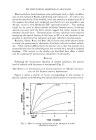
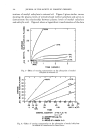
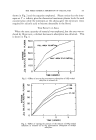
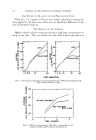
METHODS FOR MEASURING PERCUTANEOUS ABSORPTION By M. AINSWOP, TH* Presented September 23-2•, Z959, Seminar, New York City WHEN A LIQUID is applied to one side of a very thin membrane, some molecules of the liquid will appear almost immediately at the other side. This diffusion process can be described by a single permeability index because the diffusion rate is always constant. However, if the "membrane" is very thick an appreciable amount of the diffusing substance accumulates inside it before the penetration reaches a steady state. During this stage the rate of entry of the substance into the membrane is faster than the rate at which it leaves the other side. The diffusion process can then no longer be described by a single index. This is true of skin which in some ways acts as a very thick membrane. Treherne's work (1) in this laboratory showed that with several chemicals of very different properties applied to the skin there was always a delay period during which the penetration rate accelerated from zero toward a steady value. This delay period has ranged from a few minutes in the case of methyl alcohol applied to rabbit skin to one or more hours with, for example, tri-butyl phosphate applied to pig skin. Therefore, to study the transfer of molecules through the skin we should use dynamic methods which follow variations of the penetration rate with time. A single measurement of the amount which has penetrated over a given period of time is inadequate in the sense that we cannot estimate from it the quantity which would penetrate during any other period of time. The problem of measuring percutaneous absorption into the whole animal can be approached in two ways. Either we can make a continuous estimation of the quantity of the test substance accumulating in the body or we can measure the rate of disappearance of the test substance from the skin surface after taking precautions to prevent evaporation. However, there is no certainty that these two methods of approach will lead to the same result, for in one case the systemic dose is measured and in the other it is the quantity entering the skin. The same result * Ministry of Supply, Chemical Defense Experimental • Establishment, Porton, Wilts., England. 69
Purchased for the exclusive use of nofirst nolast (unknown)
From: SCC Media Library & Resource Center (library.scconline.org)