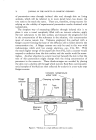
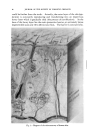
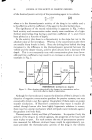
74 JOURNAL OF THE SOCIETY OF COSMETIC CHEMISTS A criticism of this method is that the diffusion must proceed through the full substance of the skin, whereas when the circulation is intact, the penetrating molecules meet the blood at the papillary capillaries and may then be removed from the site. Against this, we know that the penetra- tion of the corium is extremely rapid and its presence may not unduly influence the over-all penetration rate. However, it is possible to examine the effect of the skin circulation directly by perfusing the skin with physio- logical fluid during the course of an experiment. Most regions of the skin obtain their blood supply from a network of cutaneous arteries and veins with numerous anastomoses which connect a particular region to several sources. For perfusion purposes, a self-contained system of capillaries should arise from the branching of a single artery large enough for cannulation, and the venous blood should drain into a single vein. Feldberg and Paton, among others, (4), showed that these conditions are most nearly satisfied in the skin over the roedial aspect of the hind leg in animals. The arterial blood to this region is supplied by branches of the saphenous artery and the venous blood is drained by the accompany- ing veins joining the great saphenous vein. The entire skin flap con- taining this closed circuit can be isolated from the animal and perfused by passing physiological fluid into the cannulated saphenous artery and collecting the perfusate flowing from the great saphenous vein. We have estimated the normal blood flow rate in this region of skin by autoper- fusion. The preparation was taken as far as cannulation of the saphenous vein, leaving the artery intact, and the venous outflow of blood collected over a measured period of time. In the rabbit this flow rate ranged from 0.2-0.4 mi./min. and in pigs weighing approximately 30 kg. the flow rate was about 3 ml./min. Similar rates of flow have been maintained in the experimental perfused skin preparations. The fluid used was Ringer's solution with 20 per cent of horse serum added to prevent oedema. The perfused skin is warmed to 30øC. on a thermosrated plate of perspex which has a central hole through which the cannulated vessels protrude. The arterial cannula is connected to a pressure head of Ringer solution and the effluent from the venous cannula flows directly into a collecting tube. At the start of the perfusion a moderately high pressure of Ringer-- about 80 cm. water---is necessary to clear the residual blood, and light massage of the skin assists this process. When the flow of perfUsate is established, the pressure is reduced to 30-40 cm. water this pressure being adequate to force the less viscous Ringer solution through the skin vascular system. There is no difficulty in identifying the central region of the skin which is being perfused for this becomes very pale immediately after the circulating blood has been washed out. The test substance is applied to this region and sampling of the venous effluent continues until sufficient data has accumulated. The rate of penetration of the skin estimated by

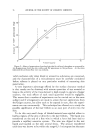
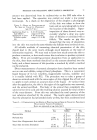
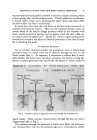
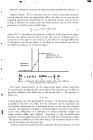
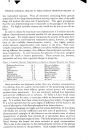
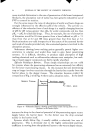
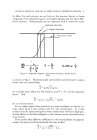
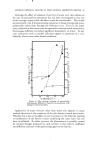
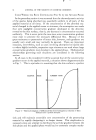
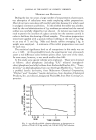
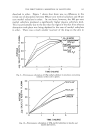
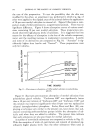
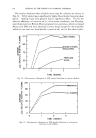
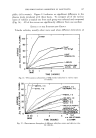
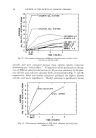
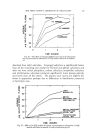
METHODS FOR MEASURING PERCUTANEOUS ABSORPTION 75 this method is sensitive tO changes in perfusion flow rate. When this is reduced the quantity of test substance removed by the perfusate is also reduced conversely raising the flow rate increases the amount removed by the perfusing fluid. Experimental data from perfused skin experiments have confirmed that after applying a substance to the skin surface there is a delay during which penetration is at first very slow and then speeds up to reach a steady value. This is an indication that the delay is associated mainly with the epidermis. The perfused skin preparation offers a method of examining the sig- nificance of measurements of the disappearance of radioactive substances from the skin surface. This is normally done by applying the labeled test substance to the skin, covering the site with a thin window which transmits /3-particles but prevents evaporation, and then setting up a Geiger counter facing the skin. As the substance is absorbed into the skin and cleared away by the circulation the Geiger counter rate falls, and this rate of fall can readily be expressed in terms of the mass of sub- stance entering the skin in unit time. Such observations, however, only tell us that the substance has at least entered the skin. They do not distinguish between molecules which enter the blood and are cleared away, those which escape the skin vascular network and enter subcutaneous tissues, and those which for one reason or another remain in the skin, for example, combined with protein. It is in fact only necessary for Phosphorus 32 atoms to penetrate a millimetre or two into the skin for their radioactivity at the skin surface to be halved by the screening due to the intermediate tissue. The perfused skin preparation has allowed us to study the significance of the disappearance of a test substance fkom the skin surface. The data plotted in these graphs were obtained in a experiment in which radio- active tri-butyl phosphate (TBP) was applied to perfused pig skin. The surface radioactivity of the skin and the activity of the perfusate were measured simultaneously, and during the course of the experiment the perfusion flow rate was varied. There are two striking features of these graphs. First, a variation in perfusion flow rate altered the circulatory clearance of the penetrating TBP in almost exactly the same way as it changed the disappearance rate from the skin surface. Second, the quantity leaving the skin surface was very little different from that entering the skin vessels in a given time. The apparent slightly faster rate of dis- appearance from the skin surface could well have been due to slight loss of radioactivity due to screening by the stratum corneum as the TBP entered the skin. These data with perfused skin seem to be clear evidence of the validity of skin penetration results obtained by studying the disappearance of a radioactive test-substance from the skin surface. This is probably a
Purchased for the exclusive use of nofirst nolast (unknown)
From: SCC Media Library & Resource Center (library.scconline.org)