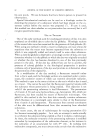
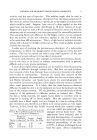
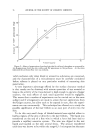
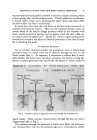
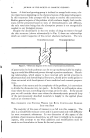
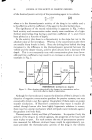
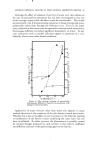
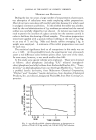
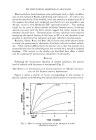
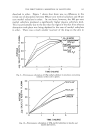
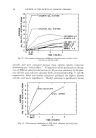
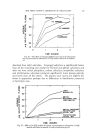
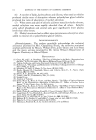
PHYSICAL CHEMICAL ANALYSIS OF PERCUTANEOUS ABSORPTION PROCESS 93 Although the effect of variation of activity of water over skin surface on the rate of percutaneous absorption has not been investigated as yet, one would strongly suspect that the effect would be considerable. This would be particularly true if the penetrating substance is being transported trans- epidermally rather than through the follicular route. Even in the latter case, hydration of the tissues may be expected to cause physical alteration in the passages sufficient to produce significant dependency on water. In any case, substances such as methyl salicylate appear to penetrate at a con- siderably altered rate under humid conditions. m IC- 1336- • ILl 13•- 4 - 2- 0 0 , /-,,07 ! _ I /_ 18o I-- / •o t- / / 1501• I •40 100 I i I 25 50 75 % HUMIDITY Figure &--Plot showing variation of permeability and apparent diffusivity of glyceryl monostearate with change in relative humidity. Application of many solvents other than water also appears to cause marked alteration in the resistance of the skin barrier toward penetration. Whether this is due to the effect of such treatment on the follicular opening or modification of the barrier tissues underlying the outer layer has not been established. In either instance the phenomenon is possibly caused by marked changes produced by such solvents in the activity coefficient and diffusion constant of the penetrating agent in the barrier.

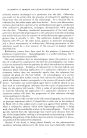
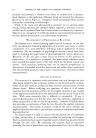
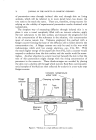
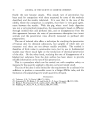
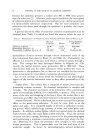
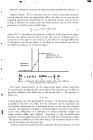
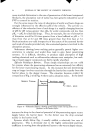
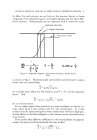
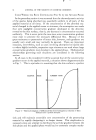
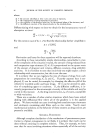
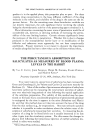
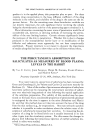
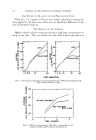
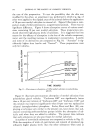
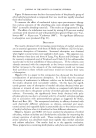
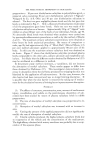
94 JOURNAL OF THE SOCIETY OF COSMETIC CHEMISTS C^sEs WI•ERE TI• R^'r• CO•TROLL•G Swap Is • wI• AppL•E•) Pw^s• In the preceding section it was assumed that the thermodynamic activity of the species being absorbed was essentially uniform in all parts of the applied material at all times. If the concentration of the absorbed ma- terial changed in the applied cream or ointment, the assumption was made that only negligible concentration gradient developed in the direction normal to the skin surface that is, any decrease in concentration occurred uniformly. This is never quite the case since some concentration gradient must exist to promote the necessary diffusional flow. Because of the great resistance to penetration of intact skin, however, such gradients are usually very small and may normally be ignored. There are important instances, nevertheless, such as cases involving absorption by injured skin or where highly insoluble, suspension-type ointments are used where large concentration gradients may develop in the applied phase. Mathematical relationships governing such situations are considered in the following section. In all cases to be considered it will be assumed that all the concentration gradient occurs in the applied material, a situation shown diagrammatically in Fig. 7. This is equivalent to assuming that the skin surface is a perfect RECEPTOR PHASE O 7.--Schematic diagram ooe di•u$iona] •ow from homogeneous so|ution of •nit½ thickness into a pcroe½ct receptor. sink and will maintain essentially zero concentration of the penetrating material by rapidly dissipating it to deeper tissues. This simplication is necessary since any attempt to distribute the activity gradient between the skin phase and the applied phase would lead to extremely complex mathe-
Purchased for the exclusive use of nofirst nolast (unknown)
From: SCC Media Library & Resource Center (library.scconline.org)