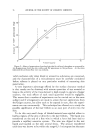
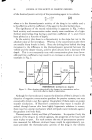
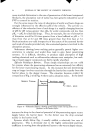
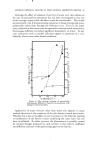
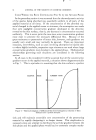
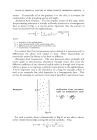
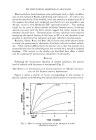
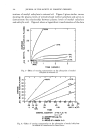
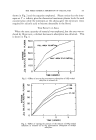
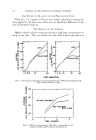
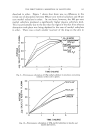
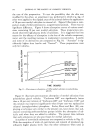
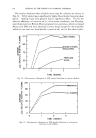
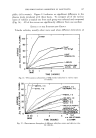
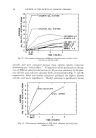
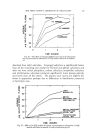
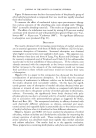
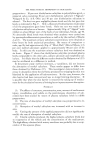
110 JOURNAL OF THE SOCIETY OF COSMETIC CHEMISTS Figure 19 demonstrates the fact that acetylation of the phenolic group of ethyl salicylate produced a compound that was much less rapidly absorbed than ethyl salicylate. To measure the effect of mechanical injury upon percutaneous absorp- tion various amounts of the absorbing area were abraded with "Dragon Skin" (a metallic abrading material). The results are diagrammed in Fig. 20. The effect of a rubefacient was tested by mixing 0.25 per cent methyl nicotinate with mineral oil and with polyethylene glycol (50 per cent "Car- bowax 400" -+- 50 per cent "Carbowax 1500"). No significant differences in absorption were produced (Fig. 21). DISCUSSION The results obtained with increasing concentrations of methyl salicylate are in essential agreement with those of Shelly and Melton (12) for the per- cutaneous absorption of histamine. Increased absorption was obtained when higher concentrations were applied in both cases. The apparent con- flict between these data and those of Lang, Vos, Kunze and Urnberger (13) for mercury compounds and of Strakosch and Clark (14) for sulfonamides may be due to the low solubilities of these substances. If the vehicles were already saturated with the compounds at the lowest concentrations used further increases in the amounts of the medicaments would not increase their activities in these vehicles and hence would not increase their rates of absorption. Higuchi (16) in a paper in this symposium has discussed the theoretical considerations of percutaneous absorption. It is likely that the concept of activity of medicament in different vehicles can be fruitfully applied to the results obtained with nonvolatile vehicles. On this basis the signifi- cantly greater rates of absorption of methyl salicylate obtained when pet- rolatum or mineral oil were used as vehicles as compared with lipids and silicone were due to the greater activity of methyl salicylate in these hydro- carbons. Conversely, the significantly lower levels obtained with poly- ethylene glycols was due to a lowered activity of methyl salicylate perhaps due to association with polyoxyethylene groups as suggested by Stolar, Rossi and Bart (10). The unexpected similarity in efficacy obtained with such chemically different substances as silicone, saturated and unsat- urated animal and vegetable lipids is presumably due to the similar activity of methyl salicylate when it is dissolved in these different substances. Halpern, Gaudin and Stiffel (15) have studied the absorption of methyl salicylate, sodium salicylate and diethylamine salicylate by measuring the urinary excretion of salicylic acid. These workers reported that diethyl- amine sa]icylate was absorbed much more rapidly than methyl salicylate and sodium salicylate. Our results lead us to the opposite conclusion. Three preparations containing diethylamine salicylate were tested on rabbit

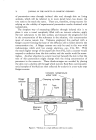
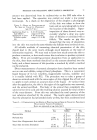
THE PERCUTANEOUS ABSORPTION OF SALICYLATES 111 preparations: 10 per cent diethylamine salicylate in polyethylene gycol, a prepared salve containing 10 per cent diethylamine salicylate ("Algesal," Nyegaard & Co. A/S. Oslo) and 10 per cent diethylamine salicylate in ethanol. The first two gave negligible plasma levels and the last gave low levels as indicated in Fig. 17. Only s-dibenzyl-ethylenediamine disalicylate of all the preparations gave lower levels. Only one test was made of di- ethylamine salicylate on a human. Approximately 30 g. of "Algesal" were rubbed on about 80 per cent of the body of one individual, female, age 46. No detectable blood levels were obtained when analyses were carried out by spectrophotofiuorometric procedures as well as by the method of Brodie et al.(5). The maximum urinary salicylate concentrations were obtained at forty hours by both analytical procedures. By means of comparison a male, age 26, had approximately 30 g. of "Minit-Rub" (Bristol-Myers, 1.76 per cent methyl salicylate) applied to approximately 80 per cent of his body. In this case the maximum urinary salicylate level was obtained at six hours. Figure 17 shows that diethylamine salicylate produced plasma levels comparable to the other salts, sodium salicylate and morpholine sal- icylate. It is likely that the different results obtained by Halpern et al. (15) may be attributed to a difference in method. In the present study methyl nicotinate, a vasodilator, did not increase the absorption of methyl salicylate. These results appear to differ from those obtained by Malkinson (17). This investigator demonstrated a de crease in absorption when the erythema produced by stripping the skin was blanched by the application of hydrocortisone. In this case, however, the skin barrier had been removed and was no longer limiting absorption. It is possible that when the skin barrier is removed the taking up of medica- ment by the circulation becomes a limiting factor in percutaneous absorption. SUMMARY (1) The effects of structure, concentration, area, amount of medicament injury, vasodilation, and vehicle on the percutaneous absorption of sali- cylates have been studied by means of plasma salicylate levels in rabbit preparations. (2) The rate of absorption of methyl salicylate was proportional to its concentration. (3) Absorption of methyl salicylate was increased with an increase in area. (4) Varying the amount of the applied preparation did not significantly modify the rate of absorption of methyl salicylate. ($) Volatile vehicles produced the highest plasma salicylate levels due to evaporation of the vehicle and the concentration of the medicament. The high efficacy obtained with watery emulsions was probably due to evap- t)ration of the aqueous phase.
Purchased for the exclusive use of nofirst nolast (unknown)
From: SCC Media Library & Resource Center (library.scconline.org)