SYSTEMIC TOXICOLOGICAL REACTIONS RESULTING FROM PERCUTANEOUS ABSORPTION By FREi) H. SNYDER* Presented September 23-24, 1959, Seminar, New York City iT Is PROBABLY safe to say that the great majority of cosmetic in- gredients, and all of the commonly used ones, can be used under normal conditions without any hazard, including that of percutaneous toxicity. Actually, the possibility of the latter may seem so remote that one can doubt the necessity for discussing it. However, there are factors suggesting that workers in the field of cosmetic chemistry should be aware of the prob- lems that may confront them. WHY TEST fOR PERCUTANEOUS Tox•crr¾? Tests for percutaneous toxicity must be considered as simply one aspect of the over-all evaluation of safety, which is carried out to determine whether new products are safe for use by the consumer. This point of view applies to traditional materials, and it becomes even more compelling as new types of compounds, especially those of greater biological activity, find a place in cosmetics. Furthermore, legislation that will require specific tests, including those for percutaneous toxicity, may be around the corner. There is an ever-growing trend toward the use of biologically active materials in cosmetic products--materials that will control bacteria on the skin,' or influence metabolism in such ways as to improve the texture or appearance of the skin, or retard perspiration, or control dandruff. Com- pounds having such effects may also affect the organism in other ways, and studies must be undertaken to determine whether toxic reactions--local or systemic, by any "normal" route--can occur. This is not the place to consider the question of when cosmetics become drugs irrespective of the legal aspects, the cosmetic chemist is going to be interested in any products that improve the appearance (or the social acceptability) of the body. Demonstration of safety is bound to assume greater and greater importance in the future, as the variety of materials available for study increases. * Research Division, The Procter and Gamble Co., Cincinnati 39, Ohio. 117

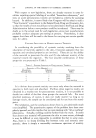
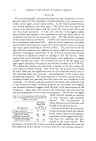
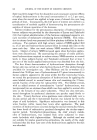
118 JOURNAL OF THE SOCIETY OF COSMETIC CHEMISTS With respect to new legislation, there are already statutes in some lo- calities requiring special labeling of so-called "hazardous substances," and tests on acute percutaneous toxicity are included as criteria for assesSsing hazard. In addition, it seems likely that Congress will be asked to add a "New Cosmetic" amendment to the Federal Food, Drug and Cosmetic Act, so that the results of tests would have to be submitted to the Food and Drug Administration before a new product could be introduced. There may be doubt as to the actual need for such legislation, since most manufacturers probably conduct adequate pre-testing at present. Nonetheless, it does appear that there will be need in the future for carrying out certain specific tests for safety. I•'ACTORS INVOLVED IN PERCUTANEOUS TOXICITY In considering the possibility of systemic toxicity resulting frOl'l'l the absorption of materials applied to the skin, it becomes apparent that two separate and unrelated properties are involved. These are (a) the ability of the material to penetrate the skin and (b) the inherent toxicity of the material toward the organism. The four possible combinations of these properties are presented in Table 1. TABLE 1 FACTORS INVOLVED IN PERCUTANEOUS TOXICITY •---Properties of Test Material .... Absorption Inherent Systemic Through Skin Toxicity Effect -- -- None + -- None -- + None q- q- Toxic reaction It is obvious that systemic toxicity can occur only when the material in question is both toxic and absorbed. Further, when negative results are obtained in a routine test for percutaneous toxicity, it is not possible to decide into which of the first three groups the material falls. For most practical purposes, of course, it does not really matter--so long as no damage occurs, the sample can be considered safe for use from this stand- point. The tabulation, and the conclusions drawn from it, are admittedly much over-simplified. The quantitative aspects of the problem have been com- pletely ignored, and this implies that we were dealing with "all-or-nothing" phenomena. Actually, nothing could be further from the truth. It seems that almost any material will penetrate the skin to some extent, although it may be dimcult or even impossible to establish the fact in some cases. Also, there is no sharp dividing line between toxic and nontoxic com- pounds there is simply a reasonably continuous spectrum of toxicity.
Purchased for the exclusive use of nofirst nolast (unknown)
From: SCC Media Library & Resource Center (library.scconline.org)