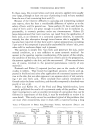
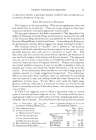
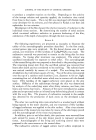
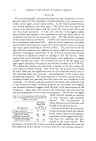
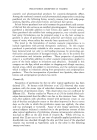
SYSTEMIC TOXICOLOGICAL REACTIONS 121 In these cases, the concentrations and total amounts applied were usually very large, although at least one case of poisoning is said to have resulted from the use of talc containing boric acid (1). Because of the inherent difficulty in assessing and interpreting isolated case reports, there has been a considerable difference of opinion as to the safety of boric acid for general use. Some authors (2) have said that the value of boric acid is not great enough to justify its use in medicine or, presumably, in cosmetic products under any circumstances. Others (3) have demonstrated that toxic reactions can result from the application of boric acid, as an ointment or a saturated aqueous solution, to extensive wounds, but that absorption through intact human skin is negligible. It has also been reported (4) that boric acid in talcum preparations containing 5 per cent of the compound is practically unabsorbed by infants' skin, even when mild to moderate diaper rash is present. The question. is simply this: Can boric acid penetrate the skin, under normal conditions, at a rate sufficient to cause systemic toxicity? An answer to the question requires consideration of the nature of the vehicle, the condition of the skin, the concentration of boric acid in the preparation, the amount applied to the skin, and the area covered. (These same factors are, of course, involved in the potential percutaneous toxicity of any material.) Freimuth and Fisher (5) reported just last year on the results of their studies in rabbits. They found that significant amounts of boric acid ap- peared in the blood and urine after application of a saturated aqueous solu- tion to the skin, but not after exposure to an aqueous slurry of talc contain- ing 5 per cent boric acid. They conclude that calcium metaborate is formed under the latter conditions, and that this compound is absorbed very poorly or not at all. Draize and Kelley (6), of the Food and Drug Administration, have recently published the results of a systematic study of this problem. Since their investigation is such an excellent prototype of a procedure that can be followed in experiments of this kind, it may be worthwhile to review it in some detail. This study cannot be considered typical of the problems that are most often encountered, since it deals with a material having a long TASLg 2--Excr[gTION Or Bor[IC ACID FOLLOWING TOPICAL APPLICATION (DRAIZE AND K•LL•¾ (6)) Concn. of Boric Acid Dose, •Urinary Excretion, mg./kg.--• Preparation (%) mg./kg. Intact Abraded Burnt U.S.P. Crystals 100 4000 0.78 5.62 126.9 Talcum 12.5 500 0.91 1.40 37.2 Talcum 5 200 O. 55 2.09 20.3 Aq. solution 5 200 1.44 7.56 21.4 U.S.P. Ointment 10 400 4.56 3.0 10.5

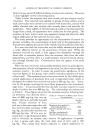
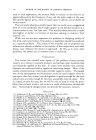
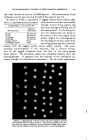
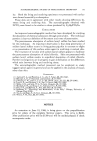
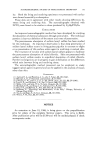
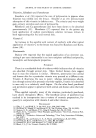
122 JOURNAL OF THE SOCIETY OF COSMETIC CHEMISTS history of use, and with definite evidence of some toxic reactions. However, it does highlight several interesting points. Table 2 shows the materials that were tested, and the amounts used in treatment. The materials were applied to groups of three rabbits, and in each case studies were carried out on animals with intact skin, animals with mildly abraded skin, and animals with severely burnt and partially de- nuded skin. Since rabbits of the latter group could not be maintained for longer than a week, all experiments were carried out for that period. The excretion of boric acid in urine was measured during and after the daily topical application of the materials for four days. The study provides an opportunity for the examination of several im- portant variables: the concentration of boric acid in the preparation, the total amount applied, the nature of the vehicle, and the condition of the skin. It is seen that both the intact skin and the mildly abraded skin provide a rather effective barrier to the penetration of boric acid. While the amounts involved are small, it does appear that absorption through the intact skin is somewhat greater from the ointment than from the other preparations, and that there is a small tendency toward increased absorp- tion through abraded skin. Concentration does not appear to be much of a factor. When the skin was burnt and partially denuded, however, quite appreci- able quantities of boric acid appeared in the urine, but there were no signs of systemic toxicity. In order to assess the quantitative significance of the excretion figures in this group, other rabbits were given graded oral doses of boric acid. The maximum level of excretion shown by the rabbits given topical applications of powdered boric acid corresponded rather closely to the figures for rabbits'that received'oral doses of 200 mg./kg./day. Excre- tion by the groups receiving the more dilute preparations was correspond- ingly lower. It was found further that the daily oral dose required to cause death of rabbits was over 800 mg./kg. The relationships are summarized in Table 3. These figures show that the maximal excretion following topi- cal treatment was observed when a dose of 4000 mg./kg./day was ap- plied to the burnt, partially denuded skin. Urinary excretion of boric acid was in the same range when rab- bits received daily oral doses of 200 mg./kg., and the lethal oral dose was 800 mg./kg./day. If it is now as- sumed that a 3-kg. (6.6-pound) baby TABLE' 3--ToxicITY OF BORIC ACID: INTER- RELATIONSHIPS mg/kg./- day Maximum dose applied to burnt, denuded skin 4000 Oral dose giving same excre- tion 200 Oral dose causing death 800 Normal exposure in use 500 (this is ottviously an extreme case) receives 10 applications of powder a day, 3 grams each time, the total daily dose of boric acid is 500 mg./kg. I'hen, going from human exposure to topical application on
Purchased for the exclusive use of nofirst nolast (unknown)
From: SCC Media Library & Resource Center (library.scconline.org)