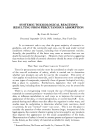
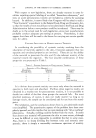
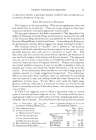
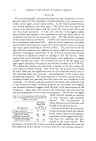
SYSTEMIC TOXICOLOGICAL REACTIONS 125 to determine whether a particular product would be safe, considering con- centration, frequency of use, etc. SOME HYPOTHETICAL PROBLEMS This brings us to the main problem: What are the appropriate tests, and how should they be carried outP There are no pat answers to these ques- tions, but comments on possible approaches may be useful. The principal reference in this field is contained in "The Appraisal of the Safety of Chemicals in Foods, Drugs and Cosmetics," prepared by the staff of the Food and Drug Administration and published by the Association of Food and Drug OFficials of the United States. In describing the 90-day test ['or percutaneous toxicity, Draize suggests the design indicated in Table 5. The "maximal normal" or "baseline" dose is defined as "the maximal amount to which the individual may become exposed in the course of use as per label directions from such use as is customary or usual" (21). This dose must take into account the actual human exposure, the frequency of use, and body weights of the human and the test animal. This approach (i.e., the use of a series of dose levels) is certailaly the preferred one when time is an important factor (a frequent situation). If space and manpower are critical problems, however, it may be possible to gamble a little on possible loss of time, and obtain the needed information a little more eFfi- ciently. In our laboratories, when feasible, we start with a larger group of animals, exposed to a single exaggerated dosage level. If no deleterious effects are seen under these conditions, there is a solid basis for concluding that the material is safe, and nothing would have been learned from the application of lower doses. If toxic effects occur under the highly exag- gerated conditions employed, it is necessary to retreat to lower levels and obtain a reasonable estimate of the safety factor this obviously represents a loss of time. In Table 6 are suggested ways in which a ninety-day study on several types of cosmetic products might be set up. The study would involve a single group of eight to ten rabbits (plus controls), using dosage levels some- thing like those indicated. The safety factors take into account the amount TABLE 5--N•NET¾-DaY TEST for PE.- CUTANEOUS TOXICITY (DE. AIZE (2l)) (1) Three rabbits per group (2) At least four dose levels (a) "Maximal normal" exposure (b) Two times base-line dose (c) Four times base-line dose (d) Eight times base-line dose (3) Daily application to clipped intact skin (4) Ten per cent of body surface TABLE 6--PossIBLE DESION OF TESTS FOR PERCUTANEOUS TOXICITY Dose, Factor Concn., g./kg./ (X nor- % day real use Shampoos 10 2 20-50 "Minor ingred- ient" at 5X normal level 100-250 Antiperspirant 100 0.6 40 Waving lotion 100 1 60-360 Hair dressing 100 2 40-100

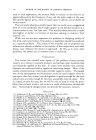
126 JOURNAL OF THE SOCIETY OF COSMETIC CHEMISTS used at each application, the amount likely to remain on the skin for an appreciable period, the frequency of use, and the body weight of the user. The specific figures given, while certainly open to debate, are probably all within reason. The note under shampoos simply means that we would use an exaggerated level of a new compound which might appear in the finished product at a concentration of, say, 1 or 2 per cent. This would include materials to make hair lighter or darker, to increase or decrease sudsing, to improve "hair control," etc. While one can use past experience for guidance in designing studies of this kind, each new product, formulation, or ingredient should be considered as a separate problem. The nature of the material and its proposed use, information already available on the toxicity of the components, and other factors may influence the choice of approach. In this, as in most other problems, the liberal use of common sense is indicated. CONCLUSION This review has coverec• some aspects of the problem of percutaneous toxicity as it relates to cosmetic products and perhaps other materials that are frequently applied to the skin It seems most unlikely that cosmetic chemists are confronted with a regular or continuing danger. Most of the studies of percutaneous toxicity give entirely negative results. The people who do the development and formulation work are much happier when we can report that their newest miracle ingredient is gentle enough for the most delicate skin and safe enough fm the most susceptible internal organ. This is, indeed, usually the case, but we will be wise to keep in mind the possi- bility that systemic toxicity can occur as a result of absorption through the skin Only properly designed tests can provide the necessary answers. REFEKENCES (1) Goldbloom, R. B., and Goldbloom, A., pt. Pediat., 43, 631 (1953). (2) Ducey, J., and Williams, D. B., Ibid., 43, 644 (1953). (3) Pfeiffer, C. C., Hallman, L. F., and Gersh, I., pt. Am. Med. Assoc., 128, 266 (1945). (4) Vignec, A. I•[ and Ell«s, R., Am. pt. Diseases of Children, 88, 72 (1954). (5) Fre«muth, C., and Fisher, R. S., pt. Invest. Dermatol., 30, 83 (1958). (6) Draize, J. H., and Kelley, E. A., Toxicof. Appl. Pharmacol., 1,267 (1959). (7) Bunce, A. H., Parker, F. P., and Lewis, G. T., pt. Am. Med. Assoc., 116, 1515 (1941). (8) Cotter, L. H.,Ibid., 131, 592 (1946). (9) McCord, C. P., Ibid., 131, 776 (1946). (10) Draize, J. H., Alvarez, E., and Woodard, M., Federation Proc., 8, 287 (1949). (11) Kensler, C. J., and Elsner, R. W., pt. Pharmacol. ExptL Therap., 97, 349 (1949). (12) Unpublished data, Research Division, Procter & Gamble Co. (13) Sh½lanski, H. A., and Shelanski, M. V., pt. $oc. Cosmetic Chemists, 4, 277 (1953). (14) Roman, D. P., Barnett, E. H., and Balske, R. J., •?0ap, 34, No. 1, 35 (1958). (15) Baker, W. B., pt. $oc. Cosmetic Chemists, 6, 313 (1955). (16) Lubowe, I. I., Ibid., 6, 19 (1955). (17) Shelanski, H. A., Shelanski, M. V., and Cantor, A., Ibid., 5, 129 (1954). (18) Greenberg, L. A., and Lester, D., "Handbook of Cosmetic Materials," New York, Inter- science Publishers, Inc. (1954), p. 20.
Purchased for the exclusive use of nofirst nolast (unknown)
From: SCC Media Library & Resource Center (library.scconline.org)