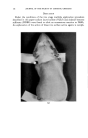
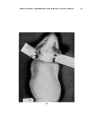
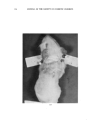
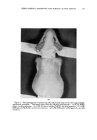
128 JOURNAL OF THE SOCIETY OF COSMETIC CHEMISTS Kvornung and Svendsen (4) to provoke the sensitizing action by NiC12 and K2Cr=O7 in patients allergic to these substances. In human patch tests the authors were able to elicit vesicular reactions with a considerably weaker concentration of the allergen solution if Teepol was present than if an aqueous solution of the allergen alone was applied. Nilzen's work was extended at Edgewater with studies on the action of different surface active agents in eliciting the eczematogenic effect of nickel sulfate. The test employed, a two stage multiple application technique, was more stringent than the one described by Nilzen. The limiting con- centrations of nickel sulfate and surface active agents which caused ec- zematous reactions were investigated. EXPERIMENTAL Young adult female guinea pigs (300-230 g.)*, six per test group, were immobilized on a wooden board by means of tape. This was accomplished by two loops of tape, one around the thoracic region entrapping the fore legs and the other around the lumbar region. The ends of the tape were secured to the board with push tacks. The dorsal areas were clipped and the test solution (1 ml.) applied to a 3" X 3" 6-ply gauze pad in contact with the clipped area. The pads were kept saturated by further additions (0.5 ml.) of the test solution every fifteen minutes over a period of one hour. Rubber dams overlaid the gauze pads to avoid evaporation and chilling. At the end of the test period the animals were returned to their cages. The treatment was repeated daily for a total of ten applications with no treat- ment given during an intervening weekend. This series was followed by a ten to fourteen day interval of no treatment after which three daily chal- lenge applications were applied. Gv. oss S•IN CHANGES Skins were examined twenty-four hours following each application and the following scores employed: O--No evidence of skin irritation. 1--Erythema with or without roughness or scaling. 2--Erythema with slight thickening and crusting, traumatic spots. 3--Erythema with more advanced thickening, crusting, and lesions. 4--Erythema, deep lesions with bleeding. HISTOLOGICAL EXAMINATION Skin specimens were removed one to two days after the last treatment and prepared for histologica1 examination employing two methods: 1. Slides were prepared of skins employing the standard paraffin-imbed- ding technique and staining with hematoxylin and eosin. * Hemlock Hollow Farms, Wayne, N. J.

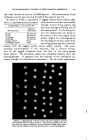
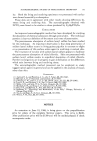
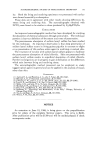
PERCUTANEOUS ABSORPTION AND SURFACE ACTIVE AGENTS 129 '2. Slides were prepared of skins employing a frozen-section technique. The color reagent for nickel is dimethylglyoxime which forms a pink- red complex with the metal. A. Sensitizers NISO4--0.5% and 5.0%. B. Surface Active Agents 1. Anionics o MATERIALS Sodium iauryl sulfate (NaLS)•0.1, 0.2, 0.5 and 1.0%. Sodium dodecyl-(branched) benzene sulfonate (DDBS), 0.2, 0.5 and 1.0%. Sodium acyl (coco) isothionate 1.0%. Sodium acyl (coco) n-methyl taurate 1.0%. Commercial toilet soap 8.0%. Nonionics Lauryl alcohol-ethylene oxide condensate (Atlas Brij 35)--1.0%. Tridecyl alcohol-ethylene oxide condensate (Monsanto's Sterox AJ-100)--l.0%. Cationic Distearyl dimethyl ammonium chloride (Armour's Arquad 2HT)-- 1.0%. RESULTS Irradiation and histological data on the effect of NiSO4 alone, sodium lauryl sulfate (NaLS) alone at different levels and mixtures of NaLS and NiSO4 are given in Table 1. As shown NiSO4 repeatedly applied at levels TABLE 1--INFLUENCE OF SODIUM LAURYL SULFATE ON THE EOZEMATOGENIC ACTION OF NiSO4 REPEATEDLY APPLIED TO TIeE GUINEA Pit SKIN Gross Skin Appearance Skin Reading* After Daily Applications After Two Histological Group Onset of Skin Reading* Repeat Challenge Analysis No. NaLS NiSO4 Irritation After 10Applic. Applications After Challenge 1 1% . 4 applic. 4 2 1% 0 •% 3applic. 4 3 0 0. 5% 6 applic. 3 4 .5% 01•% 4 applic. 4 5 0.2% . 8 applic. 1 6 0 2% 0 }% 7applic. 3 7 0.1% . No irrit. 0 8 0 1% 0 }% 8 applic. l-2 9 ... 0.5% No irrit. 0 10 ... 5.0% No irrit. 0 0 Acanthotic 4 Acanthotic Ni in hairduct, dermis and Malpighian layer 0 Acanthotic 4 Same as (2) 0 SI. acanthotic 3 Same as (2) 0 S1. acanthotic 2 Same as (2) 0 Normal: Ni does not penetrate skin 0 Same as (9) * Skin Readings: 0--No irritation 1--Erythema, roughness 2--Erythema, slight thick- ening, crusting and trauma 3--More advanced stage of (2) 4--Deep lesions and bleeding. of 0.5 and 5.0 per cent alone has no eczematous effect on guinea pig skin and is not absorbed percutaneously. NaLS alone gives rise to primary irritation during the first stage of multiple applications. The irritation
Purchased for the exclusive use of nofirst nolast (unknown)
From: SCC Media Library & Resource Center (library.scconline.org)