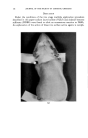
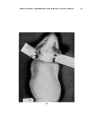
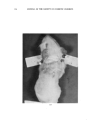
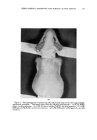
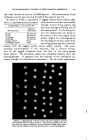
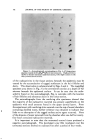
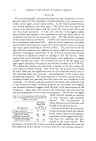
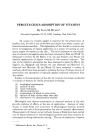
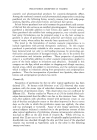
144 JOURNAL OF THE SOCIETY OF COSMETIC CHEMISTS STUDY B The autoradiographic technique developed has been employed to investi- gate the aspects of skin absorption of nickel chloride in the presence of a surface active agent, sodium lauryl sulfate. In the following experiments, two normal laboratory rats were used. The dorsal area was shaven by means of an electrical clipper and the dorsal skin was scored with a pen into four equal quadrants. A 1 per cent solution of nontagged sodium lauryl sulfate was applied to the quadrants on the left dorsal side of the animal for one hour on two consecutive days. The right dorsal quadrants of the animal remained untreated. A rubber dam prevented the surfactant from reaching the right dorsal skin. After the second application of sodium lauryl sulfate, the animal was rinsed with a small volume of water to remove any excess agent remaining on the skin surface. The pretreatment of the skin with this surfactant was sufficient to cause a slight irritation response. However, histological examination of the surfactant-treated skin showed no evidence of epidermal erosion or damage to the skin barrier. After twenty-four hours following the pretreatment, the application of tagged nickel 63 chloride was made. On symmetrical sites of the left upper and right upper quadrants were placed one hundred lambdas each of Ni63C12. The radioactive solution was permitted to remain on the skin surface for sixty minutes without rinsing. After that time, the animal was sacrificed by ethyl ether and the application sites on the surfactant-treated and on the untreated sides were removed. Autoradiographs of the tissues were immediately prepared. The remaining skin on the lower quadrants of the sacrificed animal was removed after four hours and was considered to be nonliving. To the left nonliving quadrant pretreated with surfactant and to the symmetrical right nonliving quadrant not pretreated were applied one hundred lambdas of tagged nickel chloride, in the same manner as the living skin. Again after sixty minutes, the radioactive sites were removed and autoradiographs of the tissues were prepared. The solution of tagged TABLE 2--AuTORADIOGRAPHIC DETERMINA- TION OF THE PERCUTANEOUS ABSORPTION OF NiøaC12 IN TX•E RAT Skin Specimen Absorption Depth (Mi- crons) Rat A Rat B Living, nontreated 25 25 Living, pretreated with so- dium lauryl sulfate 450 400 Nonliving, nontreated 25 25 Nonliving, pretreated with sodium lauryl sulfate 200 225 nickel chloride showed an activity of three thousand eight hundred dps/ml. The concentration of nickel chloride was 0.1 per cent, and the pH of the solution was 6.5. As shown in Table 2, the skin of the living animal pretreated with sodium lauryl sulfate demonstrated greater penetration of the tagged nickel chlo- ride than the nonliving skin pre- treated in the same manner. The penetration of twenty-five micrdns recorded actually signified that only the first epidermal section placed in contact with the x-ray showed radioactiv-

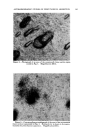
AUTORADIOGRAPHIC STUDIES ON PERCUTANEOUS ABSORPTION 145 ity. Both the living and nonliving specimens not pretreated with surfac- rant showed essentially no absorption. These data are in agreement with other results showing differences be- tween living and nonliving skin. The autoradiographs obtained with Ni6•CI2 were found to be similar to those produced by C•2H25S•O•Na. CONCLUSIONS An improved autoradiographic method has been developed for studying the absorption of chemical substances through animal skin. The technique permits a clear-cut definition of the extent and route of penetration. The percutaneous absorption of sodium lauryl sulfate has been studied by this technique. An important observation is that deep penetration of sodium lauryl sulfate occurs in living guinea pig skin in contrast to slight or no penetration of this surface active agent in nonliving or excised skin. The treatment of rat skin with sodium lauryl sulfate appears to facilitate the percutaneous absorption of nickel chloride. Skin not pretreated with sodium lauryl sulfate results in superficial absorption of nickel chloride. Further investigations are in progress to gain information on the differences which exist between living and nonliving tissue. The autoradiographic method presented can be employed to study tagged topical agents in general and can be applied in the analysis of tissues other than skin. REFERENCES (1) Axelrod, D. J., and Hamilton, J. G., Arm. )e. Pathol., 2•1, 389 (1947). (2) Belanger, L. F., y. Histochem. and Cytochem., 5, 65 (1957). (3) Johnston, G. W., and Lee, C. O., y. Arm. Pharm. Atssoc., $ci. Ed., 32, 278 (1943). (4) Lux, R. E., and Christian, J. E., Arm. y. Physiol., 162, 193 (1950). (5) Miller, O. B., and Selle, W. A., y. Invest. Dermatol., 12, 19 (1949). (6) Mosbach, E. H., and King, C. G., Federation Proc., 9, 208 (1950). (7) Pelc, S. R., and Howard, A., Brit. Med. Bull., 8, 132 (1952). (8) Rothman, S., "Physiology and Biochemistry of the Skin," Chicago, University of Chicago Press (1954). (9) Tas, J., and Feige, Y., y. Invest. Dermatol., 30, 193 (1958). (10) Witten, V. H., Ibid., 26, 437 (1956). NOTICE An extension to June 1.5, 1960, is being given on the prepublication price for orders of the complete Seminar papers. This price is $4.00. After publication price will be $5.00 and will be mailed prepaid if check accompanies order.
Purchased for the exclusive use of nofirst nolast (unknown)
From: SCC Media Library & Resource Center (library.scconline.org)