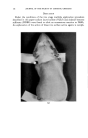
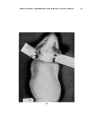
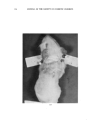
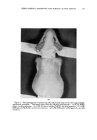
AUTORADIOGRAPHIC STUDIES ON PERCUTANEOUS ABSORPTION 145 ity. Both the living and nonliving specimens not pretreated with surfac- rant showed essentially no absorption. These data are in agreement with other results showing differences be- tween living and nonliving skin. The autoradiographs obtained with Ni6•CI2 were found to be similar to those produced by C•2H25S•O•Na. CONCLUSIONS An improved autoradiographic method has been developed for studying the absorption of chemical substances through animal skin. The technique permits a clear-cut definition of the extent and route of penetration. The percutaneous absorption of sodium lauryl sulfate has been studied by this technique. An important observation is that deep penetration of sodium lauryl sulfate occurs in living guinea pig skin in contrast to slight or no penetration of this surface active agent in nonliving or excised skin. The treatment of rat skin with sodium lauryl sulfate appears to facilitate the percutaneous absorption of nickel chloride. Skin not pretreated with sodium lauryl sulfate results in superficial absorption of nickel chloride. Further investigations are in progress to gain information on the differences which exist between living and nonliving tissue. The autoradiographic method presented can be employed to study tagged topical agents in general and can be applied in the analysis of tissues other than skin. REFERENCES (1) Axelrod, D. J., and Hamilton, J. G., Arm. )e. Pathol., 2•1, 389 (1947). (2) Belanger, L. F., y. Histochem. and Cytochem., 5, 65 (1957). (3) Johnston, G. W., and Lee, C. O., y. Arm. Pharm. Atssoc., $ci. Ed., 32, 278 (1943). (4) Lux, R. E., and Christian, J. E., Arm. y. Physiol., 162, 193 (1950). (5) Miller, O. B., and Selle, W. A., y. Invest. Dermatol., 12, 19 (1949). (6) Mosbach, E. H., and King, C. G., Federation Proc., 9, 208 (1950). (7) Pelc, S. R., and Howard, A., Brit. Med. Bull., 8, 132 (1952). (8) Rothman, S., "Physiology and Biochemistry of the Skin," Chicago, University of Chicago Press (1954). (9) Tas, J., and Feige, Y., y. Invest. Dermatol., 30, 193 (1958). (10) Witten, V. H., Ibid., 26, 437 (1956). NOTICE An extension to June 1.5, 1960, is being given on the prepublication price for orders of the complete Seminar papers. This price is $4.00. After publication price will be $5.00 and will be mailed prepaid if check accompanies order.

PERCUTANEOUS ABSORPTION OF ADRENAL STEROIDS * BY FREr)ERmK D. M^LK•so•* Presented September 23-24t, 1959, Seminar, New York City THE THERAPEUTIC effectiveness of topical hydrocortisone prepara- tions for the treatment of certain inflammatory, chiefly eczematous, dermatoses has been well established (1-4). The recent synthesis of steroids possessing greater anti-inflammatory potency than hydrocortisone has also led to the widespread use of these newer hormones in dermatologic therapy. Impressive treatment results from topical preparations have been observed with prednisone (5), prednisolone (5-7), 6-methyl-predni- solone, and triamcinolone (8). It should be noted, however, that despite the enhanced anti-inflammatory properties of these hormones their topical efficacy is again confined to eczematous eruptions. Following the early successful use of hydrocortisone in ointment and lotion preparations, the initial studies of percutaneous absorption of this compound were largely undertaken for rather practical reasons. In the absence of some knowledge of the quantitative absorption of hydrocortisone through inflamed skin sites, the widespread topical use of this hormone posed the theoretical danger of systemic side-effects from penetration of excessive amounts through the skin. Attempts to study this specific problem, however, subsequently led to far more detailed investigations on the absorption of various steroids through normal and abnormal skin sites, and these in turn opened broad fields of investigation in many other areas. In addition to providing information on the routes of penetration of steroids, variations in the rates of absorption among these compounds, and differences in penetrability of intact and injured skin, these studies are leading to further work on such problems as the metabolism of adrenal steroids by the skin, the relationship of the anti-inflammatory effects of these hormones to the percutaneous absorption of other substances, the promotional effects of these hormones on healing and regeneration of the superficial barrier following controlled iniury to the skin and metabolic alterations of steroids by bacterial enzymes on the skin surface. * Section of Dermatology, Dept. of Medicine, The University of Chicago, Chicago 12, IlL • This study was supported in part by Public Health Grant No. E-1444 (C4). 146
Purchased for the exclusive use of nofirst nolast (unknown)
From: SCC Media Library & Resource Center (library.scconline.org)