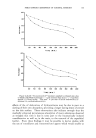
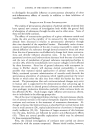
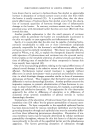
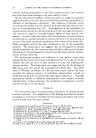
SYSTEMIC TOXICOLOGICAL REACTIONS 123 intact rabbit skin, to application on burnt, denuded skin, and finally to oral administration in the rabbit, it appears that there should be something like a 3000-fold margin of safety between normal usage and lethal dose. And there should be at least a 32-fold margin, even if the baby's skin is considered to be as permeable as that of the burnt rabbit. Even if it is assumed that human skin may be more permeable than rabbit skin in similar condition, there should be no hazard connected with the use of powders containing 5 per cent boric acid. MERCAPTANS Let us turn now to some materials that are clearly cosmetics, and that were new compounds for this use when the toxicological studies were carried out. These are the mercaptans, used as the active agents in permanent waving solutions. The first, and perhaps the only, really serious question concerning the safety of so-called "heatless permanent waving solutions" came from the report of a fatality associated with the use of a solution containing ammo- nium sulfide (7). In the early history of thioglycolate lotions, there were a few reports of toxic symptoms from the use of the cold wave process (8), but the significance of these has been questioned (9). The fact that no such reports have appeared in the literature in the last eight years suggests that a causal relationship may not have existed. In any event, a considerable amount of toxicological study was carried out on thioglycolate and other mercaptans in the period from 1945 to 1949. In the standard percutaneous toxicity test that he developed, Draize and his co-workers (10) found that a daily dose of 4 ml./kg. of 7 per cent ammonium thioglycolate applied to the skin of rabbits caused 61 per cent mortality in the ninety-day period of the test. Symptoms of toxicity developed rapidly, but recovery was prompt and complete following cessation of treatment. Lower doses (0.5-2 ml./kg.) appeared to be essentially nontoxic this is equivalent to the daily application of 25-100 ml. of a waving lotion to the skin (not to the hair) of a 50-kg. individual--a considerable margin of safety. Interestingly, treatment with thioglycerol at the higher dosage level caused no deaths but did give some evidence of pathologic changes in the thyroid glands, an effect not observed with thioglycolate. A similar difference between the effects of these compounds on the thyroids has also been demonstrated for rats by Kenslet and Elsnet (11). Quantitatively, then, how safe are the waving lotions ? The amount used in the customary procedure is about 100 ml. Even with a very small child, weighing 10 kg. (22 lb.), the maximum dosage would be 10 ml./kg. Rela- tively little of this actually gets in contact with the skin, and almost all is rinsed off after no more than an hour. Even if it is assumed that 10 per cent of the amount applied remains on the skin where it can be absorbed,

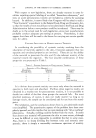
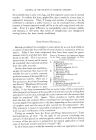
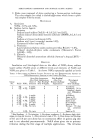
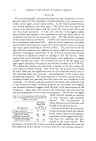
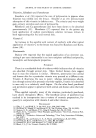
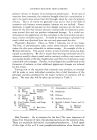
124 JOURNAL OF THE SOCIETY OF COSMETIC CHEMISTS the available dose is only 1 ml./kg., and this exposure occurs once in several months. In rabbits this dose, applied five days a week for ninety days, is apparently innocuous. Then, if dosage and number of exposures can be combined to calculate a safety factor, it can be concluded that a 60-fold increase in human exposure would still be in the safe range found with ani- mals. Even if a great difference in susceptibility exists between rabbits and humans, it still seems that safety of thioglycolate and thioglycerol waving lotions has been clearly established. SOME OTHER MATERIALS Having considered two examples in some detail, let us now look briefly at a variety of materials that could be of some interest in connection with cos- metics. Table 4 lists some compounds that have been tested for percu- taneous toxicity, and that have been found to be safe. This is not an ex- haustive list, of course, and it cannot be concluded that materials omitted from this table are toxic. On the other hand, one can find ex- amples of materials that may not be suitable for use in strictly cosmetic products because of the possibility of percutaneous toxicity. Here are a few quotations, first from Greenberg and Lester's "Handbook of Cosmetic Materials." With respect to acer- TABLE 4--EXAMPLES OF COMPOUNDS FOUND TO BE SAFE FROM STANDPOINT OF PER- CUTANEOUS TOXICITY A. Antibacterials 1. Hexachlorophene (12) 2. Bithionol (13) 3. Trichlorocarbanilide (12, 14) 4. Neomycin (15) B. Surface-active agents 1. Alkylsulfates (12) 2. Alkylbenzene sulfonates (12) 3. Soaps (12) C. Silicones (16) D. Polyvinylpyrrolidone (17) E. Antiperspirants 1. Aluminum hydroxychloride (12) 2. Zirconyl chloride (12) anilide, "it has been recommended that no use be made of this compound in toilet preparations because of the possibility of systemic toxicity arising from absorption from the skin, although this seems remote with the amounts that might be employed" (18). Again: "Since camphor is readily absorbed from the skin, the systemic effects resulting from oral ingestion may occur to some degree from application to the skin, depending on the concentration of camphor used and the area of skin covered by the preparation" (19). This statement is based on reasonable assumptions, but only experimental work can give verification of the conclusion. Taking an example from the Food and Drug Administration's Trade Correspondence, we find: "In the light of our present knowledge any amounts of such glycols as ethylene glycol, carbitol, and diethylene glycol, in excess of five per cent in a preparation for topical application to small areas of the body would constitute a hazard" (20). In all of these cases it would be necessary to carry out appropriate studies
Purchased for the exclusive use of nofirst nolast (unknown)
From: SCC Media Library & Resource Center (library.scconline.org)