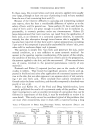
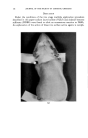
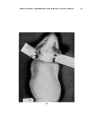
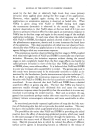
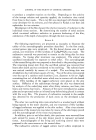
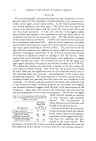
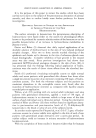
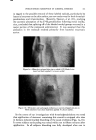
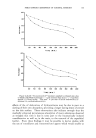
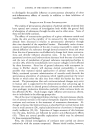
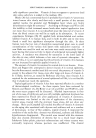
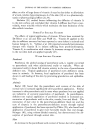
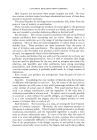
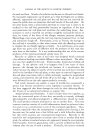
PERCUTANEOUS ABSORPTION OF ADRENAL STEROIDS 153 in regard to the possible removal of these labeled radicals, particularly by bacterial enzymes on the skin surface, are now under way for both 6-rnethyl- prednisolone and triamcinolone. Recently, Spencer, et al. (35), studying the systemic absorption of 6a-C14H3-prednisolone following rectal instilla- tion, concluded that splitting off of the labeled methyl groups occurred in a major portion of the compound administered. It was assumed that this alteration in the. molecule resulted primarily from bacterial enzymatic action. Figure la.--Blanch at stripped skin site to which 0.5% Medrol oint- ment had been applied 11/•. hours earlier. Figure lb.--Persistent and unchanged erythema at control stripped skin site to which ointment base alone had been applied l l/v. hours earlier. In the course of our investigations with 6-methylprednisolone we noted that application of ointment containing this steroid to stripped skin sites in humans induced marked blanching of the usual erythema (Figs. la, lb). In some subjects early paling was noted within ten to fifteen minutes after application. In all subjects blanching was fully developed after one to

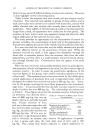
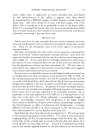
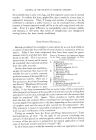
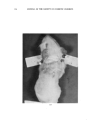
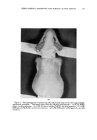
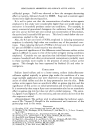
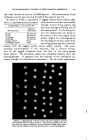
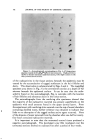
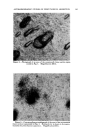
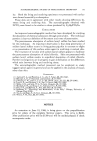
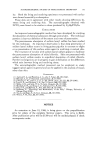
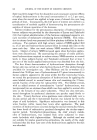
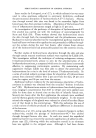
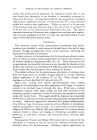
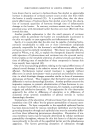
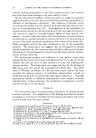
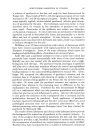
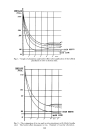
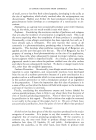
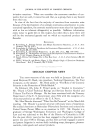
154 JOURNAL OF THE SOCIETY OF COSMETIC CHEMISTS one and a half hours. Wells (36) had found previously that application of hydrocortisone to stripped skin sites induces inhibition of vasodilatation more slowly, with the initial effects appearing four hours later and the maximal blanch occurring at twelve hours. It has been assumed that the absorption of substances through skin denuded of its superficial barrier depends in part on concentration gradients between the skin surface and the corium. For a given compound an initial rapid penetration is followed by subsequent slowing as corium levels rise more rapidly than the substance is "cleared" by the circulation, allowing tissue and skin surface concentrations to come into closer equilibrium. This explanation has been advanced previously for the absorption patterns of testosterone-4-C TM and hydrocortisone-4-C TM through stripped human skin sites (21). Since tissue "clearing" is obviously affected by the degree of vasodilation present, it is not surprising, for example, that capillary dilation pharmacologically induced by absorbed carbon dioxide may signifi- cantly increase the absorption of other gases to which the skin is simul- taneously exposed (37). Consequently, it seemed likely that the pronounced reversal of vasodila- tion observed following application of 6-methylprednisolone to stripped skin sites would to some degree inhibit the absorption of other substances applied to these same areas. A study of this phenomenon was undertaken by the author in collaboration with Kirschenbaum. Previous studies have shown that when testosterone-4-C TM is applied to stripped human skin sites most of the hormone is absorbed within three hours (21). In the present investigation two skin sites were stripped in each subject. A thin layer of 0.5 per cent 6-methylprednisolone ointment* was applied to one skin site ("treated"), while the other site ("control") was covered thinly with the ointment base only. One and one half hours later, after a distinct blanch was observed at the treated site, a thin layer of testosterone-4-C TM ointment was applied to both stripped areas. Imme- diately, and at certain time intervals for a three-hour period thereafter, residual radioactivity levels were measured at the application sites with a gas-flow cell by the technique described previously (21). Although there was appreciable absorption of testosterone-4-C TM from both the treated and control areas, residual radioactivity levels were con- sistently higher (i.e., absorption lower) at the treated sites. Furthermore, at the end of the experimental period residual radioactivity levels were 50 per cent higher at the sites to which 6-methylprednisolone had been previously applied (Figs. 2a and 2b). The demonstrable effectiveness of 6-methylprednisolone in decreasing the absorption of testosterone-4-C TM reflects a strong inhibition of vasodila- tation. It suggests, too, that the more potent topical anti-inflammatory * Medrol© ointment was kindly supplied by the Upjohn Co., Kalamazoo, Mich.
Purchased for the exclusive use of nofirst nolast (unknown)
From: SCC Media Library & Resource Center (library.scconline.org)