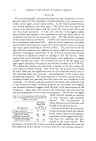
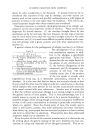
CUTANEOUS REACTIONS FROM COSMETICS 171 about by other mechanisms to be discussed. It should, however, be re- membered that reactions of this type do develop and with certain cos- roetics, such as hair wavers and possibly antiperspirants, a mild degree of primary irritation is the rule rather than the exception. This will be dis- cussed at greater length when these cosmetics are considered. Cutaneous reactions to cosmetics developing because of an allergic sen- sitization are the most important variety of reaction. These are the most important for several reasons: (1) the reactions brought about by this mechanism are by far and away the most frequent, (2) this type of reaction may be much more severe than the reactions brought about by the other mechanisms, and (3) it is much more difficult to predict whether such a reac- tion will develop with a given cosmetic and with what approximate fre- quency (2). A general scheme for the pathogenesis of allergic reactions is as follows: Task• 2 Cr•'Ae • k= S the genetic make-up of the host the intrinsic allergenicity of the com- pound adventitious factors which may influ- ence the sensitizability of the host at that time quantitative factors some theoretical level which the product of G/.A• must reach in order for a sensi- tization to be detectable clinically detectable sensitivity The development of an eczema- tous sensitization requires, in addi- tion to the allergen, a genetically appropriate individual. Table 2 in- dicates that the two major factors in the genesis of any sensitization are (1) the intrinsic allergenicity of the compound, and (2) the genetic con- stitution of the host. The rela- tionship states that if the product of the two equals or exceeds some hypothetical level, say, k, a detectable sensitization, denoted by S, develops. It is also seen that the two factors are inversely related, so that if one is small the other must be large in order for a sensitization to develop, which explains why most persons do not become eczematously sensitized from causal contact with most substances. Another way of stating this is that the ordinary eczematous allergen is not strong enough to overcome the genetic inertia of most people. This is loose phraseology, but it is merely meant to convey an idea and not to be a precise formulation. A powerful allergen will be strong enough to overcome any genetic indifference so that it will cause a sensitization to develop in practically everybody to whom it is applied. From the clinical point of view, this merely asserts what is well known, namely, that some substances are better sensitizers than others, e.g., more people become sensitized to poison ivy than to nickel, and more to nickel than to aluminum. These points have been elaborated at greater length by me elsewhere (3). From the point of view of the cosmetic manufacturer, it is obvious he can do nothing about the genetic makeup of the user therefore, he must con- centrate on using only materials of low allergenic potential. This on oc-

172 JOURNAL OF THE SOCIETY OF COSMETIC CHEMISTS caslon may pose a problem in that the very property which makes a sub- stance desirable from the point of view of the cosmetic chemist may be indissolubly linked to a property which makes it potentially allergenic. Allergic reactions are of two general types, namely, the immediate and the delayed but in the case of cosmetics, reactions of the immediate type are sufficiently uncommon so that they will not be further considered in this paper. The delayed type of allergic reaction in general is broken down into two varieties, namely bacterial and eczematous, but there is' no essential immunologic difference between the two varieties and, from the point of view of cosmetics, only the eczematous variety need be taken up. Considering the eczematous variety, details with respect to its immu- nology will not be gone into (4) but a very brief discussion of the nature of the allergen is appropriate. In general, eczematous sensitizations are brought about by simple chemicals that have the property of insinuating themselves onto the surface of a protein'molecule without markedly derang- ing the internal configuration of the protein. Examples of such are paranitrosodimethylaniline and paraphenylenediamine. It is believed that, by virtue of the simple chemical insinuating itself onto the surface of the protein molecule, the stereochemical configuration of the protein is suffi- ciently altered so that the body treats it as an alien substance and initiates the changes which culminate in a sensitivity to the chemical in question. For reasons that are not clear, if the simple chemical reacts too violently with the protein molecule, the changes which are ultimately recognized as a sensitization do not develop. The interaction between sulfuric acid and the skin is an example of such. The explanations which have been given are oversimplifications of the imperfect knowledge concerning com- plicated biological phenomena. Despite the lack of complete information, the essential germ of the previous statement, namely that in order to de- velop an eczematous sensitization the simple chemical must unite in some fashion with a body constituent, is reasonably well documented. This then means that, with increasing knowledge, one should be able to predict [reasonably well] as to whether a simple chemical is likely to cause a sensiti- zation. However, as was already pointed out, the situation is complicated by the genetic aspects. Chemistry will no doubt provide means to predict the strong sensitizers, i.e. ones that are likely to cause a sensitization in a great number of people but it is dubious that in the foreseeable future it will be possible to foretell the occasional individual who, for reasons that are quite obscure, becomes sensitized to some substance to which most of his fellowmen are indifferent. The morphological expression of an allergic eczematous reaction is the same as that described under the primary irritant eczematous reaction. Indeed, on the basis of inspection, it may be, and often is, impossible to state as to whether the reaction in question was brought about because of a
Purchased for the exclusive use of nofirst nolast (unknown)
From: SCC Media Library & Resource Center (library.scconline.org)