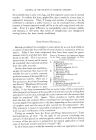
CUTANEOUS REACTIONS FROM COSMETICS 173 primary irritant or because of an eczematous sensitization. In the case of reactions from cosmetics, the irritation brought about by a sensitization is apt to be much more severe than that brought about by way of a primary irritant. This is of course not generally true, and is true in the field of cosmetics only because severe primary irritants are not utilized. Paren- thetically, it might be pointed out that allergic reactions are the best evi- dence for the fact that minute amounts of practically all substances pene- trate normal skin and can produce widespread damage. In a nickel sen- sitive person the application of a five-cent piece to the normal skin may pro- duce a severe vesicular reaction. It would be interesting to calculate how much nickel was dissolved from the coin and penetrated the skin. Pigmentary Reactions. These, as Table 1 indicates, are of two types. The first, or photodynamic type, comes about because some substance makes the skin more vulnerable to radiant energy. An example of this is Betlock dermatitis. The second variety, in lieu of a better name, has been termed accumulative. By this is meant that the long continued use of a substance, usually a heavy metal such as mercury or silver, may cause it to accumulate locally at the site of application and there, by its presence, cause undesirable color changes. Further, its local deposition usually leads to the formation of melanin, so that additional pigmentary changes are induced by this means. Turning now to the reactions that cosmetics may produce, no attempt will be made to cover individual cosmetics, but a brief discdssion of the principal reactions produced by the major varieties of cosmetics will be given. The ones that will be taken up are listed in Table 3. TABLE 3•VARIETIES OF COSMETICS I. Hair Cosmetics VI. Antiperspirants and Deodorants A. Dyes C. Straighteners B. Wavers D. Lacquers VII. Depilatories E. Bleaches II. Eye Cosmetics VIII. Perfumes A. Dyes C. Washes B. Shadow D. Mascara IX. Sunburn Preventives E. Pencil III. Face Powders, Creams, and Rouge X. Specially Labeled Creams and Lo- IV. Lipsticks nons V. Nail Cosmetics A. Neck C. Hormone A. Polish B. Base Coats B. Hand D. Wrinkle C. Removers E. Moisture Hair Cosmetics. [As to cosmetics for the hair] The most important of these, from the point of view of producing reactions are the oxidative dyes. These are essentially derivatives of paraphenylenediamine. I shall speak of this type of dye as if it were paraphenylenediamine alone because the

174 JOURNAL OF THE SOCIETY OF COSMETIC CHEMISTS remarks apply to all the derivatives of this compound. Such dyes, as is well known, can be various modifications of the radical and by suitable formulation, produce a wide range of natural-appearing colors. Unfor- tunately, by virtue of the fact that the dye enters into some sort of union with keratin, which is the reason it produces natural and long-lasting colors, it fulfills the requisites for a good eczematous allergen when such a com- bination with keratin is produced in the scalp. That portion of the dye that has combined with the free portion of the hair presumably is devoid of allergenic potentiality. Obviously, then, one method of improving the safety of such products is to improve the technique of application so that none of the material gets onto the scalp proper, or to insure that the por- tion that gets onto the scalp is immediately neutralized or removed. Formerly, oxidative dyes had distinct toxic potentialities in addition to being potent sensitizers. The topic aspects of these dyes have largely been removed by (1) improved techniques for the manufacture of paraphenyl- enediamine, so that a pure product is delivered to the cosmetic chemist, and (2) improved techniques for the oxidation of paraphenylenediamine. This is important as paraphenylenediamine is not the actual dye but some de- rivative formed in its oxidative degradation and presumably it is the same product or a closely related one that is the sensitizing compound. Other types of hair dyes have far fewer potentialities with respect to allergic sensitization. True henna never, or practically never, causes a dermatitis. 'The progressive type dyes containing lead or bismuth do not sensitize. There always has been some lingering doubts about the safety of the long-continued use of lead-containing hair dyes but as far as I know, there is no proved instance of lead poisoning developing from such a source. The newer dyes, such as various FDC colors, which have become increas- ingly popular in rinses and tinted shampoos, are believed to be reasonably safe but, as with all new products, time alone will provide the final answer. Hair wavers, which are primarily thioglycolates or other mercaptans, produce their effect by attacking keratin, opening up a disulfide bond. Such products can then obviously affect the keratin of the scalp and if al- lowed to act over a sufficient time would produce some degree of irritation but under proper conditions of use no serious dermatoses have been en- countered from the use of these agents. More trouble has been had by the operators, whose hands may become inflamed from continued contact with this material. Hair straighteners, when consisting merely of petrolatums and waxes, are rather inert and innocuous from the point of view of toxicity or sen- sitization. Those which contain rather high concentrations of alkali, such as potassium hydroxide, are potentially quite irritating and severe burns have been reported from their use. Such a reaction would be an example of a primary irritant dermatitis.
Purchased for the exclusive use of nofirst nolast (unknown)
From: SCC Media Library & Resource Center (library.scconline.org)