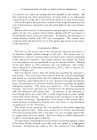
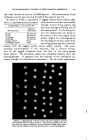
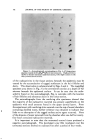
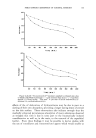
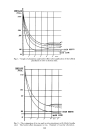
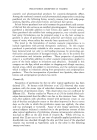
PERCUTANEOUS ABSORPTION OF ADRENAL STEROIDS 155 I00' 80- I-- 60' z ,., 40' 20' I00 80 ÷ 604 z •' 40 • i i i i i i [ i i i ZO 40 60 80 100 120 140 160 180 200 TIME (MIN.) i i . i i i i i i . 20 40 60 80 I O0 120 140 160 180 200 TIME (MIN.) Figure 2a & 2b.---Testosterone-4-C TM ointments applied to stripped skin sites to which 0.5% Medrol ointment (- - -) and ointment base alone (----) had been applied ll/•. hours earlier. "Per cent" = per cent of initial radioactivity re- maining (i.e., residual radioactivity). effects of the A• derivatives of hydrocortisone may be due in part to a slowing of their own absorption, providing a longer lasting depot of steroid on the skin surface. These observations also indicate strongly that the markedly enhanced percutaneous absorption of many substances observed at stripped skin sites is due in some part to the traumatically induced vasodilatation as well as, in the main, to the removal of the superficial barrier. From these findings it may be possible to devise studies with the use of vasodilator and vasoconstrictor agents which would enable us

156 JOURNAL OF THE SOCIETY OF COSMETIC CHEMISTS to distinguish the possible influence on percutaneous absorption of other anti-inflammatory effects of steroids in addition to their inhibition of vasodilatation. SUBJECTS FOR FUTURE INVESTIGATION The studies of percutaneous absorption of adrenal steroids reviewed here have opened new avenues of investigation both within the general field of absorption of substances through the skin and in other areas. Some of these will be briefly outlined. The effects of concentration gradients of a given substance outside and inside the skin and the rapidity of its removal by the ciruclation have already been discussed in relation to percutaneous absorption through skin sites denuded of the superficial barrier. Particularly under circum- stances of rapid penetration of the skin it seems reasonable to expect that altered diffusion of a substance through dermal connective tissue and away from the site of penetration could effectively change local tissue concentra- tions and directly influence absorption rates. It has been shown that parenteral cortisone and hydrocortisone decrease both the rate of synthesis and the rate of metabolism of ground substance mucopolysaccharides in rat skin (38), while the metabolically inert mature collagen is little affected by these hormones. Since loss of ground substance with consequent in- crease in fibrillar density will decrease derreal permeability, it seems possible that repeated topical applications of adrenal steroids or, more likely, continued systemic administration of steroids could diminish the percutaneous absorption of substances which rapidly penetrate the intact barrier or which enter the skin sites from which the barrier has been re- moved. The presumption that such cortisone-induced changes may occur in human skin is supported by the demonstration that advancing age in humans also results in altered ground substance synthesis and metabolism since androgen production diminishes markedly while cortisone levels are less affected (39, 40). Such changes might influence percutaneous absorp- tion in individuals in the older age groups also. One of the most intriguing problems relating to the percutaneous absorp- tion of adrenal steroids is the topical therapeutic disparity between hydro- cortisone and cortisone in the treatment of eczematous dermatoses. Al- though cortisone, like hydrocortisone, is absorbed from normal human skin sites in small amounts (29), topical administration of cortisone is therapeu- tically ineffective (23, 24). Injections of larger amounts of this hormone into the skin, however, are followed by potent anti-inflammatory effects (41). There are several possible explanations which may be advanced for these unexpected findings. First, the clinical investigations of cortisone were carried out almost exclusively with the acetate compound. Recent initial studies, however,
Purchased for the exclusive use of nofirst nolast (unknown)
From: SCC Media Library & Resource Center (library.scconline.org)