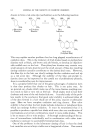
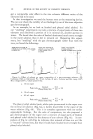
162 JOURNAL OF THE SOCIETY OF COSMETIC CHEMISTS staining on the skin. Used in high concentration, the intermediate tends to partially redissolve the old dye so that both new and old dye redistribute around the fiber. Most important, with mild reducing agents like sulfoxy- late, the dye can be reduced to a soluble form and washed out if necessary. Thus the oxidation dyes have become the preferred for most permanent hair dyeing. There is one final class of color product, quite common in the textile field for producing complicated patterns on a fabric, that has appeared on the cosmetic market to a limited extent. The color actually is a pigment rather than a dye, and it is printed onto fabrics in a resin vehicle. The pigment is limited to the surface of the fiber, and, therefore, its permanence depends entirely on the tenacity of the resin vehicle for the fiber. Since great strides have been made in recent years making new resins for hair sprays, it is not surprising that there already has appeared on the market some activity in this field of resin bonding of pigments to hair. With all the restrictions to using dyes on humans, it may seem a wonder that hair dyes are used at all and so effectively. The increase in the market and in satisfaction on the part of the consumer is a tribute to the technical advances that have been introduced in recent years. REFERENCES (1) Ooldemberg, R. L., Drug & Cosmeticf•d., 85, 618 (1959). (2) Goldemberg, R. L., 5 t. Soc. Cosmetic Chemists, 10, 291 (1959). (3) Wilmsmann, H., •im. Perfumer•iromat., 75, No. 5, 41 (1960). (4) Howitt, F. O.,•. Textile grist., 51, P120 (1960). (5) Kass, G. S., 5 t. Soc. Cosmetic Chemists, 12, 146 (196l). (6) Kass, G. S., •Im. Perfumer•iromat., 68, No. 1, 25, No. 2, 34, No. 3, 47 (1956). (7) Millson, H. E., and Turl, L. H., •im. DyestuffReptr., 39, 647 (1950). (8) Lindberg, Joel, Textile Research •., 20, 381 (1950) Ibid., 23, 67-76, 573-584 (1953). (9) Underwood, D. L., "Sorption and Diffusion in Human Hair," Ph.D, Thesis, Princeton University, Textile Research Institute, Princeton, N.J. (1954). (10) Speakman, J. B., and McMahon, P. R., New Zealand]. Sci. Technol., 20, No. 5B, March. 248-264 (1939) 21, No. lB, July, 31-46 (1939) 22, No. 5B, March, 235-264 (1941),

SOME TOXICOLOGIC AND CLINICAL INVESTIGATIVE STUDIES WITH DIHYDROXYACETONE By LEON GOLDMAN, M.D.* Presenter/November 29,/960, New York City I• THE constantly changing superficial pattern of the practice, not the principles of cosmetology, it would appear that now this subject of dihy- droxyacetone (9) is of little interest except in courts of law. We, in derma- tology, knew nothing about this fascinating compound when it was intro- duced for consumer use and abuse. Still, we know too little about it and have some concern about this lack of knowledge if dihydroxyacetone is to be continued to be used extensively by the cosmetic industry. When we say we know so little about this, you must remember that some of our research group in Cincinnati have had some four years of experience with dihydroxyacetone, including observations of its coloring effects (1). Some of you may know also that our cooperative work was started more than a year ago, chiefly in response to demands by physicians for informa- tion on dihydroxyacetone. I set up a cooperative study with the Children's Hospital Research Group, who had worked long with dihydroxyacetone, the Bureau of Occupational Dermatoses of the Public Health Service in Cincinnati, the Kettering Laboratory and our Department of Dermatology. We are still trying to learn more about dihydroxyacetone. I am sure that what we do, incidentally, without any budget, in a very cumbersome, tedious institutional type of fashion is done rapidly and efficiently in your own research groups. Each day new avenues of work arise to complicate an already complicated situation. Actually, your pessimism about the color deficiency of dihydroxyacetone is not warranted unless you have, by now, exhausted all possible studies in the mechanism of the development of the dihydroxyacetone color complex. However, as you know from the work of Wittgenstein and her collab- orators at the Children's Hospital and from the previous work with the sugars in relation with the amino acids, it is obvious that the amino acids, especially with the guanido group and especially with arginine and glycine that the majority of this color complex reaction occurs. In the test tube, * Dept. of Dermatology, College of Medicine, University of Cincinnati. 163
Purchased for the exclusive use of nofirst nolast (unknown)
From: SCC Media Library & Resource Center (library.scconline.org)