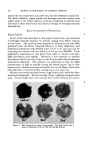
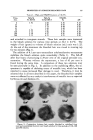
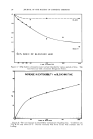
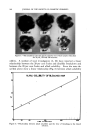
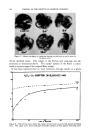
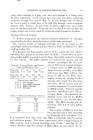
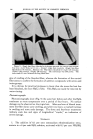
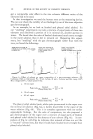
166 JOURNAL OF THE SOCIETY OF COSMETIC CHEMISTS ß Another phase of the study of the color complex has been repeated ob- servations of changing color of crystals of dihydroxyacetone exposed to air or ammonia. Dihydroxyacetone in a desiccator or in an atmosphere of pure oxygen has not been observed to change color over a period of six months. To study the color change in dihydroxyacetone, thin layers of dihydroxyacetone in alcohol were spread over porcelain or glass. Studies of changes in size and shape of crystals were observed 'under regular, pol- arizing and fluorescent microscope. Infrared absorption studies for us by Brewer (8) showed no quinone structure at any time in the development of the yellowish crystalline mass. Chemical studies of the structural and color changes in crystals are being continued by Wittgenstein and her associates. After exposure to air for three months, the yellowish crystalline masses were dissolved in water and showed coloring of the skin. Crystals ex- posed to air for six months showed only faint coloring of the skin. It is obvious that there is definite need to be able to control better the development of the color--to secure a color less yellow and more natural as sun tanning. Much has been done in this phase but little has been said publicly. In all probability, there is much more speculative material than factual results. It seems to us that the following types of color studies need to be considered: 1. To continue to use higher concentrations of dihydroxyacetone 2. To add colorants 3. To add tannins 4. To attempt to increase melanin production 5. To develop more effective analogues of dihydroxyacetone I am certain that your group will be able to solve this colorant problem. However, it is difficult to work on this in an orderly fashion without any more information on the basic mechanism of the development of the di- hydroxyacetone color complex. Again we plead, monotonously, for con- tinued interest and support for basic research in this field. In brief, then, there is a maximum color response to local application of dihydroxyacetone whether you use a single application of high concentration or repeated applications of weaker concentrations. A whole series of studies with various dyes and dye complexes in solutions of dihydroxyacetone did not produce constant or lasting color. There was no interference with the action of the dihydroxyacetone. Research in this field continues. Black walnut juice extract was used as an example of a tannin. Here, too, even with concentrated and standardized extracts, the color was often not superior and did not persist and was removed easily. Experiments with the development of analogues to complex more amino acids, increase melanin production without irritant or sensitizing reactions are continuing with some interesting although preliminary results. Studies with hair dyeing mixtures are also continuing.

TOXICOLOGIC AND CLINICAL INVESTIGATIVE STUDIES 167 One phase of our continuing study is, of course, toxicity of dihydroxy- acetone. We have no evidence that even in high concentrations that this compound is a primary irritant or even a sensitizing agent to the skin. However, after continued local use, under skih microscopy we have ob- served some dryness and scaling of the colored skin. Clinically, this is not significant. The cases of contact dermatitis which we have collected from all over the country seem to be related to the vehicles used in com- mercial preparations. Next, in order, we have no information as to its local effect on the carbo- hydrate metabolism of the skin. This we are studying with histochemical preparations of the skin and with chemical determinations. What about the absorption of dihydroxyacetone? Recent studies we have done with Guest and Wittgenstein of the Children's Hospital Group, indicate that dihydroxyacetone may be found in the blood after local ap- plication may be associated at times with significant elevations of blood sugar. These studies are being reported elsewhere. From the study of animal toxicity where the dihydroxyacetone may be as much as 10 per cent of the diet, it is obvious that chronic toxicity changes are observed. These are reported elsewhere. At present, we are doing feeding experiments in man with 18 grams, three times a day, over periods of two to three weeks. We are also studying the effect of dihydroxyacetone in the development of cataracts in animals. So, it is obvious that our toxicologic data at present are completely incomplete. These studies both of initial, acute and chronic toxicologic data must be continued es- pecially in man, and we emphasize man, if dihydroxyacetone is to be a standard agent in modern cosmetic practice. So, you see, there is much to be done besides additional advertising campaigns. Even if the fad fades or is given just to children to color their dolls, we shall continue to study it to attempt to develop better color, to understand its absorption and its effect on local and systematic carbo- hydrate metabolism and its effect on various enzyme systems. REFERENCES (1) Goldman, Leon, Barkoff, Joel, Blaney, Donald, Nakai, Takashi, and Suskind, Raymond, •7. Invest. Dermatoi, 35, 161 (1960). (2) Wittgenstein, Eva, and Berry, Helen K., Science 132, 894 (1960). (2a) Wittgenstein, Eva, and Berry, Helen K., "Reaction of Dihydroxyacetone (DHA) with Human Skin Callus and Amino Compounds," in press. (3) Blau, Saul, Kanof, Norman, B., and Simonson, Louis, At.M. At. Atrch.' Dermatol., 82, 69 (1960). (4) Maibach, Howard I., and Kligman, Albert M., Ibid., 82, 73 (1960). (5) Goldman, Leon, Blaney, Donald, and Goldman, John, "Topical Therapy with Dihydroxy- acetone," in press. (6) Bandelin, Fred J., personal communication. (7) Goldman, Leon, At.M.d. Atrch. Dermatol., 75, 345 (1957). (8) Goldman, Leon, Wittgenstein, Eva, Blaney, Donald, Goldman, John, and Sawyer, Faye, "Studies of Some Physical Properties of the Dihydroxyaceton½ Color Complex," in press. (9) Dihydroxyacetone furnished by Wallerstein & Co.
Purchased for the exclusive use of nofirst nolast (unknown)
From: SCC Media Library & Resource Center (library.scconline.org)