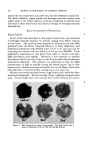
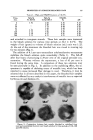
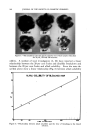
170 JOURNAL OF THE SOCIETY OF COSMETIC CHEMISTS due to some kind of attraction or association between odorant and fixa- tive. Pickthall (2) has shown that the hypothesis that fixation is due to dilution only cannot account for some facts familiar to every perfumer, and that it is reasonable to assume some degree of molecular association. If this is so, it follows that the chemical structure of the substances in- volved is important and that the action of a given fixative should be more or less selective. In general, molecular association and hence fixative action would tend to be more pronounced when the odorants and fixatives are closely related chemically than in cases where the two have widely different structures. This would mean that in the case of a complex per- fume mixture we can, by the proper selection of fixatives, control to some extent which components will be most pronounced in the end note (i.e., the odor of the perfume in its final stages of evaporation). Let us add to this the observation that a fixative, by lowering the rate of evaporation, not only strengthens the odor of the fixed odorants in the final evaporation stages, but that it also weakens it in the earlier stages. We are then forced to conclude that if molecular association and electro- static attraction really play an important role, the choice of a fixative affects the odor balance of the perfume throughout its evaporation. Since all this has not only theoretical, but also far-reaching practical importance, it certainly seems worthwhile to study the action of fixatives more closely by means of experiments. EXPERIMENTS ON FIXATION The most straight-forward way of studying the action of a fixative would be to make a dilution of some perfume material, add a fixative to a portion of this, let the solutions both with and without fixative evaporate, and ob- serve in which one the odor of the perfume material remains noticeable for the longest time. Anyone who has ever taken a perfume blotter and tried to indicate the moment at which the odor of the material on it ceases to be perceptible realizes that this is a difficult and poorly reproducible determination. Two perfume blotters dipped simultaneously into the same solution usually do not lose their odor at exactly the same rate. It is hard for any in- vestigator to reproduce his end point, since much depends on the degree of freshness or fatigue of the nose. If several persons participate in this test, you find that it is nearly impossible to reach any close agreement. For this reason we tried to find an experimental approach that is less sub- jective and more reproducible and reliable. The general plan of our experiments was as follows: We took two odorants that differed in one or more of the structural features thought to play a role in electrostatic attraction (e.g., an aliphatic and an aromatic alcohol, or an aliphatic ester and an aliphatic alcohol).

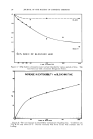
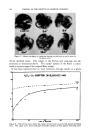
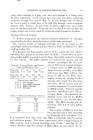
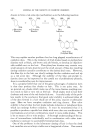
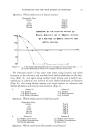
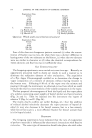
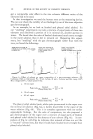
EVAPORATION AND THE ODOR QUALITY OF PERFUMES 171 We prepared two mixtures: one containing the two odorants plus a fixa- tive closely corresponding to one of the odorants in its critical features (e.g., in the second example, a high molecular weight aliphatic ester) the other mixture in exactly the same proportions by weight contains the same two odorants plus a fixative corresponding closely to the other odorant. If fixative action depends on attractive forces and hence on similarities in chemical structure, we would expect that in each of these mixtures that odorant would linger longest which has a structure most similar to that of the fixative. In each of the two mixtures under consideration, therefore, a different odorant would remain at the end. Whether this actually occurs or not can be ascertained quite easily by simple odor tests. A smelling blotter is dipped in each of the two mixtures and the two blotters (marked with code numbers or letters) are presented to members of the test panel. They are told which odorants are contained in the mixture (but nothing is said about their concentration or about any fixatives present). If the tester is not very familiar with the odor of one or both of the odorants involved, he may be shown these in suitable dilu- tions. The question asked is this: "Which of the two blotters smells more of ..... ?," naming one of the components of the mixture. Note that in this arrangement the members of the smelling panel are not asked to make decisions about subtle differences in odor strength or to indicate the point at which an odor becomes imperceptible but only to indicate differences in odor quality. Experience has shown that this is much easier and more reproducible. FIXATION--SMELLING EXPEP. IMENTS The following are some examples of the results obtained in our tests. 1. Solution M Solution N 1 g. Nonyl alcohol 1 g. Nonyl alcohol 1 g. Nonyl acetate 1 g. Nonyl acetate 8 g. Octylene glycol 8 g. Diethyl sebacate 5 mi. Ethyl alcohol* 5 ml. Ethyl alcohol* The question, "Which of these blotters smells more like nonyl acetate ?," was posed to a panel of 6-7 persons at various stages of evaporation. The answers were (cf. Fig. 1): Evaporation time, minutes Results 2-10 86% M 3545 100% M 60-70 100% M 200-205 58% N 280-285 86% N 320-330 100% N * The ethyl alcohol was added solely for the purpose of equalizing the viscosities of the two solutions.
Purchased for the exclusive use of nofirst nolast (unknown)
From: SCC Media Library & Resource Center (library.scconline.org)