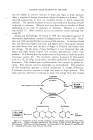
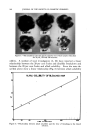
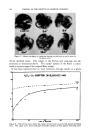
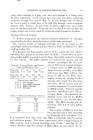
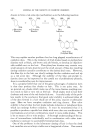
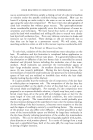
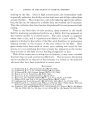
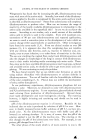
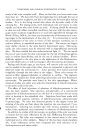
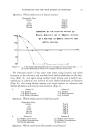
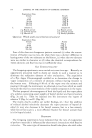
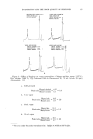
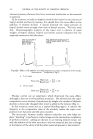
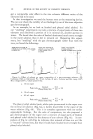
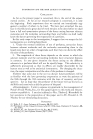
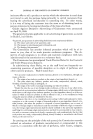
174 JOURNAL OF THE SOCIETY OF COSMETIC CHEMISTS Evaporation Time, minutes Results 3-10 84% D 3O-4O 67% D 90-100 50% D 240-250 75% E 300-310 100% E Solution L Solution M 2 g. Benzyl acetate 2 g. Benzyl acetate 2 g. n-Nonyl acetate 2 g. n-Nonyl acetate 6 g. Mineral oil 6 g. Diethyl phthalate Question: Which smells more like benzyl acetate ? Evaporation Time, minutes 0-15 30-40 10O-110 250-260 Results 79% L 67% L 84% M 75% M Loss of this clear-cut changeover pattern occurred (a) when the concen- tration of fixative was too low, (b) when there was a distinct difference in lasting power of the two odorants on the blotter, (c) when the two odorants were too similar in character or (d) when the chemical correspondence be- tween odorants and fixatives was not sufficiently close. G^s C•oM^ToG•^P•¾ The foregoing experiments were carried out some time ago. Recently an opportunity presented itself to check our results in such a manner as to eliminate the subjective element of odor evaluations. The acquisition of a Pye Argon Chromatograph enabled us to determine the change in vapor composition of a mixture of odorants without having recourse to the human nose. Collecting 4-10 ml. of the vapor over the mixture and passing it through the instrument, we obtained curves from which we could estimate the relative concentrations of the volatile components in the vapor. We first prepared chromatograms of both the liquid and the vapor phase of a solution containing equal weights of heptyl alcohol and benzyl acetate (Fig. 3a and b). Then we injected into the instrument the vapors of solution T (Fig. 3c) and U (Fig. 3d). The results clearly confirm our earlier findings, viz.: that the addition of tridecyl alcohol selectively decreases the vapor pressure of heptyl al- cohol (it may also decrease it for benzyl acetate, but to a less extent), while benzyl benzoate is a more effective fixative for benzyl acetate than it is for heptyl alcohol. BLENDING The foregoing experiments have indicated that the rate of evaporation of perfume materials is influenced by electrostatic interactions with fixative molecules. The same type of interaction should take place also with other

EVAPORATION AND THE ODOR QUALITY OF PERFUMES 175 SOLVTIOI't O[ Hoe?IffL riL(20HOL (raft ,•, BE•ZTL •E[TfiTE IFI ETHYL fiE[TriTE VAPOJ? OVER MIXTURE 0[' EQUAL •/[IGHTS OF HEPTYL riLI20HOL ^ND • I•EN ZYL riGE T^TE .• VAPOR OVER MIXTURE: HEPTTL ALCOHOL BENZYL riCETATE TRID[CYL PLr.,OH 0 L VAPOR OVER MIXTURE HPTTL ALCOHOL , r•u BENZYL ACETATE •r•u lYENZTL BENZOATE •.• 127 C. Figure 3.--Effect of fixatives on vapor composition: Column and der, temp.:' ø Det. voltage: 1000 V. 5% Carbowax 1540 on Chromosorb W 70 ml. A/min. (10 psi) Attenuation: X3 a. 0.025 3,1. liquid Heptyl alcohol 6.2* Peak ratio Benzyl acetate - 6.1 - 1.0 b, 5 ml. vapor Heptyl alc. 16.2 Peak ratio Benzyl acer. 5.9 - 2.8 c. 10ml. vapor Heptyl alc. 15.1 _ 1.:3 Peak ratio Benzyl acet. - 11.7 d. 10 ml. vapor Heptyl alc. 28.1 = 4.2 Peak ratio Benzyl acer. - 6.• * The area under the peiaks was taken to be: height X width at half height.
Purchased for the exclusive use of nofirst nolast (unknown)
From: SCC Media Library & Resource Center (library.scconline.org)