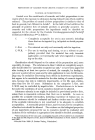
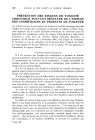
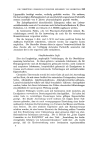
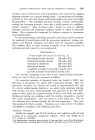
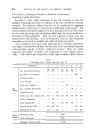
•48 JOURNAL OF THE SOCIETY OF COSMETIC CHEMISTS SOME ASPECTS OF THE ANALYSIS OF HOUSEHOLD DETERGENTS D.C. CULLUM, B.Sc., F.R.I.C.* A lecture delivered before a Joint Meeting of the Society of Chemical Industry and the Society on 2$rd March 1962, at Manchester. Comparison of analytical results shows that liquid detergents have simpler but more varied compositions than detergent powders. The "active ingredient" may be determined by titration in a two-phase system with a long-chain quaternary ammonium salt. The end-point is determined by migration of dyestuff ions from the aqueous to the organic phase, or vice versa. Both concentration and mean chain length of condensed phosphates may be determined by titration of the acid liberated when the diacid form is treated with silver ions, before and after acid hydrolysis. Flame photomerry provides a rapid method for the determination of sulphate. TI•E TERM "household detergent" is a vague one including, in its widest sense, laundry powders containing both soaps and synthetic detergents, liquid preparations, scouring powders and pastes, and "general household cleansers" in both powder and liquid form. In this paper the term refers to powders based only on synthetic detergents and intended mainly for laundry, and liquid detergents, also based on synthetics and intended mainly for washing-up. Nevertheless, some of the analytical procedures described are applicable to a wider range of compositions. Table 1 Detergent Powders Sodium C12 benzene sulphonate Cx2_14 monoethanolamide .. Total P•.O• as sodium triphosphate Sodium sulphate .. Sodium silicate .... Sodium perborate .. Sodium toluene sulphonate Carboxymethyl cellulose Unsulphonated hydrocarbon Sodium chloride •. Water ..... Fluorescent brightener A B C D 18.4 18.2 20-0 20.3 1.8 1.5 2.5 3.3 32.0 32.1 30.7 30-9 18.7 21.5 17.8 17-4 6.1 5.9 5.4 5.8 6-8 4.0 6-7 7-0 2.0 1.8 -- -- 0.9 0.8 0.8 0.9 1.0 0.9 1.1 1.0 0.2 0.2 1.2 0-7 11.8 12.6 15.6 12.6 Present Present Present Present *Colgate-Palmolive Ltd., Salford, Lancs.

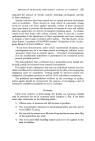
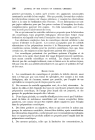
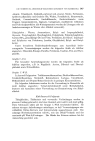
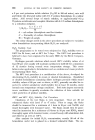
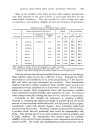
SOME ASPECTS OF THE ANALYSIS OF HOUSEHOLD DETERGENTS Table 2 Compositions of Liquid Detergents 349 Sodium C•2 benezene sul- phonate ...... Sodium C•2 ether sulphate (3 E.O.) ...... Ammonium nonyl phenol/ E.O. sulphate .... Nonyl phenol/10 E.O. con- densate ...... Nonyl phenol/4 E.O. .. Lauric M.E.A./4 E.O. con- densate ...... Lauric M.E.A./3 E.O. con- densate ...... Lauric M.E.A ..... Sodium toluene sulphonate Sodium xylene sulphonate Unsulphonated hydrocarbon Sodium sulphate .... P•O 5 as NaaPO4 .. Urea .... G1¾cerol .... Fluorescent brightener Ethanol .... Water .... A B C D E F G 5.7 18-6 24-4 21.1 16.0 26.4 18.3 .... 15.0 -- -- -- -- 3.9 .... 15.0 .... 7.2 -- -- 4.2 ..... -- -- -- 8.7 -- -- -- -- 1'8 .... 5.4 .... 3.0 -- -- -- 6.8 -- 3.1 -- 4.8 -- -- -- 4.8 .... N.T. 0.5 N.T. 1.5 1.0 0.8 0.8 1.7 0.8 0.4 0.9 1.3 1.2 0.8 1.5 -- 0.3 .... -- 3.8 5.0 -- -- 4.0 -- ...... 0.2 Present ...... .... 16.5 8.6 -- 75.0 63.4 62.0 65.0 47.0 46.9 75.5 N.T.----Not Tested. As Tables I and 2 show, the liquids generally contain fewer components than the powders, but their range of ingredients is much wider. The products listed are all well-known brands. N.B. The term "nonyl phenol/10 E.O. condensate" denotes the addition product formed from ten molecules of ethylene oxide with one molecule of nonyl phenol. "M.E.A." denotes monoethanolamide. A detailed account of the analysis of such mixtures would fill a fair-sized book, and for this paper, only a few salient features have been selected. IDENTIFICATION OF ACTIVE INGREDIENT The "active ingredient" is the actual detergent substance, which is usually present at a concentration of 20-30}/0 in both powders and liquids. By far the most frequently used type is sodium a!kylbenzene sulphonate. For many years the material used in this country was the "propylene tetramer" product, which is actually a complex mixture of many different substances of which
Purchased for the exclusive use of nofirst nolast (unknown)
From: SCC Media Library & Resource Center (library.scconline.org)