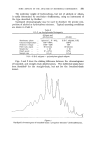
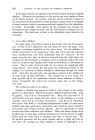
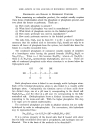
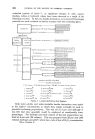
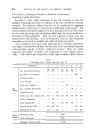
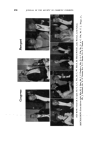
352 JOURNAL OF THE SOCIETY OF COSMETIC CHEMISTS Figure • Gas-liquid ½hrornatograrn ooe straight-chain dodecylbenzene. Infrared spectrophotometry can assist in identifying hydrocarbons, yield- ing such information as presence of aromatic rings, ratio of CHa - to - CH2 - groups, degree of branching, and classification of the a-carbon atom of the side chain as secondary, tertiary or quaternary. The kinds of examination outlined above usually lead to a successful identification, but there is in addition at least one comprehensive scheme of systematic qualitative analysis of detergents *'•. VOLUMETRIC DETERMINATION OF ACTIVE I•GREI)•E•r Provided its molecular weight is known, almost any artionic detergent can be determined by titration with a long-chain quaternary ammonium salt in a two-phase system, the phases usually, but not necessarily, being water and chloroform. In 1948 two methods were published utilising this principle but using fundamentally different processes for the determination of the end-point. 1. The Epton Method* The indicator is methylene blue, the structure of which is shown below. (CH•)2N S N (CH•) 2 CC This is a cationic dyestuff, i.e. the coloured ion is positively charged. A suitable titrant is cetyltrimethylammonium bromide, C•6H a aN (CLI,) aBr.

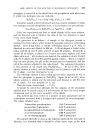
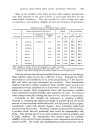
SOME ASPECTS OF THE ANALYSIS OF HOUSEHOLD DETERGENTS 353 10 ml of the detergent solution, about 0.004 N, is put into a stoppered vessel with 25 ml of an acidified solution of methylene blue. 15 ml of chloroform is added and the mixture is shaken. All the indicator migrates to the chloroform phase. The quaternary salt, about 0.004 N, is added in small portions, with thorough agitation after each addition. Near the end point the colour begins to migrate back into the aqueous phase. The end point is taken quite arbitrarily when the two phases are of equal colour. The mechanism of the process is as follows: At first, the indicator reacts with a little of the anionic detergent to form a simple salt, which is completely extracted by the chloroform. As the quaternary is added, it too forms a salt which is extracted by the chloroform. When all the anionic detergent has reacted and been extracted, further increments of quaternary ions compete with the methylene blue for the detergent combined with it. Methylene blue is displaced and returns to the water layer. The equality of colour in the two layers at the end point is a convenient criterion but has no fundamental significance. This method has the advantage of not suffering from interference by any soap which may be present. But the end point is not easy to judge because the two phases are of different tints. In addition, the volume ratio of the two phases is critical, and if the titration differs appreciably from 10 m! the result is not accurate. Further, for both theoretical and practical reasons, the titration does not appear to be stoichiometric. But in spite of these drawbacks, the Epton method has been, and still is, very widely and successfully used. 2. The Barr Method This is one of two described in a paper by Barr et al ø, the indicator being bromophenol blue: Br Br ,-. .or S03Ne This is an anionic dyestuff, i.e. the coloured ion is negatively charged. The fundamental distinction between the Barr and Epton methods is that the former uses an indicator of the same charge as the detergent ions being determined, whereas the latter uses an indicator of opposite charge.
Purchased for the exclusive use of nofirst nolast (unknown)
From: SCC Media Library & Resource Center (library.scconline.org)