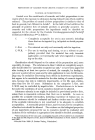
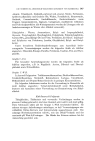
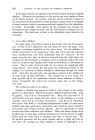
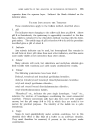
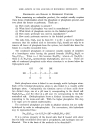
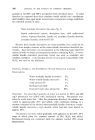
350 JOURNAL OF THE SOCIETY OF COSMETIC CHEMISTS the two shown below are typical. Both structure and size of the side-chain vary over a wide range. CH] CH 3 CH 3 CH] • SO•Na CH• CH• CH• SO3Na The propylene tetramer type of detergent is objectionable because it is .......... .•,.• by ........ , methods of sewage treatment, and for this reason it is being gradually replaced by the "biologically soft" straight chain isomer. This too is a complex mixture. The structure shown below is a typical molecule, but the phenyl group may be attached anywhere in the paraffin chain except the 1-position. The length of the chain also varies and some branching is usually present. CH•- CHz- CHi' CH2-• CHz- C H2- CHz- CHz- C Hz- C H2- CH • SO,No Sodium lauryl ether sulphate, C•2H25 (OCeH4)aOSOaNa, first appeared in a household detergent only a few years ago. Secondary alkyl sulphates of the Teepol type were at one time extensively used in washing-up liquids, but are not now used in any major product. The range of detergent type found in practice is thus quite narrow, and identification is not usually difficult, even when a mixture of detergents is present as in some of the liquids. Non-ionics and alkanolamide-type foam promoters are easily separated by passage through a mixed-bed ion exchange resin, and are usually readily identified by comparison of their infra-red spectra with standard spectra. Alkyl sulphates and alkyl ether sulphates are differentiated from sulphonates by the fact that they are hydrolysed by prolonged boiling with N hydrochloric acid. Alky! and alkylaryl sul- phonates resist hydrolysis but are converted to the parent hydrocarbon by boiling with phosphoric acid of boiling point 215øC. This is conveniently done in a Dean and Stark apparatus of the "heavy entrainer" type. The oil collected in the side-arm will contain fatty acids if an alkanolamide was present, and it is therefore washed with dilute alkali before examination.

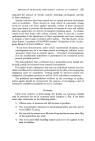
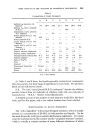
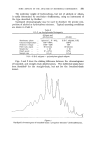
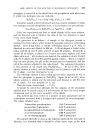
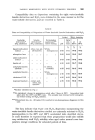
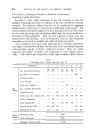
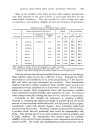
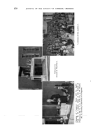
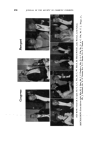
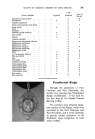
SOME ASPECTS OF THE ANALYSIS OF HOUSEHOLD DETERGENTS 351 The molecular weight of hydrocarbons, but not of alcohols or ethers, is easily determined by semi-micro ebulliometry, using an instrument of the type described by Heitler •. Gas-liquid chromatography may be used to elucidate the precise com- position of alcohol or hydrocarbon mixtures. Typical operating conditions are shown in Table 8. Table :• G.L.C. on desulphonated detergents ,'llkanes and alkylbenzenes A lcoh ols Stationary phase .. Apiezon L, 5--10•o P.F..G. adipate, 10% Column temperature .. 130--160øC 150øC Detector voltage .. 1750--1250 750 Flow rate, argon .. 40 ml/min 40 ml/min Sensitivity .... X 10 X 10 Chart speed .... 9"--12"/h 12"/h Sample size .... 0.1 [•1 0.1 [•1 N.B.-•P.E.G. adipate = polyethylene glycol adipate. Figs. I and 2 show the striking difference between the chromatograms of branched- and straight-chain alkylbenzenes. The individual peaks have been identified • for the straight-chain, but not for the branched-chain isomer. Figure 1 Gas-liquid chromatogram of branched-chain ("propylene tetramer") dodecylbenzene.
Purchased for the exclusive use of nofirst nolast (unknown)
From: SCC Media Library & Resource Center (library.scconline.org)