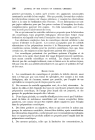
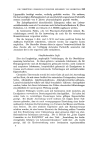
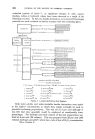
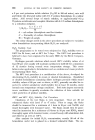
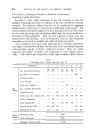
JOURNAL OF THE SOCIETY OF COSMETIC CHEMISTS extended periods of time 8-•, no significant changes in acid, saponi- fication, iodine or hydroxyl values have been observed as a result of the bleaching reaction. In fact, the lanolin derivatives so treated with hydrogen peroxide are quite resistant to further reaction with this oxidizing agent. -acylation (acet,•j LANOLI N -ethoxylation (75 moles EO) , -solvent fract•onation I sapon?cation T0½AL !l FATTY Iesterification(,soIlanolate'IsopropylI Acetylated lanolin**' I I Ethoxylated Innolin: I ILanolin oil' I fract•ønat•ønlsuI•Iextract'extractUSPJcholesterol'base-mult•-sterotmulti-sterolJSolidEO/--IEthoxylated,•lLiquid[Absorption[Cholesterolmoes/24fract•onation•blend•ng/ethoxyat,on-further-crystallizationFACE adsøiptiøn I extraction I ACT I V E i •-(16 moles EO)dEthoxylated lanolin alcohols'" I --ethøxylatiøn-L(25 moles EO)--IEthoxylated lanolin r(acetic)-fract•onatlon•Acetylated lanolin alcohols •: esterification-I , • I I L(ricinoleic) ILanolin alcohols ricinoleate / •--acetyiation lPamally acetylareal ethoxylated ester t• I I.
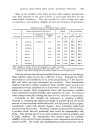
IALCOHOLS et box latlon • -k•cet•,•tion Com• acet•7•'7/eth•'•x•atT• •er,• l WATER SOLUBLE --WATER INSOLUBLE **U.S. Patent 2,725,334 British Patent :::784,465 and other foreign patents I. Modulan © 6. Amerchol©CAB II. Solula?25 2. Solulan©75 7. Amerchol©H-9 12. Acetulan © 3. Viscolan © 8. Amerchol©Cholesterol USP 13. R•olan©B 4. Amerlate©P 9. Solulan©C-24 14. Solulan©98 5. Amerchol©L-101 10. Solulan©16 15. Solulan©9 - Figure 1. Lanolin derivatives flow diagram Both water-soluble and water-insoluble lanolin derivatives were tested in the highest concentration at which they might normally be used in peroxide-containing preparations. This was set at 5 per cent although it was felt that they generally would be employed at considerably lower percentages. The hydrogen peroxide content of the test preparations was fixed at 6 per cent (20 volume). This was prepared from 35 per cent (130 volume) hydrogen peroxide*, which has a rate of loss of H202 concentration_ *Becco Formula D.

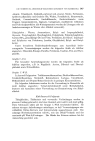
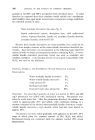
LANOLIN DERIVATIVES WITH DILUTE HYDROGEN PEROXIDE 365 of under 1 per cent per year at room temperature, when stored in the original shipping containers or in proper storage tanks. Contamination of hydrogen peroxide by dust, dirt and foreign material generally may cause more rapid decomposition. This hydrogen peroxide formula contains substantially nothing but hydrogen peroxide, water and a small amount of a stabilizer, sodium stannate.* Only deionized water should be used in diluting hydrogen peroxide and additional stabilizer should be added as described below. The recommended compound for dilution purposes is phenacetin (p-acetophentidine) 7. In the manufacturing of hydrogen peroxide-containing cosmetic products the materials of construction of all the processing equipment, storage con- tainers, and finished containers and liners must be examined carefully. The catalytic effect of many common materials on the decomposition of hydrogen peroxide cannot be over-emphasized. ]•XPERIMENTAL Water-Soluble Derivatives (see also Fig. 1) Ethoxylated lanolin alcohols (16 moles EO), ethoxylated lanolin alcohols (25 moles EO), ethoxylated cholesterol (24 moles EO), ethoxylated lanolin (75 moles EO), completely acetylated ethoxylated lanolin ester, partially acetylated ethoxylated lanolin ester. Test solutions containing 5 per cent of each soluble lanolin derivative and 6 per cent of H202 were prepared as follows: The prescribed quantity of deionized water was heated to 100øC and 400 mg/1 of phenacetin was added with mechanical stirring. After the phenacetin dissolved, the solution was cooled to approximately 45øC and the desired soluble lanolin derivative was added with continued stirring. This mixture was then cooled gradually with agitation to the 35øC-40øC range at which point the required amount of 35 per cent H•O2 was added. Mechanical mixing was continued until the solution temperature reached 25øC (room temperature). Care was taken to avoid water loss. The six test solutions were checked initially for pH and appearance. They were then analyzed for H•O• content. Titrations were made with 0.1 N sodium thiosulphate according to the following procedure: Analytical Procedure Acidify the samplet with 75-100 ml 25 per cent sulphuric acid and add 3 drops of N ammonium molybdate solution. Then add 15-20 ml of *U.S. Patent No. 2,872,293 iFor formulations containing approximately 1.5 per cent H•O•, use a 0.5 g-0.6 g sample. For formulations containing approximately 6 per cent H•O•, use a 0-2-0.3 g sample.
Purchased for the exclusive use of nofirst nolast (unknown)
From: SCC Media Library & Resource Center (library.scconline.org)