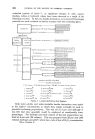
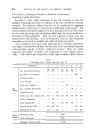
368 JOURNAL OF THE SOCIETY OF COSMETIC CHEMISTS position in the 66øC and 100øC accelerated tests described above. It could therefore be expected that these solutions would exhibit very satisfactory 'shelf stability when aged under normal room temperature storage conditions for extended periods of time. Water-Insoluble Derivatives (See also Fig. 1) Liquid multi-sterol extract, absorption base, solid multi-sterol extract, isopropyl lanolate, lanolin oil, acetylated lanolin alcohols, acetylated lanolin, cholesterol USP. Because these lanolin derivatives are water-insoluble, they could not be tested in as simple a manner as the water-soluble derivatives described pre- viously. Each derivative was incorporated in the following basic dispersed system in order to obtain a homogeneous product containing H 20 2. A water- soluble lanolin derivative previously tested was used as emulsifier and emulsion stabilizer. Cetyl alcohol, known to have good compatibility with H202, was used as the thickener. •GENERAL FORMULA FOR DISPERSING WATER-INSOLUBLE LANOLIN DERIVATIVES Water-insoluble lanolin derivative 5% Water-soluble lanolin derivative 5ø/0 Cetyl alcohol NF 10/0 Hydrogen peroxide 6ø/'0 Deionized water plus phenacetin 83% Procedure: The prescribed quantity of water was heated to 100øC and 400 rag/1 phenacetin was added with mechanical stirring. Precautions were taken to avoid water loss. After the phenacetin dissolved, the solution was cooled to approximately 70øC and added, with continuous stirring, to a mixture composed of the desired water-insoluble lanolin derivative+water- soluble lanolin derivative+cetyl alcohol, which had also been heated to approx. 70øC. The mixture was then cooled gradually, with agitation, to the 35øC-40øC range at which point the required amount of 35ø/ H202 was added. Mechanical mixing was continued until the solution reached 25øC (room •temperature).

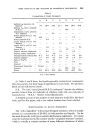
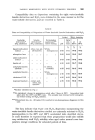
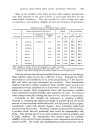
LANOLIN DERIVATIVES WITH DILUTE HYDROGEN PEROXIDE 369 Compatibility data on dispersions containing the eight water-insoluble lanolin derivatives and H202 were obtained in the same manner as for the water-soluble derivatives, and are recorded in Table 2. Table 2 Data on Compatibility of Dispersions of Water-Insoluble Lanolin Derivatives with H•O• Initial H•O2 Stability Insoluble Soluble Formulation H•O2 derivatives* derivatives* appearance** con- at at (5% additions) (5% additions) before testing pH tent 100øC 66øC % % % liquid multi-sterol ethox. lan. alc. White, extract .... (16 mol EO) homogeneous 5'00 6.01 99.0 99'5 absorption base ............ 5.00 6.04 99.2 99.7 solid multi-sterol extract .............. 5.05 5.99 99.0 99.5 lanolin oil .............. 4.50 6.00 95.7 99'0 acetylated lanolin sl. yellow, alcohols .......... stratified 4.55 6'02 98.5 99.2 acetylated lanolin ........ White, homogeneous 4.40 5.98 94.7 98 '9 cholesterol USP ............ 4.25 6.03 90.6 91'9 isopropyl lanolate.. compl. acer ..... 4.35 5.98 98.0 99'3 ethox. lan. ester*** *Further identified in Fig. 1. **No significant change in appearance noted after 7 days at 25øC. Separation took place after the 100øC and 66øC tests. The samples were remixed until homogene- ous before testing for H•Oz stability. ***Ethoxylated lan. alc. (16 moles EO) resulted in non-homogeneous dispersion in this case. The data indicate that 6 per cent H20• dispersions incorporating the water-insoluble lanolin derivatives studied are extremely resistant to H202 decomposition in the 66øC and 100øC accelerated tests described above. It could therefore be expected that these preparations would also exhibit very satisfactory shelf H202 stability when aged under normal room tem- perature storage conditions for extended periods of time.
Purchased for the exclusive use of nofirst nolast (unknown)
From: SCC Media Library & Resource Center (library.scconline.org)