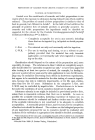
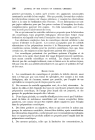
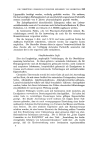
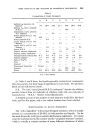
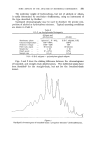
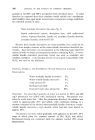
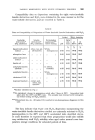
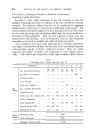
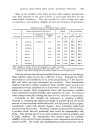
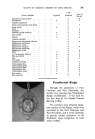
SOCIETY OF COSMETIC CHEMISTS OF GREAT BRITAIN 381 Colour Additive Chromium oxide greens .... Cornstarch ...... Dihydroxyacetone .... Ferric ferrocyanide (iron blue) .. Gloss white ...... Gold ........ Graphite ...... Guanine (pe'•rl essence) .. Iron oxides ...... Kaolin ........ Lithium stearate ...... Magnesium aluminJure silicate .. Magnesium carbonate .. Magnesium oxide .... Magnesium stearate .. Magnesium trisilicate .. Manganese violet .. Mica ...... Silicon dioxide (Silica) .... Silk, powdered ...... Talc ........ Tin oxide ........ Titanium dioxide ...... Ultramarine blue .... Ultramarine green .... Ultramarine pink .... Ultramarine red ...... Ultramarine violet .... Zinc oxide ........ Zinc stearate ...... USE Area of Lipstick External the eye x x x x x x x x x x x x x x x x x x x x x x x x x x x x x x x x x x x x x x x x x x x x x x x x x x x x x x x x x x x x x x x x x x x x x Presidential Badge Through the generosity of Past Chairmen and Past Presidents, the Society now possesses the Presidential Badge, as illustrated. It was used for the first time at the Annual General Meeting in May. The Society in turn obtained minia- ture replicas of this Badge, which were presented to the Past Chairmen and Past Presidents, and it is the intention to present similar miniatures to all Presidents upon completion of their terms of office.

382 JOURNAL OF THE SOCIETY OF COSMETIC CHEMISTS Diploma Course BRU•F.• CO•EGE of Technology, Woodlands Avenue, London, W. 3, through its Department of Chemistry, provides the necessary facihties for an advanced course in the Applied Chemistry of Cosmetics suitable for those engaged in the cosmetics or associated industries. This course provides a comprehensive training in all aspects of cosmetic science. The course extends over TWO Years part-time and consists of lectures and practical work, four to six hours weekly on Mondays and Wednesdays. Entrance Requirements: Candidates for the Diploma Course, should hold a National Certificate in Chemistry, or General Certificate Advanced Level in Chemistry. Students should register as soon as possible with the Society of Cosmetic Chemists. Content of Course: The course is given by the staff of the Department with specialists from industry and research associations. The course covers all the major fields of cosmetic science and includes lectures on: The anatomy and physiology of hair, skin and teeth the chemistry of oils fats and waxes, technology of perfumes and essential offs surface activity emulsions bacteriology product development and packaging of all cosmetics and toiletries chromatography spectroscopy microscopy photomicrography. All students in the course are required to sit a final examination at the end of each of the two years' study. Successful candidates are awarded The Diploma of the Society of Cosmetic Chemists of Great Britain. Applications for admission should be made to the Head of Department. 1962163 Programme Lectures Venue: The Royal Society of Arts, John Adam Street, London, W.C.2. Time: 7.30 p.m. Wednesday, 10th October 1962 A. L. Van Ameringen [International Flavors & Fragrances, Inc.] Perfumes, cosmetics, and the rising standard of living. Monday, 17th December 1962 K. McLaren, B.Sc., F.R.I.C., F.S.D.C. [Imperial Chemical Industries Ltd.] The problem of illumination in colour matching. Friday, 25th January 1963 L. Golberg, M.A., D.Sc., D.Phil., M.B., B.Chir., F.R.I.C. [British Industrial Biological Research Association] Some Problems of cosmetic and toiletry toxicology.
Purchased for the exclusive use of nofirst nolast (unknown)
From: SCC Media Library & Resource Center (library.scconline.org)