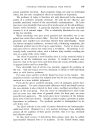
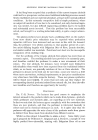
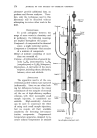
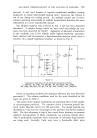
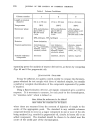
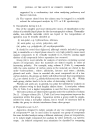
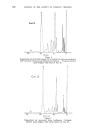
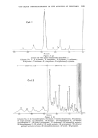
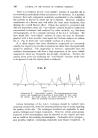
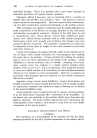
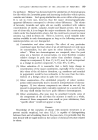
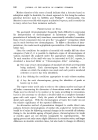
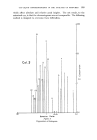
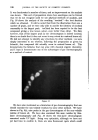
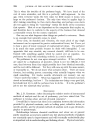
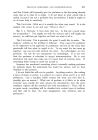
GAS-LIQUID CHROMATOGRAPHY IN THE ANALYSIS OF PERFUMES 175 proceeds, is not used because it requires complicated ancillary heating equipment to ensure reproducible heating rates moreover, the column is out of use during the cooling period. An analysis carried out on three columns operating isothermally at suitable temperatures furnishes the same information in a more reproducible manner. One all-glass analyser unit is shown in Fig. I and has been described elsewhere 8. A simpler design, which we have used successfully for four years, has been described by Smith 9. Apparatus of all-metal construction is also available, but is less reliable under highest-sensitivity operation. Each analyser unit incorporates a flame-ionisation detector which feeds a recorder via a simple impedance-marcher, as shown in Fig. 2. RI De tec for • SN7 GT -••" Sel' Zero R9 R I0 :RII 'l Figure 2 Impedance-matching circuit for flame-ionisation detector. C, 1000 pF ß R1, 1MC2 ß R2, 240 MC2 R3, R9, 50KC2 R4, 10KC2 R5, 100C2 R6, 20C2 R7, 4C2 ß R8, 1C2 ß R10, 110KC2 Rll, 10KC2var. --150 V. OV. Choice of operating conditions for optimum efficiency has been discussed previously •'8. The column conditions used for the work described in this paper are given in Table 1. The nature of the support material has an important effect on the quality of chromatogram produced. The common choice is between ground fire- brick (Johns Manville, Sil-O-Cel C.22) and Celite. For similar particle size distribution, Celite has two advantages in the perfume and flavour analysis field. The first advantage is that it has a much lower tendency to promote catalytic decomposition of labile compounds, e.g. fi-pinene, linalyl esters. This is particularly important when semi-polar or non-polar liquid phases are being used. Secondly, Celite may have a favourable effect upon

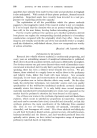
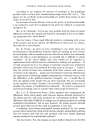
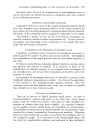
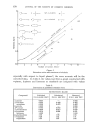
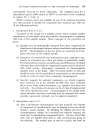
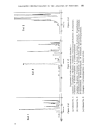
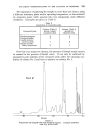
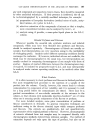
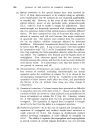
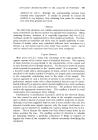
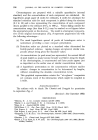
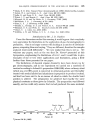
176 JOURNAL OF THE SOCIETY OF COSMETIC CHEMISTS Table 1 Column Conditions Column number 1 2 3 Length x internal diameter 2.4 m x 3-6 mm 1.5 m x 3.6 mm 2.4 m x 3.6 mm Temperature 78øC 130øC 183øC Stationary phase 20% polyethylene 20% polyethylene 10% ethylene glycol 400 on glycol 400 on glycol/adipic acid 60-100 mesh 60-100 mesh polyester on Celite Celite 60-100 mesh Celit, Carrier gas 25% nitrogen, 75%[hydrogen ........................ I Detector flame-ionisation .................................... Typical applications monoterpenes oxy-terpenes phenols, phenol~ C•--C•0 aldehydes, sesquiterpenes ethers "non- ketones, esters, C8--C•0 aldehydes, volatile" residues alcohols, ethers. ketones, esters, esters, etc. C•0. alcohols, ethers. Suitable reference limonene menthol, citral-a safrole, eugenol compounds separating power for analysis of terpene derivatives, as shown by comparing Figs. 4b and $ for peppermint oils. QUALITATIVE ANALYSIS It may be sufficient, for quality control, merely to compare the chromato- grams obtained for test samples with those of standard samples, but usually a partial or complete identification of the compounds represented by peaks is required. Using a flame-ionisation detector, all organic compounds give a positive response. It is necessary to measure, for each peak on the chromatogram, its "retention ratio" which is defined as time taken for unknown to be eluted time taken for standard to be eluted where times are measured from the moment of injection of sample to the centre of the appropriate peak. The standard is any suitable reference compound known to occur as a major component in one or more of the oils being analysed (e.g. menthol in peppermint oil, citral-a in lemon oil) or an added component. The standard should be chosen to be eluted near the centre of the useful part of the chromatogram.
Purchased for the exclusive use of nofirst nolast (unknown)
From: SCC Media Library & Resource Center (library.scconline.org)