PRACTICAL PERFUMERY AND INSTRUMENTATION 209 however, provide no hope of correlation with odour, since so many com- pounds and mixtures yield similar values. THE LECTURER: I agree with you, but I would also like to say that you have just pointed out the shortcoming of analysis yourself. You say that methods are always changing and becoming more accurate. At the same time you wish me to take notice of such things as specific gravity, whereas, I make the point that I am not concerned with that. I have purchased materials that were based on wet analysis, outside the standard set, and yet the odour was excellent. When I had finished my job it was accepted by everyone except by a few boys in the laboratory! At times, after working on a project for three months or more, I have wished that mathematical rules could help me. There are so many unknown factors that operate in perfumery. It is amazing--the older I get, the more I practise perfumery, the more I come to realise how little I know about it. Any perfumer who says differently, does so because he is unwilling to belittle himself. Through the years I have had many reminders that some of my ideas have been completely wrong. This should not have happened as I have been practising long enough, but it did. DR. Y.-R. NAVES: One cannot but complete!y agree with your opinions. The perfumer operates with olfactive quality, and we do not really know any valid relationship between a physical or chemical property and the olfactive quality. At the most, we can associate the odorous quality with the chemically defined substance which carries the odour. On the other hand, the techno!ogist who must sell regularly and profit- ably the products required by the perfumer, cannot help but use to the best advantage instrumental techniques which identify the substance or substances determining the odour of the product. In the current state of science and technology the use of instrumental technique has no connection with the art of perfumery. THE LECTURER: I should like to go further with that. When the perfumer sets out to make a new compound he usua!ly has some sort of guide, either from the management, the sales people or even from the product in hand. He already knows how far he can go. For instance, it would be completely pointless to extract a perfume of similar composition from some other product, put it through VPC, add a little guesswork, and try to reconstitute the compound. I have seen some very peculiar results arising from that method, particularly with flayours. VPC gave the result expressed as so many per cent terpene, limonene, menthol, merithone, aniseed, etc., but if one attempted to reconstitute the flavour from this information the answer would make nonsense. The instrument has faith- fully recorded its results, but these bear no relationship to the actual flavour.

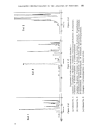
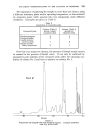
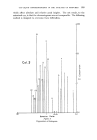
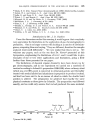
210 JOURNAL OF THE SOCIETY OF COSMETIC CHEMISTS Not because the instrument is wrong, but because it has hmitations and is still in a state of development. The following actually happened. One supplier was asked to look again at one of the essential oils he had supplied, because VPC showed some peaks where there were none before. He naturally asked for a sample, took it back to his office and had it tested again, but could not find the peaks in question. He approached the user and said "I cannot find them, how did you ? .... Oh, we cannot tell you, that is a secret !" While so-called analysts treat these matters with secrecy, how can this claim to be a method of analysis ? We are using man-made terms that do not mean the same thing. For instance, analysis does not mean the same thing to an accountant, yet by definition it means details of something, whatever it is he is trying to break down, in order to extract something. It is only to that extent that we agree. To me an analysis must be some- thing that can be reproduced wherever there is an instrument. It is there- fore up to the instrumentalists, as a body, to get together and formulate a method of procedure, even if it means using more than one stationary phase, so that everything is obtained at the same time, and it agrees with the findings of others. When an instrumentMist draws a chromatogram and this is superimposed on that of a similar oil, it will be found that with this oil, drawn from the same source, the peaks are slightly displaced, and so it is no longer accurate, is it ? Dr. Naves has already said what the errors can be, so there must be quite a lot of room yet for improvement in instrumentation before it can be accepted as a tool of analysis to carry some validity. Although it may be right amongst the laboratory people, who may have some reasonable explanation, i.e. this peak is displaced for one reason or other, but it would not hold in a court of law if there is a dispute. MR. S. J. HAWKES: The first thing I wish to say for the unfortunate technologist is that we answer the questions that you put to us. If some- body comes to me with a smell in a bottle and says "What is it ?", the only thing I can do, as an analyst, is to find out what it is. Admittedly, from time to time people have sent me samples, and after I have produced its analysis, it does not smell the way the perfumer wanted it to smell. Nevertheless, from time to time, a perfumer has sent me materials and I have sent back a result that has enabled him to work from there and find the answer to his perfumery problem. As an analyst, I cannot as yet provide the complete answer to the question "What is perfume?" It obviously contains too many substances, all of which are difficult to identify, but it can be done if I am given a few years to do it in. Never- theless, I can chart him an answer with so many per cent of so many things,
Purchased for the exclusive use of nofirst nolast (unknown)
From: SCC Media Library & Resource Center (library.scconline.org)