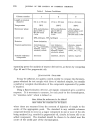
GAS-LIQUID CHROMATOGRAPHY IN THE ANALYSIS OF PERFUMES 187 any such compounds are suspected, even in traces, they should be measured by other analytical techniques. If their presence is confirmed, the oil can be re-chromatographed by a suitably modified technique, for example: (a) preparation of less-polar derivatives (methyl esters of acids, acety- lated amines, etc.) prior to G.L.C., (b) selective extraction of the compounds of interest so that a simpler, more concentrated mixture can be analysed by G.L.C., or (c) analysis using, if possible, a more-polar liquid phase in the G.L.C. column. Blended Perfumes and Flavours Whenever possible the essential oils, synthetic mixtures and isolated compounds, which may have been blended into perfumes and flavours, should be analysed separately. Chromatograms of blends are usually so complex that interpretations are very uncertain owing to the multiplicity of overlapping peaks. Analysis under different operating conditions merely rearranges the confusion. If, however, individual oils are not available, the blend may be chromatographed in the usual way, but interpretations are usually confined to comparing chromatograms of one sample with those of another. Regions of marked differences between the chromatograms may, if required, be isolated by preparative-scale G.L.C. and may subsequently be analysed under various operating conditions, or by methods other than G.L.C. Whole Products It is often necessary to check perfumes and flavours in finished products. The most straightforward procedure is the injection of a sample of the product into the column. Usually, however, this course leads to column contamination by compounds of low volatility, and it is necessary to wait for a long period before the contaminants are eluted. There may be a gradual accumulation of non-volatile materials at the entrance to the column, so that columns with replaceable injection-chambers •7 are of value when one is assaying specific components of the flavour or perfume. For more detailed analysis, some prior concentration of perfume or flavour constituents is desirable. In general, extraction techniques are inefficient owing to the diverse chemical types which compose perfumes and flavours. The extracts are qualitatively, but not quantitatively, representative of the original perfume or flavour. However, chromatograms of extracts obtained from test samples may be compared directly with chromatograms similarly derived from reference samples. The method of extraction depends not only upon the type of product, but also on its

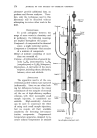
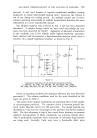
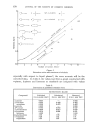
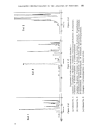
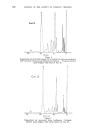
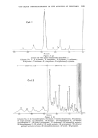
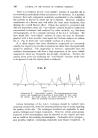
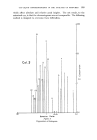
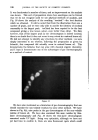
188 JOURNAL OF THE SOCIETY OF COSMETIC CHEMISTS individual formula. Hence it is possible only to give some examples of extraction procedures for typical cosmetic products. Shampoos, diluted if necessary, may be extracted with 1: 1 mixture of diethyl ether and 40ø-60øC b.p. petroleum ether. The solvent is removed under vacuum at room temperature. One must expect to find contaminants, e.g. free fatty alcohol from commercial detergents, in the perfume extract. With toothpaste, the analyst is confronted with the added difficulty that polar constituents of the flavour are strongly adsorbed on the solid phase and therefore incompletely extracted. Solution of the solid phase in acid is unsatisfactory since carbon dioxide evolved from chalk-based pastes carries some volatile flavour materials with it, while calcium phosphate- based pastes require such strongly acid conditions that changes may occur among the flavour compounds. For qualitative comparisons, the paste may be suspended in four times its weight of water and extracted several times with ether (Figure 7). Creams and emulsions, if analysed directly, suffer serious interference by the oil phase which usually dominates the chromatogram, thus masking the peaks due to the perfume. Various methods for isolating the perfume may be used, the choice depending on the nature of the emulsion. Steam distillation or solvent extraction may be suitable. Sampling of the head- space yapours above the emulsion is a simple method enabling direct analysis of the air by G.L.C., but it is important, when using this method, to carry out a blank analysis on the laboratory air since the flame-ionisation detector is very sensitive to trace contaminants. Moreover, as pointed out previously, when headspace gases are analysed, the less-volatile components will not be recorded. Apparatus using vacuum steam-distillation, vacuum fractionation and Soxhlet extraction •8 to isolate volatile fruit flayours could be equally suitable for suspensions, emulsions and solutions as long as foaming can be limited in the steam-distillation stage. Aerosol products may be analysed directly as yapours carrying perfume, or as the liquid phase remaining after evaporation of the propellant. In the former case, the sensitivity to the perfume will be lower than when the liquid is analysed. The latter method will provide more information but contamination of the column is more likely to occur from the non-volatile components of the aerosol product. GAS-LIQUID CHROMATOGRAPHY AND ODOUR Correlation The correlation of a chromatogram of an essential oil with the odour sensation produced by the oil is of prime importance to the analyst and to
Purchased for the exclusive use of nofirst nolast (unknown)
From: SCC Media Library & Resource Center (library.scconline.org)