PRACTICAL PERFUMERY AND INSTRUMENTATION 205 While reviewing the various papers on the subject of instrumentation as related to perfumery materials, the perfumer is left with the impression that an idea is being sold to him, to commit him to a definite course of action foreign to his way of thinking, he being gently chided that he views instrumentation with suspicion. Nothing could be further from his thoughts and no perfumer will ever refuse additional knowledge for the furtherance of his work. He will readily accept and digest any information passed to him and evaluate any samples, but he will always do so purely and simply in relation to odour, drawing on his odour memory for comparisons, or file away his impressions for future reference. Difference of views can exist, however, particularly on the subject o[ essential oils as evaluated by him and the results of instrumental analysis. Given a free choice, the perfumer will always prefer to depend on his nose rather than on mechanical assessment. It must be remembered that odour is an intangible quality and we do not even know by what mechanism the sense o[ smell is actuated. In the single act of smelling a sample the per- fumer uses all the accumulated experience of years. Why, then, try and convert him to a different way of evaluation ? Instruments can be wrong, and frequently are, not because the instrument has shortcomings, but because of the human limitations which operate it. It is well known that every method of analysis must be capable of duplication if intended for universal acceptance. The potential of the instrument is still in the stage of develop- ment, changes in the stationary phase and the substrate used might produce different results for different classes of aromatic chemicals. It might be difficult for the uninitiated to understand perfumery, but other experts know that the perfumer, with his specialised aptitude for storing information, links his memory with the odour sensation received, accepting or rejecting as the case may be. It is not the perfumer's function to pinpoint where deficiency begins and ends. It is the analyst's function to determine qualitative differences, always provided the subject is worth while pursuing. The perfumer can, and does, operate a very simple rule: "If in doubt--leave out." I would therefore say that the value of instrumentation or any other method of analysis yet to be found, is of greater help to the research chemist, the analyst, and for the control of manufacturing processes, than to the perfumer. The perfumer will, in my opinion, rightfully point out that he is buying odour and not physical constants, and it is hardly conceivable that a perfumed preparation is being sold on the basis of physical specifications of the perfumery material. Standardisation of synthetic aromatic chemicals used by the perfume industry is one of the most important aspects in the elaboration of perfume

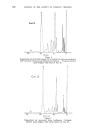
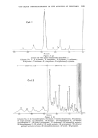
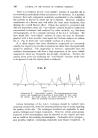
206 JOURNAL OF THE SOCIETY OF COSMETIC CHEMISTS fragrances. V.P.C. is, therefore, an invaluable tool in effecting this stan- dardisation it is also equally invaluable for the investigation of natural products, but since we do not even know their composition with any degree of certainty it would be difficult to talk in terms of standards. The further the chemist advances in the study of natural products, the more components are being found, and these can amount to quite spectacular numbers. Deficiencies in these trace compounds probably make the difference between a good or mediocre oil. So until all these various components have been identified and synthetised, much of the mystery that surrounds natural products will remain. There is no doubt that eventually these problems will be solved, and, as a perfumer, I feel sure that many more powerful and desirable but as yet unknown perfume materials will be added to the perfumer's range of odour. Who knows, perhaps it will even be possible to compound fragrances by slide rule this, however, is pure speculation. Even though the technologist and the perfumer appear to be on different sides of the fence, they have at least one l•ond in common. In their respective spheres they both serve an industry of constantly expanding scope and importance, and neither could survive on his own for very long. As a perfumer I also feel sure that the perfumer would rather be regarded as a potential consumer if thereby he preserves his mental freedom and reserves his efforts for the creation of new fragrances for the pure enjoyment that these provide, for this is, after all, his raison d'•tre. Sometimes he creates or anticipates fashion by exercising his own originality, using new aromatic chemicals offered to him by the technologist. Sometimes he revives and stimulates interest in already existing fragrances. Finally, I would state that the practice of perfumery is one of the most satisfying callings, often frustrating, but always stimulating in achievement. (Received: 12th October 1962) Introduction by the lecturer Some four years ago when VPC first came on the market, someone blithely turned up and said that perfumers were going to be out of a job very soon. Naturally, it made my ears stand up and I started to watch what was going on around me in the field of VPC. Eventually I came to the conclusion that this instrument does not help me or anyone else to make a new perfume. I regard it as an excellent auxiliary, but it does not have to be in existence as far as I or for that matter any other perfumer is concerned. We can make good perfumes without knowing about VPC curves, or physical constants, specific gravities and so forth it makes no difference, we deal mainly in odours. Odour is the only factor that has
Purchased for the exclusive use of nofirst nolast (unknown)
From: SCC Media Library & Resource Center (library.scconline.org)