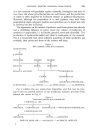
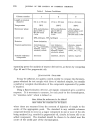
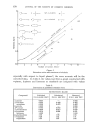
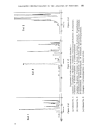
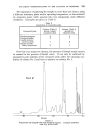
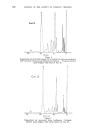
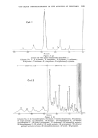
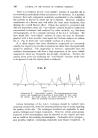
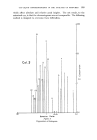
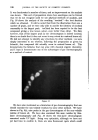
GAS-LIQUID CHROMATOGRAPHY IN THE ANALYSIS OF PERFUMES 193 which affect absolute and relative peak heights. The net result, to the untrained eye, is that the chromatograms are not comparable. The following method is designed to overcome these difficulties. IOO IO Col. 2 22 18 I•etention Ratio Figur• g Peppermint oil histogram. Io

194 JOURNAL OF THE SOCIETY OF COSMETIC CHEMISTS Chromatograms are prepared with a suitable quantitative internal standard, and the concentrations of each component are calculated. On logarithmic graph paper (3 cycles for ordinates, 2 cycles for abscissae) the standard retention ratio for each component is plotted along the abscissa (0.1 to 10) and a line representing the concentration of each component drawn parallel to the ordinate (0.1% to 100%). Values falling outside the concentration range (less than 0.1%) may be marked as red figures below the appropriate point on the abscissa. The result is a histogram representa- tive of the original chromatogram (Fig. I½ represents peppermint oil) with the following advantages: (a) The usual logarithmic spread of peaks of homologous series is neutralised, providing a more compact presentation. (b) Retention ratios are plotted as a standard value determined for freshly-packed columns. Ageing changes are ignored, similar com- pounds always being given the standard values. (c) As concentrations (or peak areas) are represented, the normal fall-off of peak heights as peaks become broader and flatter along the length of the chromatogram, is counteracted and later peaks appear just as important as the earlier ones at similar concentration levels. (d) A logarithmic presentation on the concentration ordinate enables relative changes in concentration to be determined by lengths, without considering the absolute concentration levels. (e) This graphical representation retains the "at-a-glance" comparison yet contains much of the information which might be compiled in a table. ACKNOWLEDGEMENT The authors wish to thank The Chemist and Druggist for permission to reproduce Fig. 1. (Received: 21st September 11½6oe) REFERENCES Holness, D. J. Soc. Cosmetic Chemists 12 370 (1961) Hardy, C. J. and Pollard, F.H. J. Chromatog. 2 1 (1959) Rose, B.A. Analyst 84 574 (1959) 4McWilliam, I.G. Rev. Pure Appl. Chem. 11 33 (March 1961• Dal Nogare, S. Anal. Chem. 32 19R (April 1960) Dal Nogare, S. and Juvet, R.S. Anal. ½hem. 34 35R (April 1962) Knapman, C. E. H. (Ed.) Gas Chromatography Abstracts (1959-1961) (Butterworth•, London) Cheshire, J.D. Chemist and Druggist 177 205 (1962) Smith, J. F. in Scott, R. P. W. (Ed.) Gas Chromatography 1960 116 (1960) (Butter- worths, London)
Purchased for the exclusive use of nofirst nolast (unknown)
From: SCC Media Library & Resource Center (library.scconline.org)