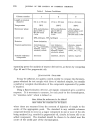
GAS-LIQUID CHROMATOGRAPHY IN THE ANALYSIS OF PERFUMES 179 subsequently observed by direct calibration. The published data for a polyethylene glycol 4,000 column at 130øC n is converted to the conditions of column No. 1 (Table 1). Where retention data is not available by any of the methods described, it is often possible to classify the compounds into chemical type with one of the following methods: 1. Classification prior to G.L.C. Treatment of the sample by a suitable process before analysis enables classification of some peaks when the resultant chromatogram is compared with that of the original sample. Three examples of the procedure are given: (a) (b) Alcohols may be preferentially separated from other compounds by distribution of the sample between carbon tetrachloride and propylene glycol TM. Chromatograms of the two layers are examined and com- pared with that of the original sample. Separation of essential oils into hydrocarbons and oxygenated com- pounds by adsorption on a silica gel column is particularly useful. The hydrocarbons (terpenes, sesquiterpenes and direrpenes) are eluted with petroleum ether while the oxygenated terpenes may be displaced with ethyl acetate. Subsequent comparison of chromatograms classifies some of the peaks. Only the purest grades of silica gel should be used, and the possibility of isomerisation on the adsorbent should be borne in mind when comparing chromatograms. Selective reagents for carbonyl compounds, e.g. Girard reagents, have restricted use in the essential oil field since some carbonyls fail to react while others decompose, e.g. camphor and citral res- pectively. Nevertheless, the process can be of value if supplemented with other classification tests. Chromatograms of the sample made before and after removal of carbonyls may be compared and, where possible, regenerated carbonyls can be analysed separately. 2. Classification after G.L.C. (a) After a preliminary chromatogram has been prepared, the yapours of compounds of special interest may be trapped as they are eluted during a repeat analysis. By bubbling the effluent gas from the chromatographic column via a manifold into selective reagents, the peaks may be classified into compound types •a. We have found that such tests are reliable when there is only one functional group in the molecule. The method may be used as a guide, but must be

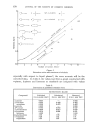
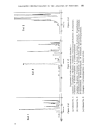
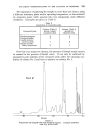
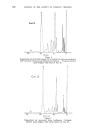
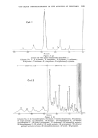
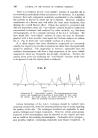
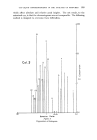
180 JOURNAL OF THE SOCIETY OF COSMETIC CHEMISTS supported by a confirmatory test when analysing perfumery and flavour materials. (b) The vapours eluted from the column may be trapped in a suitable solvent for subsequent analysis by U.V. or I.R. spectroscopy. 3. Classification during G.L.C. One of the simplest and most informative means of classification is the choice of a suitable liquid phase for the chromatographic column. Thermally- stable, non-volatile materials which are liquid at the temperatures of operation may be broadly classified as (i) non-polar, e.g. hydrocarbons, silicones, (ii) semi-polar, e.g. esters, polyesters, and (iii) polar, e.g. polyglycols, fifi'-oxydipropionitrile. It should be noted that diglycerol, although strictly included in group (iii), is unsuitable as a liquid phase since its very high polarity causes most organic compounds to be virtually insoluble in it, thereby causing rapid elution of all compounds before separation has occurred. Group (iii) is most suitable for analysis of mixtures containing several classes of compound, since the materials are eluted roughly in order of increasing polarity. For example, using column 2 (Table 1), compounds with the same number of carbon atoms in the molecule are eluted in the order--hydrocarbons ethers aldehydes, ketones and esters alcohols phenols and acids. Since in essential oils, most compounds are of a ten- carbon skeleton, the groups are fairly well defined except that sesquiterpenes (C•5) are eluted in the C•o aldehyde/ketone/ester region (Fig. 8b). Within each group, elution tends to be in order of decreasing volatility. Phenols and acids are, in general, too polar for satisfactory analysis on polar columns owing to their lengthy elution times. A semi-polar column (No. 3, Table 1) at a higher temperature is used for these compounds. The hydrocarbons are eluted rather quickly under the conditions of column No. 2. A longer column (No. 1, Table 1) at lower temperature improves the separation within this group. Separation within a group could be supple- mented by using a non-polar column, but it would be necessary first to isolate the group to obviate interference from other groups. 4. Preparative-scale G.L.C. Apparatus designed to isolate samples of any one component or group of components 2'a'4 can be used either to separate one group of compounds for more detailed analysis using a different stationary phase or temperature, or to isolate single compounds for analysis by other methods, e.g. spectro- scopy. An isolated compound may sometimes be classified by comparing
Purchased for the exclusive use of nofirst nolast (unknown)
From: SCC Media Library & Resource Center (library.scconline.org)