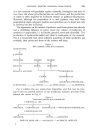
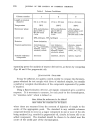
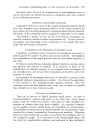
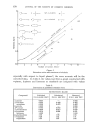
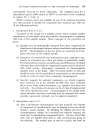
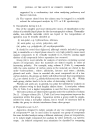
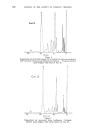
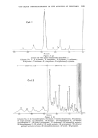
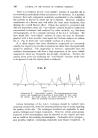
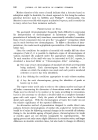
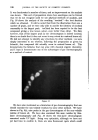
SYNTHETIC PERFUME MATERIALS FROM PINENE 165 as a raw material will gradually replace citronella, lemongrass and bois de rose, three oils whose price fluctuations are well known and the production of which is often impeded by inclement climate or political disturbances. Moreover, although the proportions of a- and •-pinene vary with their geographical origin, adequate qualities and quantities can be found not only in America but also in Europe. The appearance on the market of products made from pinene has already had a stabilising influence on prices where the volume of production of synthetics is appreciable, i.e. for linalol, geraniol, nerol and citronel!ol. The production of hydroxycitronellal and citral is inadequate at the moment. But it is foreseeable that when sufficient quantities of these synthetics are available, their prices and those of the ionones will drop. TURPENTINE I + I + MYRCENE I + LINALOL I + LINALYL ACETATE TURPENTINE Figure 1 New synthetic routes from turpentine. ESTERS ESTERS + + NEROL GERANIOL I CITRAL I + IONONES •/-PINENE --- •'CITRONELLOL I + CITRONELLAL + HYDROXYCITRONELLAL •-/-ISOPULEGOL -----•-/-MENTt-IOL Fig. 1 outlines the new routes from turpentine, and this may be com- pared with the general pattern of the traditional isolation processes from natural oils shown in Fig. 2. Figure 2 Traditional isolation from essential oils. CITRONELLA OIL I + + GERANIOL CITRONELLOL CITRONELLAL HYDROXYCITRONELLAL LEMONGRASS OIL I + GERANIOL CITRAL - BOIS DE ROSE OIL - -IONONES -LINALOL•LINALYL ACETATE

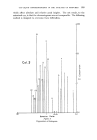
166 JOURNAL OF THE SOCIETY OF COSMETIC CHEMISTS The traditional rose alcohols are normally isolated from citronella, some- times also from other natural oils. In fact, the "Geraniol" resulting from this operation is more often a by-product, the principal interest being centred on the other components of the natural oil. It is sold at a low price after a minimum of rectification. The better grade frequently contains a large proportion of citronellol, and possibly nerol. In citronellol isolated from citronella, one normally finds geraniol. Special qualities of these two rose alcohols ex citronella are produced where extensive rectification has been carried out, but their price level handicaps their sale. Most commercial neroIs isolated from an essential oil, or derived from an isolate, contain no more than 30-70% nerol. The remainder is, for the most part, geraniol. We therefore see that the traditional qualities of these alcohols vary to a large extent and often their commercial name indicates no more than the predominant constituent. Their common feature is a nuance, more or less accentuated, reminiscent of citronella and resulting from traces of terpenes and sesquiterpenes from the original oil. The synthetic rose alcohols from myrcene, by their very nature, are devoid of these terpenes. They are very pure and well defined. If one compares them with their traditional counterparts this fundamental differ- ence must be kept in mind. For example, if they appear less lasting on the smelling strip, this is explained by the absence of sesquiterpene im- purities. This is simply one aspect of their purity. In preparing a com- position, the perfumer will call upon oils and synthetic products which act more suitably as fixatives rather than having a citronella background. It will also be appreciated that precise analytical specifications can be given to these new synthetics ex pinerie. They will therefore fall in line with the increasing number of products which are characterised by such data. This obviates the practice of "bouquetage". Moreover, gas-liquid chromatography has significantly simplified analytical control. We must not forget, however, that improved methods and more regular analytical control do not guarantee "absolute purity". In chemistry, as elsewhere, the "absolute" does not exist. The purest product will always contain impurities. But for the chemist this is no reason for not aiming at maximum purity, always on the condition that it can be obtained at reasonable cost. The perfumer is particularly concerned with the effect of the impurities. He will certainly agree that the more a product is chemically pure the better is its chance of reflecting a true picture of its odour. But odour effect is not proportional to weight, which means that a very small amount of impurity may provoke an odour change quite out of proportion to the
Purchased for the exclusive use of nofirst nolast (unknown)
From: SCC Media Library & Resource Center (library.scconline.org)