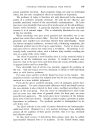
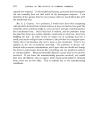
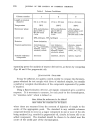
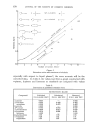
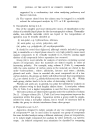
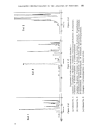
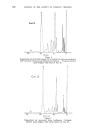
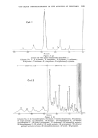
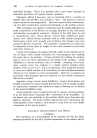
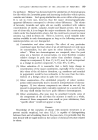
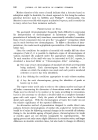
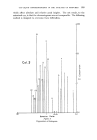
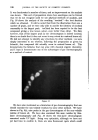
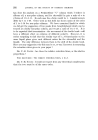
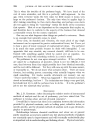
GAS-LIQUID CHROMATOGRAPHY IN THE ANALYSIS OF PERFUMES 185 7 8 4 J 5' 2 • 6 5• I i 30 20 I0 0 Minufes Figure 8 (a) Lemon oil with peaks tentatively identified :- Column No. 1: 2 m-pinene 3 camphene 4 •-pinene $ sabinene 6 myrcene 7 limonene 8 y-terpinene 0 terpinolene/p-cymene. ß Sensitivity x25 ',( Sensitivity x5 l Col. 2 i 19 27 26 25 20 o M•nutes Figure 8 (b) Column No. 2: 2-7 monoterpenes 8 octanol 9 methyl heptenone 10 nonanal 11 octyl acetate 12 citronellal 13 decanal 14 sesquiterpene X 15 linalol/ sesquiterpene Y 16 linalyl propionate 17 undecanal 19 citronellyl acetate 20 sesquiterpene Z 22 citral-b 23 neryl acetate 24 •-terpineol 25 citral-a/ geranyl acetate/carvone, 26 citronellol/decanol 27 nerol 29 geraniol.

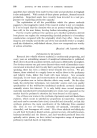
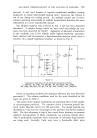
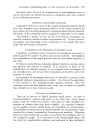
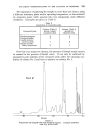
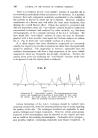
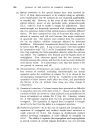
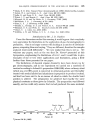
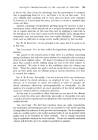
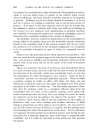
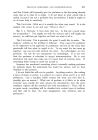
186 JOURNAL OF THE SOCIETY OF COSMETIC CHEMISTS There is a tendency for the "non-volatile" residues of essential oils to be overlooked, particularly if they are known to be odourless. It is possible, however, that such compounds contribute considerably to the stability of the perfume or flavour in which the oil is blended. Moreover, odourless constituents of a flavour may well affect the basic taste sensations, thus altering the overall flavour effect. Unless the analyst is concerned only with the immediate odour, the "non-volatile" portion should be isolated by conventional techniques and analysed by other methods, e.g. thin-layer chromatography, or by a suitable extension of the G.L.C. technique. We have found that "non-volatile" residues of citrus oils may be chromato- graphed with a slow recorder chart-speed and 16-hour analysis on column No. 2. Fig. 8c shows the "non-volatile" portion of a lemon oil. It is often argued that since odoriferous compounds are necessarily volatile, the vapour over a bottle of essential oil, rather than the liquid itself, should be analysed. This supposition is, however, unfounded since the resultant chromatogram will show a high proportion of the more volatile components which are frequently less-strongly odoriferous. Further, the reasons given above for analysing the "non-volatile" fraction would have to be ignored if only the vapour phase is analysed. Col. 2 I I I I I I I q 8 7 6 5 4 3 2 Hour• Figur• 8 (c) Column No. 2: "non-volatile" residue. The chromatogram has been drawn with exaggerated proportions of peak height to time scale, for clarity. All peaks shown are eluted after those in Fig. 8b. They are probably coumarin derivatives. ß [ ., Certain hmitations of the G.L.C. technique should be realised when analysing essential oils, otherwise misinterpretations may be made regarding the quality of the oils. The techniques described are applicable to most carbon, hydrogen and oxygen compounds. However, certain polar groups, if present in low concentration, may be adsorbed on the support and may not be visible in the resulting chromatogram. Carboxyhc acids, nitrogen. and, possibly, sulphur--containing compounds may escape recognition. If
Purchased for the exclusive use of nofirst nolast (unknown)
From: SCC Media Library & Resource Center (library.scconline.org)