SYNTHETIC PERFUME MATERIALS FROM PINENE 167 actual quantities involved. Each impurity brings not only its individual odour, but the more complicated effects of exaltation or depressiort. The perfumer of today is therefore not only interested in the chemical purity of a synthetic aromatic chemical. He asks for the olfactive and possibly analytical control of the unavoidable contaminations. He looks also more open-mindedly, than some of his predecessors, at the old antithesis: Nature versus Synthesis. A particular impurity is not ipso facto desirable because it is of natural origin. This is admirably illustrated in the case of the rose alcohols. When examining very pure nerol, geraniol and citronellol, one is sur- prised how much their odours differ. The fact that in the past they were generally used together has somewhat blurred their individuality. Nerol has always intrigued perfumers invested with a flattering reputation, the traditional product has not lived up to expectations. Today we know why, and pure nerol ex pinene has truly been a revelation. Its perfume is ex- tremely fresh, somewhat citrus, with a delicate leafy tonality recalling the dew on a sprig of lily of the valley. The odour of geraniol is more familiar since it is this material which is present in all the traditional rose alcohols. It should be pointed out, however, that in the pure form and freed from the musty citronella odour, it appears fresher and less straw-like. Pure citronellol, best of all the rose alcohols, suggests the perfume of the rose. Soft and round, never too dominant, it blends as well with floral notes as with heavier perfumes. For some years another synthetic linalol has been on the market. The prejudice towards a product not isolated from bois de rose has subsequently matured to a more realistic judgement. From all the above synthetic alcohols, esters of analogous purity have been prepared. The same characteristic difference which was found between the rose alcohols is also reflected in their esters, modified according to the nature of the acid group. Thus the esters of citronellol have more body and are more rosy than those of geraniol which, for their part, are more powerful and aggressive. The nerol esters show variations of the delicate green note of the pure alcohol. Linalyl acetate occupies a position of prime importance in perfumery. The synthetic product is distinguished by its soft fruity note. The latest arrivals in the series of pinene derivatives are hydroxycitro- nellal and citral. Obtained by a very modern technique, these aldehydes possess all the qualities of their parent alcohols, that is to say, chemical and olfactive purity. To this short review of derivatives from pinene must also be added laevo-menthol obtained from a- or /•-pinene. In the United States, large

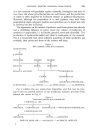
168 JOURNAL OF THE SOCIETY OF COSMETIC CHEMISTS quantities have already been made by this route and production in England is also anticipated. With certain of these pinene products, demand exceeds production. Important assets have recently been invested in a vast pro- gramme for expanding production capacity. The exploitation of all the possibilities which the pinene molecule suggests to the imaginative mind of the research worker is not yet complete. It is to be hoped that the chemists who are at present working along these lines will, in the near future, develop further interesting products. For the creative perfumer the question as to whether synthetics derived from pinene can replace the corresponding classical products is of secondary consideration compared with the originality which they offer. Since they impart a new tonality and (in the case of the rose alcohols) resolve a complex smell into distinctive, well-defined odours, these new compounds are worthy of serious attention. (Received: 4th September 1962) Introduction by the lecturer Research into volatile odorous material is continuously progressing, and every year an astonishing amount of analytical information is published. Much of it is of purely academic interest, and some is deliberately incomplete. For obvious reasons one gets more discreet where work of immediate econo- mic interest is invo!ved, but it is only fair to say that for some years, generally speaking, there has been a distinct trend towards less secrecy. We per- fumers, those attached to a supply house as well as those in the perfumery and toiletry trade, follow this trend with keen interest. New aromatic chemicals, or new bases and reconstructions of essential oils, which can be used to produce new or better olfactive effects may result. On the other hand, the production techniques, raw materials' sources and even quality specifications of the well-known traditional synthetic aromatic chemicals normally arouse less interest. It is only lately since several important materials manufactured by fundamentally new routes have appeared on the market that the perfumer's attention has been focused on this aspect. One of these new routes is the synthesis of geraniol, nerol and linalol from fi-pinene, which occurs in satisfactory proportions in turpentine. Geraniol and nerol can be converted into citral, citronellol and citronellal, so that this synthesis produces the main constituents of the foilowing three essential oils. Bois de rose oil--linalol citronella oil--geraniol, citronellol and citrone!lal and lemongrass oil--citral. If to these alcohols and aldehydes we add their derivatives linalyl acetate, geranyl acetate, citronellyl acetate, hydroxycitronellal and the ionones, and laevo-menthol produced from the optically active pinene, we have indeed an impressive range of important perfumery materials based on turpentine.
Purchased for the exclusive use of nofirst nolast (unknown)
From: SCC Media Library & Resource Center (library.scconline.org)