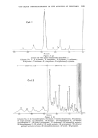
GAS-LIQUID CHROMATOGRAPHY IN THE ANALYSIS OF PERFUMES 189 the perfumer. Holness • has demonstrated the similarities of chromatograms for oils within the Lavandula genus and increasing similarities within species, varieties and strains. Such group similarities also occur within other genera. It is not in every case, however, that the major chromatographically- apparent differences correspond to obvious odour differences. The odours of lavender, lavandin and spike oils are readily correlated with relative concentrations of cineole, camphor, linalol and linalyl acetate, but in the case of citrus oils, it is no longer the major constituents (the monoterpenes) which confer the characteristic odours, but the constituents present in minor amount, e.g. citral in lemon oil. There is, however, much valuable infor- mation available in each chromatogram as long as the following sources of misinterpretation are not disregarded. (a) Concentration and odour intensity--The effect of any particular constituent upon the final odour of an oil will depend not only upon its concentration, but also upon its odour intensity or "specific odour". When two chromatograms are compared, since the peak areas are a function of concentration, we must therefore consider relative changes in peak sizes rather than absolute changes. A change in a component, X, from 1% to 2% may be just as important as a change in another component, Y, from 10% to 20%. (b) Odour saturation--It is reasonable that a fairly large change in concentration of the major constituents, especially if the character- istic odour of the oil derives therefrom, e.g. menthone and menthol in peppermint, would be less noticeable to the nose than the intro- duction of a foreign odour in quite low concentration. (c) Odour counteraction--The established property of odour counter- action could conceivably lead to incorrect interpretations of chroma- tograms. If two odorous components are absent in one oil, but present in proportions which mutually counteract in a second oil, the oils may smell similar but have quite different chromatograms. (d) Odour sensitisation--The nose may be sensitised towards some of the components of the oil when the mixture is smelt as a whole, whereas if those components were smelt as pure substances, their "specific odour" would not appear so large. Isomers Knowledge of the variation of odours with isomeric structures is at present mainly empirical, but since G.L.C. is capable of distinguishing between them and of isolating them in the pure state, it is probable that the next decade will see rapid strides in the science of chemical structure related to odour.

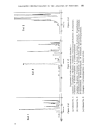
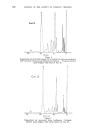
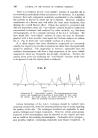
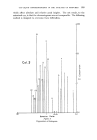
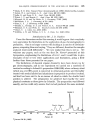
190 JOURNAL OF THE SOCIETY OF COSMETIC CHEMISTS (a) optical isomerism--A few optical isomers have been resolved by G.L.C. of their diastereoisomers or by analysis using an optically- active liquid phase, but the methods are not of general applicability to essential oils. However, in the event of any doubt about the optical rotatory power of any particular peak, preparative-scale G.L.C. could be used to isolate a sample for polarimetry. Since enantiomorphs are frequently associated with contrasting essential oils, it is sometimes believed that optical isomers contribute different odours. We have examined the case of d-carvone (the major con- stituent of caraway seed oil) and /-carvone (the major constituent of spearmint oil). The isomers were isolated from the respective oils via the sulphite addition compound followed by fractional distillation. Polarimetric measurement showed the isomers each to be better than 99% pure. 5 mg of each isomer were then purified by "preparative-scale" G.L.C. on No. 2 analytical column, a capillary- tube trap replacing the flame-ionisation detector while the carvone was eluted. The capillaries were drained and the liquids smelt on watchglasses. Four observers agreed that the two isomers had identical caraway-like odours, and that the d-carvone had a distinctly more intense odour. It is interesting to note that this isomer is the ane present in caraway seed oil. (b) Stereoisomerism--Stereoisomers are easily resolved by G.L.C. The four isomers of menthol (excluding enantiomorphs) are clearly separated under the conditions of column No. 2, as shown in the chromatogram of peppermint oil (Fig. •l). Variations in the relative quantities of these isomers could affect the odour, and particularly the flavour of the oil, without there being any other change in composition. (c) Geometrical isomerism--Cis-trans isomers have presented no difficulty in separation since the early days of G.L.C. Classic examples in the essential oil field are shown by citral-a/citral-b and geraniol/nerol in lemon oil analysed on column No. 2 (Fig. 8b). Likewise, column No. 3 will separate eugenol from the two geometrical isomers of isoeugenol. The separation of eugenol from isoeugenol is brought about by the fact that the latter is a conjugated structure. (d) Double-bond position--As in the case of eugenol and isoeugenol, the separation of conjugated and isolated double-bond structures is easily achieved by G.L.C. but changes in double-bond position without involving conjugation is more difficult to recognise by G.L.C. The ability to separate the isopropylene and isopropylidene (a and/•) isomers of several terpene derivatives has not yet been
Purchased for the exclusive use of nofirst nolast (unknown)
From: SCC Media Library & Resource Center (library.scconline.org)