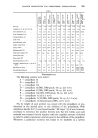
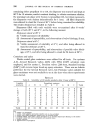
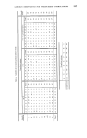
CONTACT SENSITIZATION DUE TO PERFUMERY RAW MATERIALS 321 THE LECTURER: The reactions are completely individual. MR. J. •/[. BLAKEWAY: Do you have to screen guinea pigs for particular sensitivities, in the same way that you do human beings ? Are they more sensitive than humans, less, or do they have the same peculiarities ? THE LECTURER: In the case of guinea pigs and rabbits we use special strains which are pre-disposed for sensitization. The reactions of the indi- vidual animals of these strains are almost identical. In general, animals are less sensitive. MR. P. J. L. BONGARD : Has sensitization any connection with the pH of the skin ? THE LECTURER: It would lead me too far into medicine to answer this question. The pH can certainly be correlated with the occurrence of eczemateous reactions, but deviations from the normal pH of the skin belong to medicine. }V[R. O. }V[. HOWARD: Am I to understand that for your tests you select a specific number of people who are prone to sensitization ? THE LECTURER: Not in our tests, but there are investigators who are working in this way. MR. O. M. HOWARD: IS it correct to select a section of the community who are subject to allergic effects, for specific tests on sensitization ? THE LECTURER: In experimental work to study the theoretical back- grounds of contact sensitization the chance of achieving results is much higher in these pre-selected groups of test-people. In a group of normal people these studies are almost impossible from a practical point of view. DR. V. KLEIN: I assume that the normal method of determining sensitiza- tion is a patch test. THE LECTURER: Yes. DR. V. KLEIN: In carrying out the patch test, where do you determine the concentration to differentiate between a primary irritation and sensitiza- tion ? Some years ago one of our men, who developed a serious dermatitis, was sent to a specialist who carried out some 30 patch tests on his back with concentrated materials including aldehydes, alcohols, etc. As a result, almost all of the tests were positive but the man was certainly not sensitive to so many of the materials. Where do you determine the threshold ? THE LECTURER: By lowering the concentration. When we have positive reactions we reduce the dose and try to find a threshold. If this is 50 times or 100 times the normal use value in perfume compounds, then it may still be possible to use the product involved.

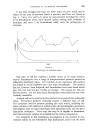
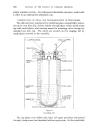
322 JOURNAL OF THE SOCIETY OF COSMETIC CHEMISTS CORROSION IN ALUMINIUM CONTAINERS E. K. CLARKE, B.Sc., M.Inst. Pkg.* Presented at the Symposium on "Aerosols", organised by the Society, at Southport, Lancs., on 25th April 1963. An investigation o• a method to l•redict corrosion was made with cells cons•ucted with electrodes o[ nickel, and aluminium taken •om l•ressure containers. The electrolytes were a series o[ different hair Slyrays. The current flowing was lflotted automatically as the cells were discharged over 24 hours. No general correlation was [ound between these results, and the results o[ storage tests excel•t [or formulations containing highly corrosive ingredients. INTRODUCTION THE AEROSOL industry is still technically very much in its infancy. A kind of folklore is often found behind very firmly bound beliefs about the behaviour of aerosol systems. An opinion once stated, and then quoted, becomes "fact". The effect of this is to make predictions about the behaviour of such systems (particularly with regard to stability and corrosiveness) very uncertain. The most experienced workers, like the earlier workers in the aircraft industry, still have to say, "Let's try it and see!". Probably the most worrying problem is the prediction of corrosion. Apart from damage to the product, the container can be attacked, and especially in the case of aluminium, perforated with disastrous effect. Various tests have been suggested which might rapidly show up corrosion. Thus it has been suggested that the increase in dissolved metals, or the increase in aldehydes be measured. Bower • has recently shown that pH measurements whilst related to corrosion do not enable predictions to be made about complete formulations, whilst Root •' has shown the value of pH in assessing batches of propellant. This paper discusses a preliminary examination of a method which has been used, or considered, by many people concerned with aluminium con- tainers, particularly non-pressurized ones. The method is a modification of the Denison Cell described elsewhere a,4. A cell is constructed having one electrode of aluminium and the other of nickel, using the product under test as the electrolyte. The cell is allowed to discharge under its owr• potential force and the current which is of the order of microamps is measured over a period of time. The type of polarisation curve produced is said to be characteristic of the type of corrosion that may be expected. *Beecham Toiletry Division Ltd., Brentford, Middlesex.
Purchased for the exclusive use of nofirst nolast (unknown)
From: SCC Media Library & Resource Center (library.scconline.org)