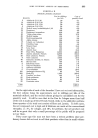
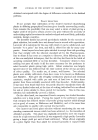
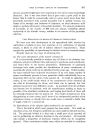
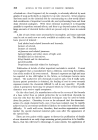
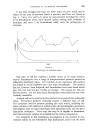
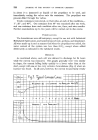
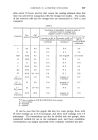
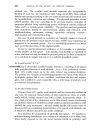
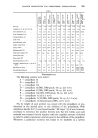
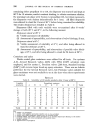
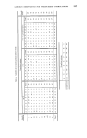
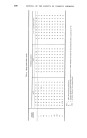
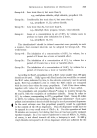
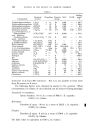
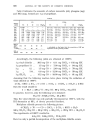
CORROSION IN ALUMINIUM CONTAINERS 327 after about 15 hours, and for that reason the reading obtained after this time was selected for comparison with the storage test results. The results of the corrosion cells and the storage tests are summarized in Table 1, and compared. Table 1 Prediction of suitability & rank in order of corrosion found on storage tests. Highest number is most corrosive. Pro- Cell -- Formula pellant Reading* 3 months at 40 ø in 9 months at 20 ø in 9 months at UNLACQUERED UNLACQUERED 20 ø in containers containers LACQUEREE containers I 11s 0.0 N 4 D 2 S 3 I 12 0.1 N 4 D 1 S 3 IMS 11/12 0.1 S 2 test stopped not tested II 11/12 0.1 S 1 N 3 S 1 I 11 0.2 D3 N4 N6 I 11/12 0.2 D 3 N 4 S 4 III 11/12 0.2 D 3 N 4 S 2 IV 11/12 0.1--0.4 S 2 D 1 N 5 IV + 11/12 1.5 N 6 stopped at N 7 Cetrimide 3 months IV + 12 2.6 N 6 stopped at N 7 Cetrimide 3 months I + 12 1.0--4.0 N 5 N 5 S 1 5% water III + 11/12 20.0 N 6 stopped at N 8, Cetrimide 3 months * 15 hour reading in MICROAMPERES from graphs. N--not suitable. D--doubtful. S--suitable. It can be seen that the graphs fall into two main groups, those with 15 hour readings up to 0.4 microamps, and those with readings over 1.0 microamps. The formulations can also be divided into two groups, those considered suitable for use in the containers used, and those unsuitable. A formulation was judged unsuitable if the container exhibited any pits.

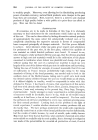
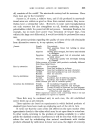
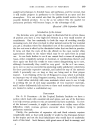
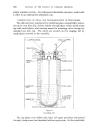
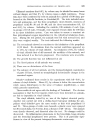
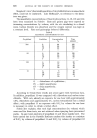
328 JOURNAL OF THE SOCIETY OF COSMETIC CHEMISTS It can be seen that the two groups found by each method do not coincide. Neither do the order, in which the formations could be ranked by either method, correlate with one another. DISCUSSION This method will pick out formulations which contain actively corrosive ingredients, such as Cetrimide. This can be done in about 24 hours, com- pared with about one week, if strips of aluminium were merely immersed in the product in a compatibility tester and then examined visually. Formulations which become corrosive slowly because of a gradual inter- action between ingredients (such as between ethanol and trichlorofluoro- methane) are not actively corrosive when packed and should not be expected to give different graphs to stable formulations at that time. This, it is suggested, is the reason why failures with the method are found, as with the toothpaste mentioned in the introduction. It is considered that if the containers are stored long enough for the contents to become corrosive, and thus yield an appropriate graph on the corrosion cell, the corrosion inside the dispensers would already be visible to the eye. (Received: l•lth February 1963) REFERENCES • Bower, F.A. Soap Chem. Specialties 38 129 (July 1962) 2 Root, M.J. J. Soc. Cosmetic Chemists 15 300 (1962) a Denison, I. A., in Uhlig, H. H. (Ed.) Corrosion Handbook 1039 (1948) (John Wiley & Sons, Ltd., London) • Morris, C.E. J. Soc. Cosmetic Chemists 15 11 (1962) Introduction by the lecturer The reason for the work described in this paper was a desire to find a method of prediction. It was hoped that it would be possible to decide which formulations would or would not corrode the containers for pressure packs, without time and labour-consuming storage trials. The simplest possible practical system was chosen: The all a!uminium container and valve cup without lacquer, and one kind of formula--the alcoholic hair spray. If success was achieved with this the method could be extended to more complex systems. The results show that certain predictions were made after three months. If all the "Not Suitable" and "Doubtful" formulations had been rejected after three months the whole series would have come to an end. However, after nine months storage three of the combinations in unlacquered alumi- nium were found not to have perforated. They are the ones packed in unlacquered containers which have been marked as "Doubtful". If any of these three were in other respects outstanding formulae, they might merit further and larger scale testing to make a conclusion possible.
Purchased for the exclusive use of nofirst nolast (unknown)
From: SCC Media Library & Resource Center (library.scconline.org)