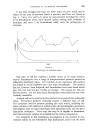
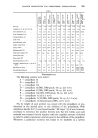
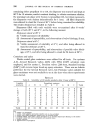
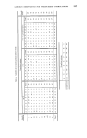
CORROSION IN ALUMINIUM CONTAINERS 329 All the containers from the unlacquered sets which had not perforated had some patches of etching corrosion. Some of the containers holding other formulations which had perforated were completely clean inside except for the perforation! In some instances the same formulation produced some containers with only slight etching, and some with perforations. It therefore seems likely that the three formulations which did not perforate were probably a chance occurrence. A larger number would be needed to settle this point. The safest conclusion is that all the formulae are unsuitable in the un- lacquered aluminium pack. Slow perforation is as serious as fast. In fact the cell reading taken when fresh may hide an accelerating reaction. From this series of experiments, I draw the general conclusions that the corrosion cell is not relevant in trying to predict whether or not a formula will corrode. It will probably pick out the highly corrosive combinations which would show up quickly anyway. Three months' storage at 40øC is an inefficient method of prediction unless one is willing to use it only as a screening test successful formulae remaining on test much longer before being passed. My recommendation would be to test lacquered and unlacquered con- tainers at least at 20øC and at, 40øC. If there are any traces of corrosion after three months I would reject the formula. If after nine months there were no blemishes at all at 20øC, and only very minor ones at 40øC, I would be prepared to pass the formula. If one was very anxious to use a formula which failed this test, the only solution is to pack at least 250, and preferably more than 500 containers and store them for nine months at 20øC. The formula would then be passed if no containers are perforated or badly pitted. DISCUSSION MR. A. I-{ERZKA: Your findings appear to confirm that for pressurized packs there is no real substitute for long term storage tests. How do you account for the difference between curve C, Figure 1 and the curve for Hairspray III, Figure 3 ? THE LECTURER: I tOO believe that there is no more sensible way of testing pressurized packs than long term storage. As I have indicated, short term tests can serve as screening tests to remove extremely corrosive products, although there is a risk that successful formulae will also be rejected occasionally. No product-pack combination should ever be released unless it has successfully passed at least nine months' storage at the normal service temperature. I do not know enough about the basic processes underlying the reactions in the cell to give a reason for the difference between curve C and the curve

330 JOURNAL OF THE SOCIETY OF COSMETIC CHEMISTS for Hairspray III. However, curve C is typical of the results obtained when testing products, such as shampoos, which are designed for aluminium collapsible tubes, and which gave corrosion of the pitting type. Such systems are, of course, aqueous in comparison with the pressure packs we have been testing which are almost anhydrous. MR. A. H•Rz•A: Have you carried out any tests with this method on hair lacquers in internally plain and lacquered tinplate containers, shaving cream formulations, and antiperspirants ? TH• L•½TUR•R: Although some of the formulations have been tested in tinplate containers, I have not systematically covered the same ground or attempted to relate those results I have in tinplate with the aluminium containers. As I mentioned above I was confining myself to as simple a system as possible. Aluminium containers, whether lacquered or not, pre- sumably exhibit the same sort of corrosion reactions. The tinplate container is a much more complex affair. I have tried to use this method on shaving cream formulations without success and have not pursued it very far. I did get very high readings from the corrosion cells, probably because of the high water content. On the limited numbers tried it was not possible to distinguish between corrosive and non-corrosive formulations. I have not tried antiperspirants. DR. P. H. W•TJ•NS: May I ask if anodised alumininm containers have been included in the experiments ? TH• L•½TUR•R: No. I would like to emphasise that in using these ceils I was trying to find a method which would predict whether the product/ aluminium combination was inherently corrosive. The question of what treatment or lacquer will best protect the aluminium is another matter. •IR. K. D•xoN: Has this method been considered as a screening test to eliminate variables from storage tests ? TH• L•½TUR•R: This method will certainly remove highly corrosive combinations from test. It must be remembered, however, that the diffe- rence between highly corrosive and slightly corrosive can be slightly academic. A formulation which eats through 10% of the containers after one year, is just as commercially a disaster as one which eats through 50% in three months! On the whole I am inclined to think that the best screening test is short term storage in the chosen pack, lacquered and unlacquered, and examina- tion with a microscope after three months. Containers showing the slightest blemish would condemn the formulation. There is then the risk that a usable formulation is in fact being rejected, but this is probably unavoidable.
Purchased for the exclusive use of nofirst nolast (unknown)
From: SCC Media Library & Resource Center (library.scconline.org)