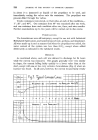
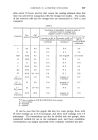
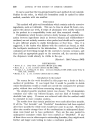
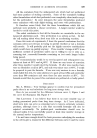
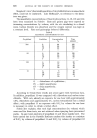
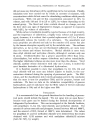
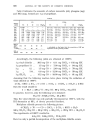
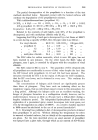
LANOLIN DERIVATIVES FOR PRESSURIZED FORMULATIONS 333 are always easily removed from the hair, if desired, by washing or shampooing. v. Liquid lanolin "50 Super" This is a chemically unmodified fluid fraction of the lanolin esters obtained by physical segregation, similar to the conventional solid lanolin chemically and dermatologically, but in the form of a clear fluid which is more easily applied to, and absorbed by, the skin, and which has better general solubility in organic solvents. vi. Liquid lanolin I.S.O. A blended and oil-solubilised lanolin, it consists of a mixture of 40% unreacted lanolin with free alcohols and isopropy! esters. It is a clear, very mobile, pale yellow liquid soluble in anhydrous ethanol, isopropanol, acetone, mineral oil and many other organic substances, and is valuable in brillian- tines, hair sprays, hand lotions, etc., where the minimum viscosity and the absence of stickiness are important. vii. Liquid lanolin "R.I.C.2" Another blended and oil-solubilised !artolin, it contains 25% of unreacted lanolin together with 25% of ricinoleic esters and free alcohols. It combines the properties of lanolin and castor oil, and is so formulated as to have a wide range of compatibilities with cosmetic ingredients. The product is a clear liquid of low viscosity, is emollient to the skin and gives a good gloss to the hair. viii. Liquid lanolin "L.I.N." This product belongs to the same class as (vi) and (vii) above, and contains 40% of chemically unreacted lanolin with linoleic esters and free alcohols. In physical characteristics it is similar to the I.S.O. grade (vi), but the unsaturated components are valuable for the skin and impart an outstanding gloss to the hair. The odour is faint, the unsaturated note being hardly detectable, and the product is stabilised against auto-oxidation. Products (vi), (vii) and (viii) are characterised by low cloud and pour points. ix. Water soluble lanolin "75" Water soluble lanolin consists of ester/ether compounds resulting from the reaction between the natural esters of which lanolin is composed and

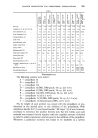
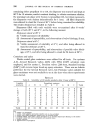
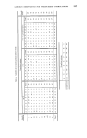
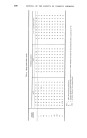
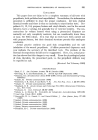
334 JOURNAL OF THE SOCIETY OF COSMETIC CHEMISTS ethylene oxide. The latter condenses to form long chains joined by ether linkages which become hydrated when dissolved in water and enable the product to form transparent solutions which are of an essentially colloidal nature. The hydration may be reversibly disrupted by heating a solution, temporary cloudiness or insolubility then being manifested. Most of the cholesterol contained in the original lanolin (approximately 20%) reacts with the ethylene oxide, and thus the products no longer conform to identity tests such as the Liebermann-Burchard reaction. The product is fairly hard, and is no longer soluble in mineral oil, but emo!lient and readily absorbed by the skin without residual stickiness. In addition it possesses wetting, foaming, emulsifying, gelling and solubilising properties, and this surface activity enables it to be used in soaps or shampoos, for example without any significant deleterious effect on lathering power such as results from any but a small addition of pharmaceutical anhydrous lanolin. Emul- sions are, of course, no longer of the w/o but of the o/w type. x. Water soluble wool alcohols "20" This consists of pharmaceutical wool alcohols B.P. of the highest quality ethoxylated to a sufficient extent for full solubility in water, and therefore comprises the polyglycol ethers of the natural, complex fatty alcohols derived from lanolin. These include alcohols of steroid, triterpene and aliphatic types and, on the basis of their mean molecular weight, the molar ratio of alcohols to ethylene oxide in the ethoxylated product is approxi- mately 1:20. At this degree of ethoxylation most of the original, high free-cholesterol content has undergone condensation, the product now yielding only a small amount of digitonide complex and giving only a weak reaction in the colorimetric Liebermann-Burchard test. Ethoxylation also greatly reduces the acetyl value and melting point, and the product is rather softer in consistency than wool alcohols B.P., and becomes plastic when warmed in the hand. Although a greater degree of ethoxylation will yield a product which has a rather higher solubility in water, the solubilising action exerted on non- water soluble substances is at an optimum when the molar ethoxylation ratio is between 1:15 and 1:20. A minimum ratio of 1:20 is necessary for aqueous solutions to be reasonably dear, and water soluble wool alcohols "20" thus provides the most satisfactory compromise between solubility and solubilis- ing power, and hence represents an extremely versatile and useful product. Its use in pressurized formulations may be summarized as-water soluble emollient, o/w emulsifier, solubiliser for liquid lanolin or perfume oil, etc., hair conditioner, plasticiser or film former in hair sprays. Table 1 summarises the analyses of these ten products.
Purchased for the exclusive use of nofirst nolast (unknown)
From: SCC Media Library & Resource Center (library.scconline.org)